

Alright, let's get one thing straight. If you're an Aussie service business and you reckon LinkedIn is just a place to chuck your CV, you are leaving a truckload of cash on the table. It's no longer just a digital resume; it's a client-getting machine where 96% of B2B marketers go to generate leads—more than any other platform. Think of it as the ultimate networking event, but without the dodgy sausage rolls and awkward small talk.
This guide will give you an actionable plan for using LinkedIn and marketing to build your authority and attract high-value clients who are actually looking for what you do.
Why LinkedIn and Marketing is a Powerhouse for Aussie Businesses

Look, if you still see LinkedIn as just a place to park your career history, you’re missing the plot entirely. It’s like owning a top-of-the-line BBQ and only using it to toast bread. LinkedIn has grown up. It's now the number one platform for professional networking, building your brand authority, and, most importantly, attracting brilliant clients who are ready to pay for your expertise.
Unlike the noisy, cat-video-filled chaos of other social media, LinkedIn is all business. Everyone’s there with their professional hat on, which means your message lands with an audience that’s ready to talk shop. That context makes every connection, every post, and every conversation far more targeted and bloody effective.
The Strategic Advantage for Service Businesses
For service-based businesses, the combination of LinkedIn and marketing isn't just a nice-to-have; it's a strategic must. Here’s why it’s a total game-changer:
- Direct Access to Decision-Makers: You can connect directly with the CEOs, managers, and founders you need to reach, without getting stuck behind gatekeepers.
- Building Genuine Authority: It’s the perfect place to showcase what you know through quality content, proving your value long before you ever slide into their DMs.
- High-Quality Lead Generation: The leads you generate are often more qualified because they’ve already seen your work and understand the value you bring.
I once used these exact principles to help an IT firm build an $180K pipeline in just 90 days. It wasn't magic or some secret voodoo. It was a consistent system of building authority and staying visible. That’s the power you unlock when you treat LinkedIn as a core marketing channel.
This isn’t about just being present; it's about being strategic. Your profile becomes your digital shopfront, your content becomes your 24/7 salesperson, and your network becomes your engine for growth.
Turn Your Profile Into a Client Magnet
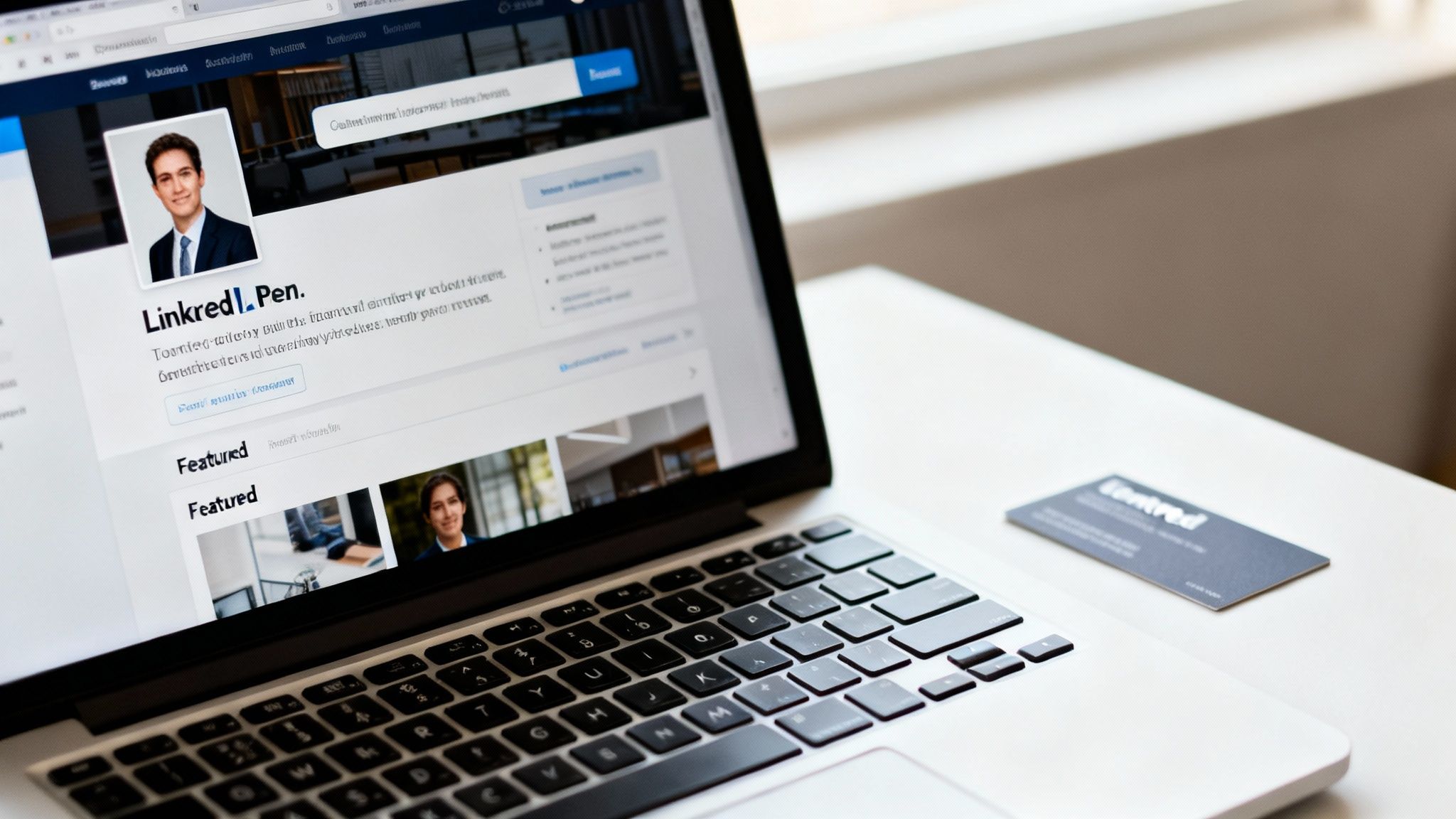
Let’s be brutally honest. Your LinkedIn profile is your digital handshake, your 24/7 salesperson, and your virtual shopfront all rolled into one. If it looks like a dog’s breakfast with a blurry photo from ten years ago, you’re screaming ‘amateur’ before anyone reads a single word.
Online, first impressions are made in milliseconds. You don't get a second chance to not look like a dag.
The goal isn’t to create a dry, digital CV. It’s to build a client-attraction machine that works harder than a sheepdog in shearing season. This is non-negotiable for anyone serious about using LinkedIn and marketing to grow their business.
Craft a Headline That Stops the Scroll
Your headline is the most valuable real estate on your entire profile. It follows you everywhere—in comments, connection requests, and search results. Don't waste it with a boring job title like "Managing Director" that sends people to sleep.
Instead, make it a benefit-driven statement that tells people exactly who you help and what problem you solve.
- Before: "Business Coach"
- After: "I Help Service Businesses Add an Extra $20K a Month Without Burning Out"
See the difference? One is just a label; the other is a solution. When I started my first business selling baby nappies with just $300, I didn't call myself a 'Founder.' I talked about helping parents save money with eco-friendly nappies. Focus on the result, and you'll attract people who want that result.
Use Your Banner and Featured Section Wisely
Your profile banner is basically a free billboard—so use it! Don't settle for the default blue background. Jump on a tool like Canva and create a simple, on-brand banner that backs up your headline. You can add your logo, tagline, or a clear call to action.
Just below your 'About' section, you’ll find the 'Featured' section. This is your personal trophy cabinet.
Treat your Featured section like a highlight reel of your greatest hits. It’s where you prove you can do what your headline promises.
Showcase your best stuff here. This could be a link to a killer case study, a powerful client testimonial video, your latest blog post, or a lead magnet. It gives prospects a compelling reason to stick around and see what you’re all about.
If you really want to dive deep, we’ve put together more tips in our complete guide to building a professional LinkedIn profile.
By optimising these key elements, your profile transforms from a passive document into an active tool for lead generation. It goes from being a place people land to a place they engage.
Find and Attract Your Ideal Clients on LinkedIn
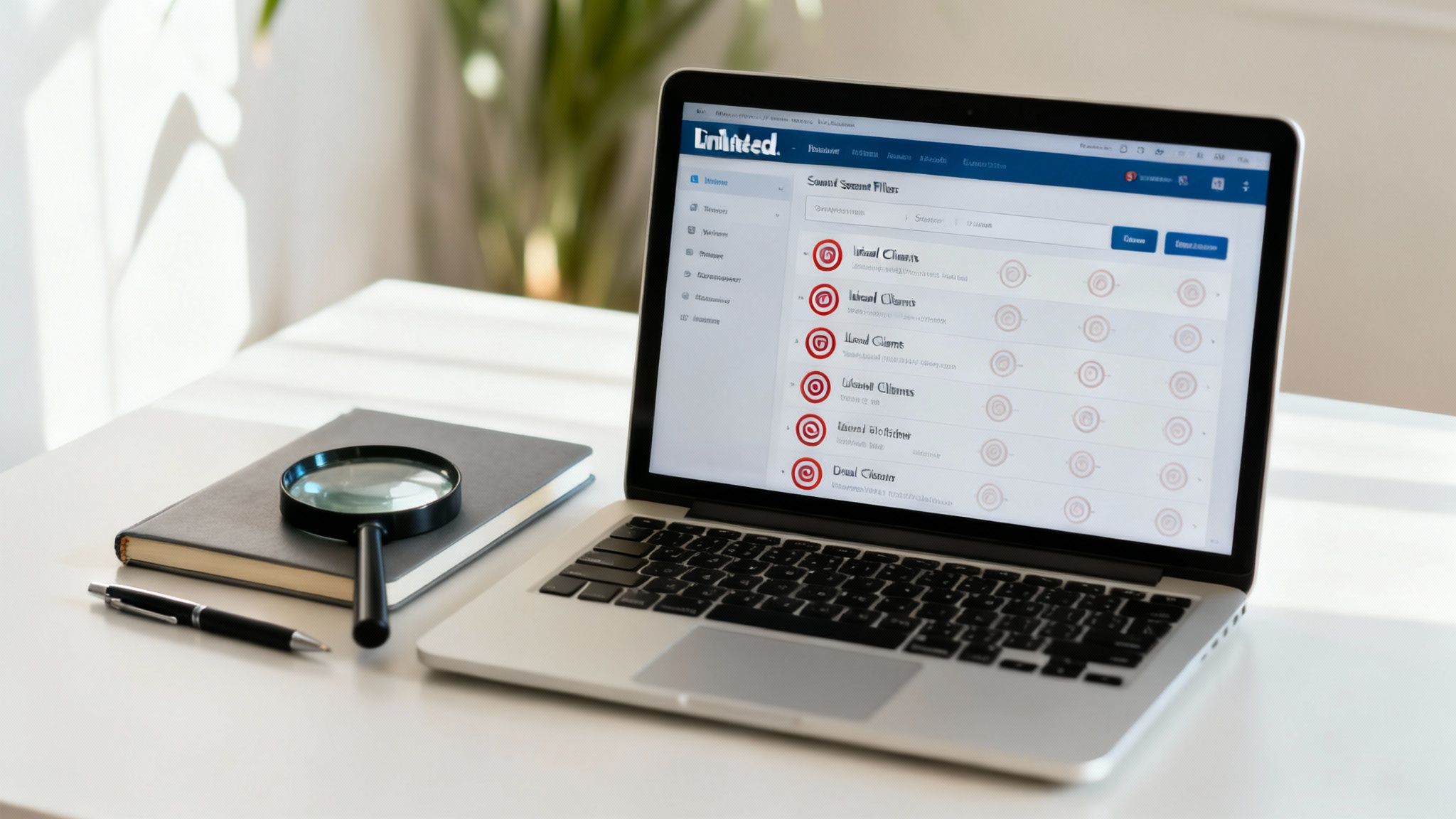
Right then, let's get into targeting. LinkedIn is absolutely swimming with potential clients, but just diving in without a plan is a good way to get lost in a sea of irrelevant profiles. The old ‘spray and pray’ method is dead. We’re aiming for sniper-like precision here, not a scattergun approach.
The real magic behind using LinkedIn and marketing effectively is knowing exactly who you’re talking to. Before you even think about sending a connection request, you need crystal clarity on your ideal client.
Pinpointing Your People with Precision
Think way beyond just a job title. You need to get granular, and the free search function on LinkedIn is surprisingly powerful if you know how to use its filters.
Start building a picture of your perfect client by defining these key attributes:
- Job Titles: What roles do they actually hold? Think "Marketing Manager," "Founder," or "Head of Operations."
- Industry: Which sectors do you serve best? Be specific—like "Software Development" instead of just "Tech."
- Company Size: Do you work with scrappy startups (1-10 employees) or established enterprises (500+)?
- Geography: Are you targeting businesses in Sydney, right across Australia, or globally?
Getting this right from the start means every piece of content you create and every message you send lands directly with someone who actually needs what you offer. To really master these filters, it’s worth checking out a solid LinkedIn Advanced Search Guide.
Supercharge Your Search with Sales Navigator
Once you've got the basics down and you're ready to pour some fuel on the fire, LinkedIn Sales Navigator is the logical next step. It takes all the standard search filters and puts them on steroids, letting you build hyper-targeted prospect lists with incredible detail. It’s a complete game-changer for anyone serious about scaling their lead generation.
Sales Navigator is like trading in your fishing rod for a high-tech trawler. It helps you find exactly the right fish, in the right part of the ocean, every single time.
When you're ready to get serious, have a look at our insights on whether Sales Navigator is right for your business. The right tools make all the difference, but remember, a tool is only as good as the person using it.
Create Content That Builds Authority and Drives Action
If your profile is your digital shopfront, your content is the conversation happening inside. Just posting for the sake of it is a fast track to wasting time and getting zero results. What you need is a simple, repeatable content plan that shows you know your stuff, builds real trust, and guides people toward working with you.
Showing up consistently isn't just about pleasing the algorithm. It's about becoming a familiar, trusted name in your ideal client's world. Every helpful post is another reason for them to see you as the go-to expert.
Develop Your Core Content Pillars
Staring at a blank screen, wondering what the hell to post? The solution is to have 3-5 core content pillars. These are the main topics you'll talk about, again and again, all tied back to what keeps your audience awake at night and how your services solve those problems.
Let’s say you’re a business coach for tradies. Your pillars might look like this:
- Cash Flow Management: Tips on quoting right, invoicing faster, and actually getting paid on time.
- Team Leadership: How to hire good people and keep them from leaving for the competition.
- Winning Better Jobs: Strategies to move from small residential gigs to bigger, more profitable commercial contracts.
Every single thing you create should fit under one of these pillars. This focus keeps your content laser-targeted and valuable, constantly reminding people what you’re brilliant at.
Master Different Content Formats
Nobody wants to see the same old thing every day. Mixing up your content formats is key to keeping your audience hooked and playing to LinkedIn’s strengths.
- Text-Only Posts: Perfect for telling a story, sharing a strong opinion, or asking a question that makes people think. These often get amazing reach.
- Carousels (PDFs): A brilliant way to break down a complex idea into simple, visual steps. Think of them as mini-guides or checklists.
- Polls: The easiest way to get engagement and do a bit of sneaky market research. Ask about common frustrations or industry trends.
- Video: Short, authentic videos build connection like nothing else. You don’t need a film crew—your phone is more than good enough.
I remember growing my first business, a commercial cleaning company, from $2K to $8K a month. It wasn't about fancy marketing; it was about relentless execution—showing up every single day, even when I was cleaning toilets at 1 am. The same goes for content: just pick a format and start. To stay ahead of the curve, it's worth checking out the latest insights in this LinkedIn Content Strategy 2025 guide.
Content isn't about going viral. It's about being consistently valuable. The goal is to become the obvious choice for your ideal clients when they're ready to buy.
By building a simple framework and showing up regularly, you stop being just another face in the crowd and start being an authority. If you need a hand with ideas, check out what gets you noticed on LinkedIn in our article.
Master Smart Outreach and Build Real Connections
Right, let’s talk about sliding into the DMs. This is where most people get LinkedIn marketing spectacularly wrong. They go from zero to a full-on, cringey sales pitch faster than you can say "spam folder." It's the digital equivalent of proposing marriage on a first date—awkward, desperate, and a guaranteed rejection.
The goal isn't just conversion; it's conversation. You want to build a network of people who actually know, like, and trust you. That starts with treating them like humans, not just leads in a spreadsheet.
Crafting Connection Requests That Actually Work
The default, blank connection request is lazy. It screams, "I couldn't be bothered." Always, always, always add a personal note. It doesn't need to be an essay; a single, genuine sentence is enough to stand out.
Here’s a simple framework:
- The Hook: Start with a specific, genuine reason for connecting.
- The Common Ground: Mention something you have in common.
- The Low-Pressure Close: End with a simple desire to connect.
Example:
"Hi Sarah, I saw your recent post on sustainable packaging and loved your take on circular economies. As someone also in the B2B space here in Melbourne, I'd love to connect and follow your work."
See? No pitch, no ask, just genuine appreciation and a reason. It’s about building rapport before you ever think about asking for a sale.
Nurturing Your Network from Cold to Gold
Once someone accepts your request, the job's not done. The real work begins now. Don't immediately hit them with your calendar link. Instead, focus on adding value and building a relationship.
- Engage with their content: Leave thoughtful comments on their posts.
- Share something valuable: Send them a link to an article or a resource you think they'd find helpful, with no strings attached.
- Look for opportunities to help: Connect them with someone in your network who could solve a problem for them.
This visual shows a simple decision tree for your LinkedIn content, helping you align your posts with your primary marketing goal.
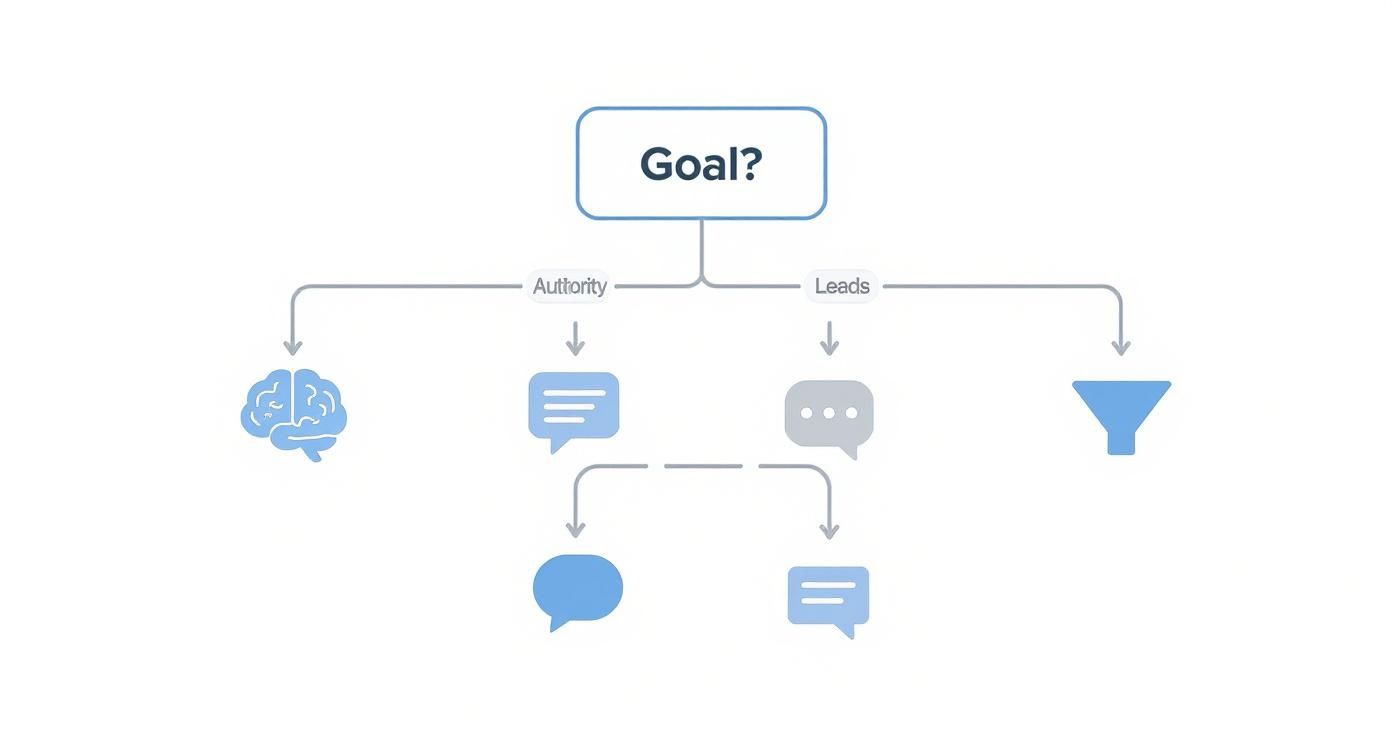
The flowchart makes it clear that whether you're aiming for authority, engagement, or direct leads, there's a specific content path to follow.
If you’re struggling to come up with posts that start these kinds of conversations, I’ve got your back. Why not Grab your free 30-Day LinkedIn Content Playbook and never run out of post ideas again.
Stop collecting connections like they’re Pokémon cards and start building real, valuable relationships. That’s how you win on LinkedIn.
How to Measure Your LinkedIn Marketing Success
Posting, connecting, and hoping for the best isn’t a strategy—it’s a guessing game. If you're putting in the work to grow your business on LinkedIn, you need to know what’s actually moving the needle. Flying blind is for the birds; we’re here to use data to get results.
Measuring your success isn’t about vanity metrics like likes and follows. It's about tracking the numbers that directly connect your activity to your bank account. Without this, you're just busy, not productive.
Key Performance Indicators to Track
Forget complicated spreadsheets. Just focus on a handful of metrics that tell you the real story of your return on investment (ROI). These are the numbers that prove your time on LinkedIn is actually paying off.
Start by tracking these essential KPIs every week:
- Profile Views: Who’s checking you out? A spike in views means your content and engagement are making people curious. You can find this right on your profile dashboard.
- Connection Acceptance Rate: What percentage of your connection requests are accepted? A high rate (over 30%) is a clear sign your targeting and messaging are on point.
- Content Engagement: Which posts are getting comments and shares? This isn't about likes; it's about the content that starts real conversations, which is a massive indicator of trust.
- Qualified Leads: This is the big one. How many genuine sales conversations or discovery calls did you generate from LinkedIn this week?
I remember writing my book Lockdown Took My Income in a frantic 24-hour sprint. It wasn't perfect, but it was done, and it got results. The lesson? Action and measurement beat perfectionism every single time. Track your numbers, see what works, and do more of that. It really is that simple.
Stop hoping and start tracking. It’s the only way to turn your LinkedIn efforts into a predictable, measurable growth engine for your business.
Frequently Asked Questions About LinkedIn Marketing
Alright, let's rip into a few of the curly questions I get asked all the time about using LinkedIn and marketing. No fluff, just straight answers to get you moving.
How Often Should I Post on LinkedIn?
Look, consistency beats frequency every day of the week. Aim for 3-5 high-quality, valuable posts per week.
It's far better to share three absolute rippers that get people talking than five mediocre ones that vanish into the void. The algorithm rewards regular activity, so find a rhythm that you can actually stick with and own it.
Do I Need a LinkedIn Company Page?
Honestly, your personal profile is where the real magic happens. People connect with people, not logos. That's where you'll build authority and genuine relationships.
However, a Company Page is still essential for brand legitimacy. It's your digital headquarters, a place to run ads, and showcase your business's services and culture. Keep it updated, but pour about 80% of your organic effort into your personal profile.
Is LinkedIn Premium Worth the Investment?
The free version of LinkedIn is more than powerful enough to get you started and land your first few clients. Once you've got a system that works and you're ready to scale, Sales Navigator is an absolute game-changer for serious lead generation.
But before you even think about spending a cent, your profile needs to be a client magnet. A flashy tool won't fix a dud shopfront. If your headline isn't stopping the scroll, nothing else matters. Feeling a bit stuck on that front? You can Steal my 50 best LinkedIn headlines — they're proven to attract clicks and clients.
It's all about mastering the basics first, then adding the fuel. Now get out there and give it a red hot go
