
That sinking feeling you get when you stare at an empty sales pipeline? It's a killer. Effective lead generation and nurturing are what fill that pipeline, turning a stranger's initial curiosity into a long-term, loyal client. It’s less about hard-selling and more about planting seeds, then giving them what they need to grow. This guide promises a clear, actionable solution to transform your approach.
Why Consistent Lead Generation and Nurturing Matters

For service-based businesses in Australia, a steady stream of good leads isn't just nice to have—it's the lifeblood of your business. Without it, you’re stuck in a reactive cycle of feast or famine, making predictable revenue feel like a pipe dream.
Consistent lead generation isn’t about chasing down every single enquiry. It’s about building a reliable system that consistently attracts the right kind of clients. This proactive approach flips the script, moving your business from a state of hopeful guessing to one of confident control. It means you can actually forecast revenue, plan for growth, and put your resources where they’ll make a real difference.
Building Trust Through Nurturing
Getting a lead is just the starting line. The real work—and the real magic—happens when you start nurturing that relationship. This is where you build trust and showcase your expertise by offering genuine value, long before you even think about asking for the sale.
Lead nurturing is all about developing a relationship with potential buyers at every stage of their journey. The goal is to educate and stay connected, so when they’re finally ready to pull the trigger, your business is the first one they think of.
Effective nurturing means you get what keeps your prospects up at night and you offer them real solutions. This could be through insightful blog posts, a genuinely helpful email newsletter, or a case study that speaks directly to their problems. Every single touchpoint is a chance to prove you understand their world. It makes the final sales conversation feel less like a cold pitch and more like a natural, logical next step.
To do this properly, you need to understand the path your customers take from stranger to client. That’s why learning what is customer journey mapping is an absolute must for any serious business owner.
The Foundation of a Healthy Sales Pipeline
When it’s all said and done, a solid commitment to both lead generation and nurturing creates a resilient sales pipeline that fuels your business day in, day out. It’s what keeps your sales team busy with a steady flow of engaged, informed prospects who are actually ready to talk.
This whole process transforms your marketing from a cost centre into a predictable revenue driver. To make sure your strategies are up to scratch, it's always smart to keep up with the latest lead generation best practices.
Common Lead Generation Roadblocks for Australian Businesses
Kicking off a lead generation strategy feels great, but it's not long before most businesses hit a few familiar, frustrating bumps in the road. For many Australian service businesses, the dream of a full sales pipeline gets stalled by the same old problems.
Spotting these obstacles is the first step. Once you know what they are, you can start building a system that actually brings in consistent, quality enquiries.
One of the biggest energy drains is chasing a flood of low-quality leads. It’s not just inefficient; it’s a killer for team morale. When your sales crew spends all day talking to people who can't afford your services, aren't ready to buy, or just aren't the right fit, motivation tanks and precious time goes down the drain.
The Great Sales and Marketing Divide
A classic roadblock is the friction between sales and marketing. Marketing works its socks off to generate leads, but if the sales team sees them as duds, a massive disconnect opens up. This misalignment creates a "leaky bucket" where good opportunities get lost.
Marketing might be high-fiving over hitting their lead quota, while sales is tearing their hair out over the poor quality. Without a shared definition of what a “good lead” actually is and a clear handover process, the two teams end up working against each other.
It’s a classic story: marketing has no idea why leads aren't converting because sales never tells them. This creates a painful feedback loop of frustration and wasted money, where marketing keeps making the same mistakes.
This chasm leads to wasted effort, missed revenue, and internal tension that grinds growth to a halt. Bridging this gap is non-negotiable if you want a customer acquisition engine that runs smoothly.
Data Accuracy and Privacy Compliance
Here in Australia, just managing your data is a challenge. Keeping a database clean and up-to-date is hard enough, but our strict privacy laws add a whole other layer of complexity. Using old or wrong information for your outreach doesn't just get you poor results—it can seriously damage your reputation.
And you can't afford to ignore compliance with regulations like the Privacy Act. The penalties are hefty, and the loss of customer trust can be permanent. A solid lead generation strategy is built on a foundation of clean, compliant data that lets you send the right message to the right person.
These issues are at the heart of what so many Australian B2B companies are up against. Low-quality leads, teams that don’t talk, and messy data are the main pain points, made even trickier by our privacy laws. You can find more insights on these B2B marketing challenges on marketingeye.com.au.
To get ahead, you have to tackle these three roadblocks head-on:
- Lead Quality: Stop focusing on quantity. Shift your efforts to attract prospects who are a genuine fit for what you do.
- Team Alignment: Get sales and marketing to agree on the rules of the game. A simple agreement on goals and processes makes all the difference.
- Data Integrity: Put strong data management and compliance practices in place. It protects your business and makes your campaigns work better.
By getting a handle on these specific hurdles, the strategies we'll cover next will give you a clear, practical path to follow.
How to Win Leads with Dominant Digital Channels
To turn your website into a lead-generating machine, you need to know which channels actually work. Success in lead generation and digital marketing isn't about being everywhere; it's about mastering the platforms where your ideal clients are already looking for solutions.
Let’s focus on three dominant channels that are absolute game-changers for Australian service-based businesses: LinkedIn, Google, and the often-underestimated world of influencer marketing. Each one offers a unique way to connect with high-intent prospects and build a pipeline you can count on.
To give you a clearer picture, let's compare these channels side-by-side.
Comparing Top Digital Lead Generation Channels
This table breaks down the primary digital channels for lead generation, highlighting their strengths, ideal use cases, and typical cost structures for Australian businesses.
| Channel | Primary Strength | Ideal For | Average Cost Model |
|---|---|---|---|
| High-quality B2B targeting | Service-based businesses, consultants, professional services | Pay-Per-Click (PPC) or Cost-Per-Mille (CPM) for ads | |
| Capturing high-intent search traffic | Businesses with a clear, problem-solving service offering | Pay-Per-Click (PPC) for ads, ongoing investment for SEO | |
| Influencer Marketing | Building trust through authentic partnerships | B2B and B2C businesses looking for quick brand authority | Flat fee per campaign, commission, or product exchange |
Mastering even one of these channels can make a significant difference, but a multi-channel approach often delivers the strongest, most sustainable results.
Master LinkedIn for B2B Connections
LinkedIn is so much more than a digital resume—it's the undisputed king of B2B lead generation in Australia. Success here comes from building a professional brand that pulls in decision-makers and using smart outreach to start genuine conversations.
Think of your profile as your digital storefront. It needs to scream who you help, what problems you solve, and the results you deliver. Ditch the boring job titles and write a headline that speaks directly to your ideal client's biggest headache.
Your LinkedIn profile is your 24/7 salesperson. It should be optimised not just to list your experience, but to convert visitors into warm leads by showcasing your authority and value.
Once your profile is sorted, it's all about outreach. This isn't about spamming connection requests. It’s about finding key decision-makers, engaging with their content thoughtfully, and then sending a personalised message that opens the door to a real conversation. For those looking to scale these efforts, our guide on LinkedIn ads offers deeper insights into reaching a targeted professional audience effectively.
Demystify Google for High-Intent Traffic
When potential clients have a problem, where do they go first? Google. Grabbing their attention at that exact moment is the key to filling your pipeline with prospects who are actively looking for a fix. This means a two-pronged attack: search engine optimisation (SEO) and targeted Google Ads.
SEO is your long game for pulling in high-quality organic traffic. It’s all about optimising your website content around the keywords your ideal clients are typing into that search bar. This means creating valuable blog posts, service pages, and case studies that answer their questions and position you as the go-to expert.
For more immediate results, Google Ads lets you jump right to the top of the search results. The secret is to target specific, high-intent keywords, not broad, expensive ones. For example, instead of "accountant Sydney," a much smarter keyword would be "small business tax accountant Sydney." This precision makes sure your ad spend is only attracting qualified leads who are ready to take action.
This chart shows what happens when you get your digital channels firing on all cylinders—a massive jump in conversions and a welcome drop in bounce rates.
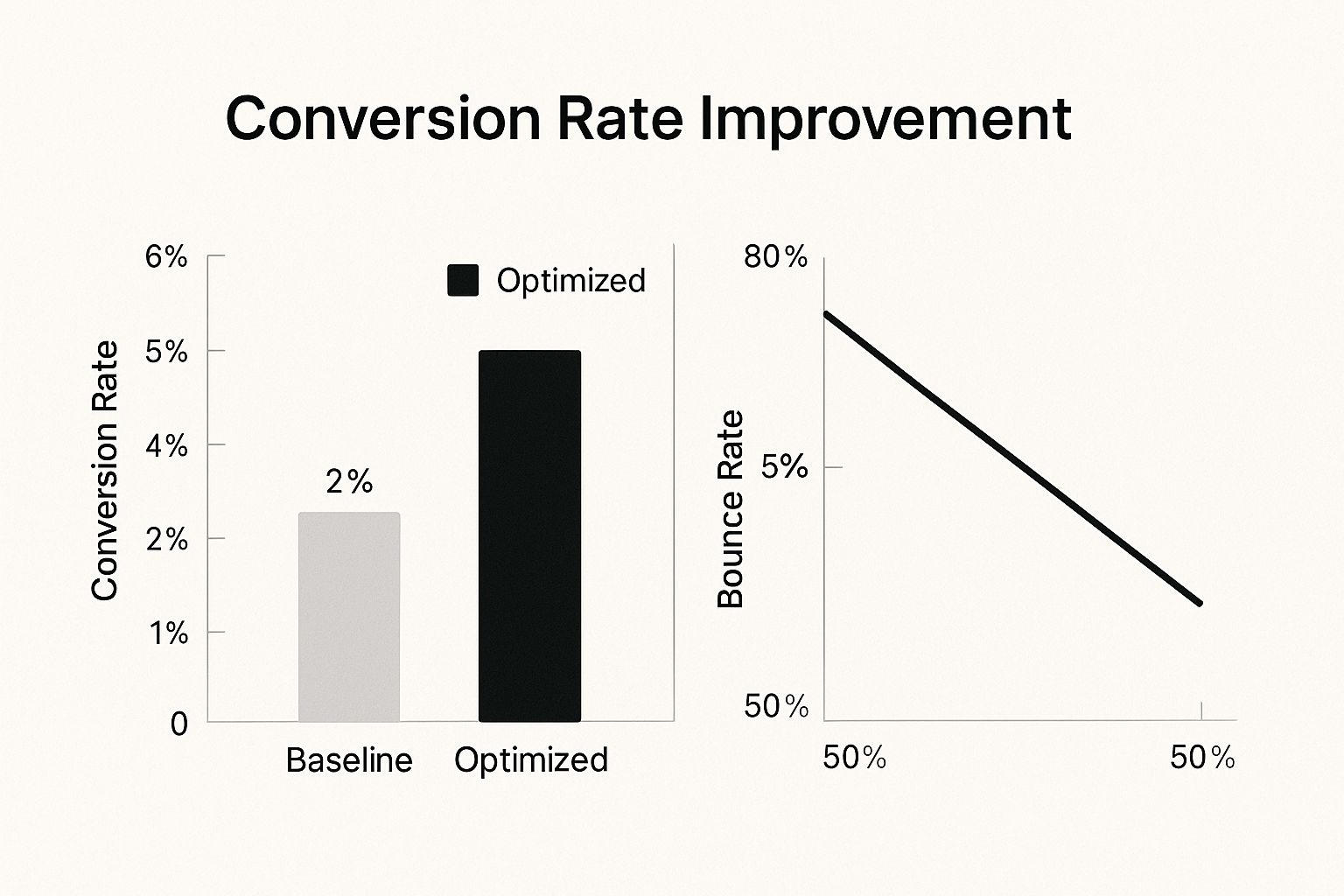
The data doesn't lie. A well-executed strategy does more than just attract visitors; it keeps them engaged and turns them into valuable leads.
Uncover the Power of Influencer Marketing
Influencer marketing is a seriously powerful channel for building trust and generating leads fast, especially here in Australia. It’s all about partnering with respected voices in your industry whose audience is a perfect match for your ideal customer. And no, this isn't just for fashion brands; B2B service businesses can get huge wins by partnering with industry experts, consultants, and thought leaders.
It's a channel that's booming for a reason. It’s projected that in 2025, Australian businesses will invest around AUD 929 million in influencer advertising. With roughly 46% of Australians having bought something based on an influencer recommendation, it's clear these partnerships directly drive sales and generate high-quality leads.
Here’s how to get started without the guesswork:
- Identify the Right Partners: Look for influencers whose values and audience are aligned with your brand. Authenticity beats a massive follower count every time.
- Define Clear Goals: Know exactly what you want to achieve, whether it's direct leads, webinar sign-ups, or just getting your name out there.
- Co-Create Valuable Content: Work with the influencer to create content that feels natural to their style but still communicates your value proposition effectively.
- Track Your Results: Use unique links or landing pages to measure the leads and conversions coming from each campaign. You need to know your ROI.
Integrating Human Touch with Modern Outreach
Digital channels are fantastic, but let's be honest—we're all drowning in automated messages and generic emails. In this sea of noise, a genuine human connection is what really cuts through. The smartest lead generation and nurturing strategies don’t just throw technology at the problem; they blend it with a personal touch to build actual relationships.
Think of it this way: instead of seeing email, LinkedIn, and phone calls as separate tools, view them as parts of a single, flowing conversation with your prospect. It’s about combining the efficiency of modern outreach with the irreplaceable value of a real human.
The Resurgence of Strategic Telemarketing
Forget everything you think you know about cold calling. We’re not talking about aggressive, robotic calls from a script. Modern telemarketing, especially when handled by professional local teams, is a powerful tool for building rapport and qualifying leads in a way that automation just can't touch.
A single, well-timed phone call can turn a lukewarm lead into a solid appointment. It’s your chance to listen to their specific problems, answer questions on the spot, and build a level of trust that a dozen emails could never achieve.
The goal isn't to ambush someone into a sale. It's to start a real conversation, figure out their needs, and see if there's a genuine fit. It saves everyone a whole lot of time.
This human element is especially crucial in the Australian market. Using local telemarketers with neutral Australian accents creates an instant connection and avoids that immediate wall that goes up with offshore call centres. It’s about building trust from the very first "hello."
Creating a Multi-Touch Nurturing Sequence
An outreach campaign that actually works coordinates multiple touchpoints across different channels. This creates a consistent, respectful presence that keeps your brand top-of-mind without being annoying.
Here’s a simple framework for what this looks like in practice:
- Initial Digital Engagement: Kick things off with a personalised LinkedIn connection request or a value-packed email. Mention a shared connection, recent company news, or a piece of content they’ve engaged with.
- The Strategic Follow-Up Call: A few days later, a professional telemarketer calls. The aim isn't to pitch hard, but to follow up on the initial message, introduce the company, and see if there's any interest in a proper chat.
- Value-Added Nurturing: Based on what you learned from the call, send a follow-up email with a relevant case study or blog post that addresses something they mentioned. This proves you were actually listening.
- Final Appointment Setting: A final, quick call can then be made to lock in a formal appointment or demo, handing a warmed-up, qualified lead over to your sales team.
This approach feels consultative and personal, not robotic or pushy.
One Australian company saw incredible results with this exact strategy. Over just three months, their partnership with professional telemarketers led to 1,200 outbound calls, which generated 250 qualified leads and 45 appointments with key decision-makers. The result? A stunning 35% conversion rate from appointment to the proposal stage. It’s proof that mixing smart telemarketing with digital outreach dramatically speeds up the sales cycle.
You can dive deeper into these highly effective lead generation strategies that work in 2025. By combining human interaction with smart automation, you create a powerhouse system that lands better appointments and closes deals faster.
Leveraging AI and Automation to Scale Your Efforts
As your business grows, trying to manage every single lead by hand becomes a fast track to burnout. The real challenge is clear: how do you scale up your lead generation and nurturing without hiring a massive team?
The answer is to work smarter, not harder. By bringing in artificial intelligence (AI) and automation, you can handle all the repetitive, time-sucking tasks. This frees you up to focus on what really matters: building high-value client relationships.
These tools aren't just for the big end of town anymore. For service-based businesses in Australia, they’re practical solutions that save hundreds of hours, make sure no lead is ever missed, and deliver a personalised touch that builds trust at scale.
Introducing AI-Powered Lead Scoring
Let's be honest—not all leads are created equal. Some people are ready to buy right now, while others are just kicking tyres. AI-powered lead scoring automatically analyses what a prospect does—like visiting certain website pages, opening emails, or downloading a guide—to tell you who’s hot and who’s not.
Think of it as your own intelligent assistant, constantly watching your pipeline and flagging the prospects most likely to convert. This means your team can stop wasting time on lukewarm leads and put their energy where it has the most impact: closing deals with people who are actually ready to talk.
This data-driven approach takes the guesswork out of sales. For a deeper dive into how AI can seriously upgrade your outreach, check out resources like this article on AI-Powered Lead Generation.
Automating Engagement with Chatbots
Your website is your 24/7 storefront, but what happens when a potential client drops by after hours? AI-powered chatbots can engage visitors around the clock. They answer common questions, qualify leads, and even book appointments for you while you’re asleep.
A modern chatbot can:
- Answer FAQs Instantly: Free up your team from typing out the same answers over and over again.
- Qualify Visitors: Ask a few smart questions to figure out if someone is a good fit for your services.
- Book Meetings: Link directly to your calendar and schedule consultations with qualified leads on the spot.
This kind of instant engagement stops potential clients from bouncing off your site and heading straight to a competitor. It’s a seamless experience that ensures you capture every single opportunity, no matter the time of day.
Nurturing Leads on Autopilot
Marketing automation platforms are the engine room of a modern lead generation system. They let you build smart email sequences that automatically nurture leads from the moment they first connect with you until they’re ready for a sales call.
For example, when someone downloads a guide from your site, an automated workflow kicks in. The system can send a series of personalised, value-packed emails over a few weeks, educating the prospect and building trust—all without you lifting a finger.
Marketing automation isn’t about sending robotic, generic emails. It’s about delivering the right message to the right person at the right time, creating a personalised journey that guides them naturally toward a solution.
These automated sequences ensure consistent follow-up, which is where so many businesses drop the ball. By putting the nurturing process on autopilot, you guarantee no lead ever falls through the cracks, which dramatically lifts your conversion rates over time. To learn more, explore our guide on marketing automation for small business and see how you can put these powerful systems to work.
By weaving AI and automation into your process, you build a robust, efficient lead generation machine that works for you tirelessly in the background. It allows you to do more with less, turning your marketing into a predictable and scalable source of revenue.
Turning Leads into Loyal Customers with Smart Nurturing

Getting a new lead is a great start, but it’s just that—a start. The real magic in growing a service business happens in the follow-up, and that’s where smart nurturing comes in. This is the process of building a genuine relationship with a prospect, guiding them from that first flicker of interest to a confident "yes".
Let’s be honest: without a solid nurturing plan, even the best leads go cold. This is your chance to prove you understand their problems, build trust, and show them you’re the expert they’ve been looking for. Get it right, and you don’t just get a new client; you get a loyal advocate for your brand.
Mapping the Customer Journey
To send the right message at the right time, you need to walk a mile in your customer's shoes. Mapping the customer journey helps you see every single touchpoint, from the moment they first hear about you to the day they sign the contract.
Think of it as a roadmap. It helps you anticipate their questions and deliver content that actually solves a problem for them, right when they need it. Are they just figuring out they have an issue, or are they already comparing you to a competitor? The answer changes everything. A one-size-fits-all approach just doesn't cut it anymore.
Lead nurturing is about being a helpful guide, not a persistent salesperson. By aligning your content with their journey, you build credibility and ensure your business is the obvious choice when they're ready to act.
Providing Genuine Value Through Content
The best nurturing sequences are built on content that serves, not sells. Your main goal is to educate and empower your leads, solving small problems for them along the way. This is how you build serious trust and position yourself as the go-to authority in your field.
Of course, different types of content work better at different stages. The trick is to match what you’re sending to where the prospect is at mentally.
Matching Content to Lead Nurturing Stages
To make this crystal clear, here’s a simple table mapping content types to the different stages of the sales funnel. It's a great cheat sheet for building out an effective lead nurturing strategy.
| Funnel Stage | Goal | Recommended Content Types |
|---|---|---|
| Top of Funnel (Awareness) | Educate and attract a broad audience | Helpful blog posts, infographics, and social media updates that address common pain points. |
| Middle of Funnel (Consideration) | Build trust and showcase expertise | In-depth case studies, insightful webinars, and downloadable guides that offer detailed solutions. |
| Bottom of Funnel (Decision) | Encourage action and close the deal | Free consultations, personalised demos, detailed proposals, and compelling client testimonials. |
By tailoring your content, you meet your leads exactly where they are, giving them the confidence to take the next step with you.
Optimising for Conversion
Finally, every piece of your nurturing strategy should gently point leads toward the next logical step. This is where conversion rate optimisation (CRO) comes into play. You’d be surprised how small tweaks to your landing pages and calls-to-action (CTAs) can have a massive impact.
Make sure your CTAs are impossible to misunderstand. Instead of a vague "Click Here," use action-packed phrases like "Get Your Free Consultation" or "Download the Guide Now". On your landing pages, cut the clutter. Make it incredibly simple for people to do what you want them to do.
When you combine a deep understanding of your customer's journey with high-value content and sharp CTAs, you create a powerful system. It’s a framework that not only turns leads into customers but also builds the foundation for long-term loyalty.
Your Lead Generation Questions Answered
Jumping into the world of lead generation and sales always brings up a few questions. To help you put these strategies into action with confidence, we’ve put together answers to the most common queries we hear from Aussie business owners.
Think of this as your go-to guide for clear, straightforward answers.
What Is the Difference Between an MQL and an SQL?
This is a big one, and getting it right is key. A Marketing Qualified Lead (MQL) is someone who’s shown some interest but isn’t ready to talk sales just yet. Maybe they downloaded an ebook or signed up for your newsletter. They’re browsing, not buying.
A Sales Qualified Lead (SQL) is different. They’ve been vetted and are showing clear signs they want to buy. They might have asked for a demo or filled out a form to get your pricing. This is the person who walks up to the counter, ready to go. Nailing this distinction is how you get your sales and marketing teams working together seamlessly.
How Long Is a Typical B2B Sales Cycle in Australia?
Honestly, it varies wildly. The length of a B2B sales cycle in Australia really depends on how complex and expensive your service is. It could be a couple of weeks for simple, low-cost services, or it could stretch out for over six months for high-ticket solutions that need a sign-off from multiple decision-makers.
The whole point of the strategies in this guide—from smart digital outreach to consistent nurturing—is to shrink that cycle. When you build trust and qualify leads properly from the get-go, you speed up the journey from that first hello to a done deal.
How Much Should My Business Budget for Marketing?
A good rule of thumb for established businesses is to set aside 5-12% of total revenue for marketing. But that’s just a starting line. The number that really matters is your Customer Acquisition Cost (CAC) versus the Lifetime Value (LTV) of a customer.
This simple calculation tells you if what you’re spending is actually making you money. You’re looking for a healthy LTV-to-CAC ratio (ideally 3:1 or higher). This proves your investment in lead generation is delivering a solid, sustainable return and building a profitable growth engine, not just burning cash.
Ready to stop guessing and start building a predictable pipeline of high-quality leads? At Homer Digital Marketing, we implement proven systems that attract your ideal clients and turn them into loyal customers.
Book a no-obligation discovery call today and let’s build a growth strategy that gets real results for your service business.
