

As a service-based business owner, you know the truth: the quality of your clients sets the tone for your entire business. Getting stuck in the endless cycle of chasing low-value leads is exhausting and, frankly, a terrible business model. So many of us fall into that trap.
Real, sustainable growth isn't about landing just any client. It's about attracting the right ones—the people who become genuine partners in your success.
Why Attracting the Right Clients Is Your Best Growth Strategy

Too many business owners treat getting new clients like a pure numbers game. More leads, more sales calls, more proposals sent out. But this grind usually just leads to burnout, scope creep, and profit margins so thin you can see through them.
The problem isn't a lack of sales hustle; it's a lack of strategy. Attracting high-value clients is about positioning, not persuasion.
Think about it like building a championship sports team. You don't just sign any player who can run. You hand-pick players who fit the team's culture, share the vision, and make everyone else on the field better. It's the same for your business. A truly successful service business is built on a foundation of ideal clients who get your value, respect your expertise, and grow with you.
A high-value client isn't just another transaction; they're a strategic partner. They see the value you bring, they work with you, and they end up becoming your biggest advocates, fuelling the kind of growth that actually lasts.
This guide is designed to be your roadmap. We’re moving past the fluff and getting straight into a clear, actionable plan to turn your business from a lead-chasing machine into a magnet for your ideal clients.
What You Will Learn
Inside this guide, we'll show you exactly how to:
- Define and understand what a modern high-value client actually looks like and what makes them tick.
- Create a precise Ideal Client Profile (ICP) so you can stop guessing and start focusing your marketing.
- Implement proven strategies to attract these clients without having to chase them down.
- Master client retention to build profitable partnerships that stand the test of time.
By shifting your focus from quantity to quality, you can build a business that’s more resilient, more fulfilling, and a whole lot more successful. Let’s start by digging into what makes a modern client truly valuable.
Getting Inside the Head of a Modern High-Value Client
To bring in high-value clients, you first need to get a crystal-clear picture of who they are and what actually makes them tick. The game has changed. Today’s premium client isn’t just looking for someone to do a job; they’re hunting for a strategic partner who can deliver real, measurable results and become a core part of their success story.
This shift in what they expect is everything. Just delivering a service isn’t enough anymore. The modern client is after a collaborative relationship built on trust, straight-up transparency, and a clear return on their investment (ROI). They’re smart, they’ve done their research, and they expect you to understand their business inside and out before you even think about working together.
The Shift from Transaction to Partnership
Think about it like this: what’s the difference between a one-off stockbroker and a long-term financial advisor? The stockbroker is purely transactional. They execute a trade for you, and that’s where the relationship ends. The value is instant but limited. That's the old way of doing things.
A financial advisor, on the other hand, builds a genuine partnership. They invest time in understanding your goals, your appetite for risk, and your vision for the future. Their advice isn't a one-shot deal; it's ongoing, strategic, and adapts as your life changes. This is exactly the role a high-value client needs you to fill. They aren't just buying a task; they're investing in an outcome.
The best clients don't see your expertise as another expense to be cut. They see it as an investment that’s going to generate a massive return. This mindset completely flips the script, turning you from a simple vendor into an indispensable partner.
Getting this right is crucial if you want to build a stable, predictable business. Transactional clients create a feast-or-famine rollercoaster, leaving you constantly chasing the next sale. But partnerships? They create predictable revenue, build fierce loyalty, and bring in the best kind of marketing there is: powerful word-of-mouth referrals.
What Really Drives a High-Value Client
If you want to attract them, you have to understand the psychology behind their decisions. High-value clients are motivated by a handful of key factors that go way beyond the price tag.
- A Clear ROI: They need to see a direct line connecting what you do to their bottom line. Vague promises won’t cut it. They want to see the data, the case studies, and a straightforward explanation of how you'll move the needle on their key performance indicators (KPIs).
- Deep Expertise and Authority: They’re looking for specialists, not jacks-of-all-trades. They are drawn to businesses known as the go-to experts in their niche, backed up by insightful content, industry recognition, and solid social proof.
- Efficiency and Trust: Time is their most precious resource. They need professionals who are organised, communicate proactively, and can be trusted to run with a project without needing their hand held. Building that trust is non-negotiable.
- Strategic Input: They don’t want a “yes-person.” They value a partner who will push back, challenge their assumptions, offer fresh perspectives, and genuinely contribute to their strategic goals. You need to act like a true extension of their team.
These drivers are particularly relevant here in Australia. Recent figures show that consumer spending hit a record AUD 333.17 billion in a single quarter. This tells us the money is there, but businesses are being incredibly selective about where it goes. They're prioritising value and proven results above all else. You can dig into the specifics in the Australian consumer spending report.
Ultimately, attracting these top-tier clients starts right here. When you know what they value, what keeps them up at night, and what they’re trying to achieve, you can shape your messaging, your services, and your entire business model to meet them where they are. That's how you stop being just another option and become the only logical choice.
How to Create Your Ideal Client Profile
Knowing who your ideal clients are in your head is one thing. Actually documenting that knowledge is where the real magic happens. This is what an Ideal Client Profile (ICP) is for.
Think of it like a detective's profile on a person of interest—the more specific details you have, the easier it is to spot them in a crowd. Creating an ICP stops you from guessing and moves you toward a smart, data-driven strategy. It’s a living document that acts as a compass for every marketing, sales, and service decision you make.
When you know exactly who you're talking to, your messaging gets sharper, your offers become irresistible, and your efforts are far more efficient.
This infographic breaks down how a solid client profile builds a foundation for a trusting and mutually beneficial partnership.
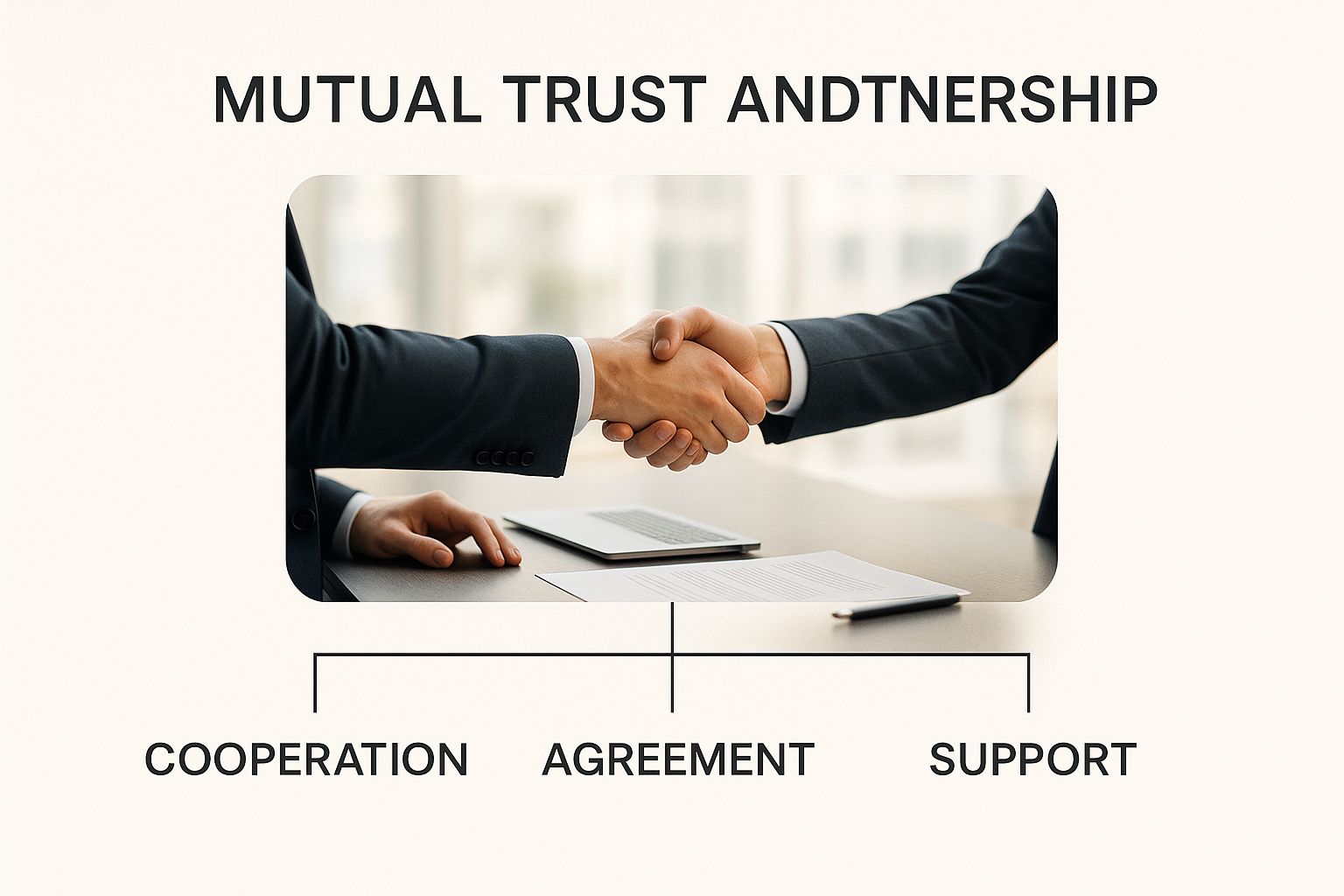
By visualising the journey from identifying key attributes to cementing that partnership, you can see how every piece of information contributes to a stronger, more profitable relationship.
Start with Your Best Existing Clients
The quickest way to build your ICP is to look at the best clients you already have. These are the ones who truly value your work, always pay on time, and are an absolute pleasure to partner with. They hold the blueprint for who you should be targeting next.
Your mission is to find the common threads that tie them all together.
Start by digging into your own data. Your CRM, project management tools, and even your accounting software are goldmines. Look for patterns in their industry, company size, revenue, and which of your services they buy most often.
Your best clients are more than just a source of revenue; they are a live case study of your ideal market fit. Analysing them reveals the precise pain points you solve and the value you deliver most effectively.
This analysis helps you move beyond assumptions and build a profile based on proven success. It's the difference between hoping the right people find you and strategically placing your business directly in their path.
Gather Deeper Intelligence
Once you’ve crunched the internal numbers, it’s time to get qualitative insights. This is where you uncover the why behind their decisions. Simple, actionable methods include structured interviews, short surveys, and a bit of online sleuthing.
- Conduct Short Interviews: Ask 3-5 of your best clients for a quick 15-minute chat. Prepare questions that dig into their goals, their biggest challenges before they hired you, and what they value most about working with you.
- Send Targeted Surveys: Use a simple tool like Google Forms to ask specific questions. Focus on how they make decisions, where they look for information, and what their main business goals are for the next year.
- Review Their Online Footprint: Check out their LinkedIn profiles, company websites, and industry news. This helps you understand their professional language, key priorities, and how they present themselves to the world.
These steps are crucial for seeing the full picture. The data you gather here will help you map their motivations and decision-making processes, which is essential for effective marketing. For a deeper dive, you can learn more about what is customer journey mapping and how it can seriously refine your client acquisition strategy.
Build Your Actionable ICP Document
Okay, now it's time to pull it all together into a clear, one-page document. This isn't just a box-ticking exercise; it's a practical tool your entire team can use to stay aligned. Your ICP should be specific, covering key firmographic, psychographic, and behavioural details.
Use this framework to gather and organise key data points about your best clients, helping you create a precise and actionable profile for your marketing and sales efforts.
Ideal Client Profile (ICP) Builder
| Attribute Category | Key Questions to Ask | Example Data Point (for a B2B Marketing Agency) |
|---|---|---|
| Firmographics | What industry are they in? How big is their company (employees/revenue)? Where are they located? | Professional Services, 5-20 employees, based in Sydney. |
| Role/Title | What is the specific job title of the decision-maker you work with? Who signs off on the invoice? | "Founder," "Managing Director," or "Marketing Manager." |
| Goals & Objectives | What are they trying to achieve in their business right now? What does success look like for them? | "Increase qualified leads by 20% in the next 6 months." |
| Challenges & Pain Points | What specific problem keeps them up at night? What frustration led them to you? | "We don't have the time or expertise for consistent marketing." |
| Watering Holes | Where do they get their information? What blogs, podcasts, or events do they follow? | Listens to the My Business podcast, active on LinkedIn. |
| Quotes | What are some direct quotes from your client interviews that capture their mindset? | "I just need someone I can trust to handle it so I can focus on running the business." |
With this completed profile, you have a powerful filter for every business decision, ensuring you attract only the clients who are the perfect fit for what you do best.
Proven Strategies for Attracting Your Ideal Clients
Okay, so you’ve got your Ideal Client Profile locked in. Think of it as your business’s North Star. Now it’s time to stop chasing leads and start building a brand that pulls those perfect clients right to you.
The goal here is to make the whole sales process feel less like a hunt and more like a natural conversation. You want to be the solution they're actively searching for, not another interruption in their day.
This means every blog post, every social media update, and every conversation you have needs to speak directly to the challenges and goals you mapped out in your ICP. When you get this right, you’ll find that bad-fit enquiries fade away, and the high-value prospects you really want feel like they’ve finally found what they’ve been looking for.
Position Yourself as an Authority with Value-Driven Content
Just saying "do content marketing" is lazy advice. To attract high-value clients, you need to create content that solves their biggest problems before they even think about hiring you.
Instead of pumping out random blog posts, focus your energy on creating a "pillar page." This is a seriously in-depth guide covering a core topic your ideal client needs to master. For a marketing agency targeting small businesses, this might be the ultimate guide to local SEO. This one monster resource becomes the central hub you can link to from smaller blog posts, social media, and emails.
Content isn't about filling a calendar; it's about proving your value upfront. When a potential client reads your stuff and has that 'aha!' moment, you’ve already won half the battle. You’re no longer a salesperson; you’re a trusted advisor.
This approach builds rock-solid credibility and trust. It also does wonders for your SEO, helping you show up for the exact search terms your ideal clients are typing into Google when they’re stuck.
Leverage Strategic SEO and Digital Platforms
Your ideal clients are already online, searching for answers. Your job is to make sure it’s you they find. This takes a targeted SEO approach and a smart presence on the right platforms.
The digital marketplace in Australia is buzzing. The number of monthly online shoppers shot up by 45%, from 11.78 million in 2020 to 17.08 million by 2024. That’s a massive shift, and it confirms that a strong online presence isn't just nice to have—it's non-negotiable.
Here’s how to get your digital touchpoints aligned:
-
Optimise Your Website: Your website is your digital shopfront. Make sure your homepage, services pages, and case studies speak directly to the pain points of your ICP. Use their language and show them the results they actually care about.
-
Master Your LinkedIn Profile: For most service businesses, LinkedIn is where the action is. Your profile shouldn’t read like a CV; it should be a sales page. Optimise your headline and summary to scream, "This is who I help and this is the problem I solve." For a deeper dive, our guide on using LinkedIn Sales Navigator will give you a serious competitive edge.
-
Gather Social Proof: High-value clients want proof you can deliver. Make it a system to collect and showcase testimonials, case studies, and reviews. Don't leave it to chance. For some practical tips, check out this guide on creating a high-converting client testimonial form.
Engage in Targeted Networking
Don't forget the power of good old-fashioned human connection—but be strategic about it. Ditch the generic networking events and focus on the "watering holes" where your ideal clients actually hang out.
This could mean joining niche online communities, getting active in industry-specific forums, or showing up at conferences that your ICP wouldn't miss. The goal isn't to pitch everyone in the room. It's to listen, add value, and build real relationships.
Answer questions. Share insights. Be genuinely helpful. When you consistently show up as an expert who’s there to contribute, the right clients will naturally come to you when they're ready to buy. It’s a patient, value-first approach that builds a pipeline of leads who are already sold on you.
Mastering Client Retention to Build Lasting Partnerships

Getting your ideal clients through the door is a huge win, but let's be honest—that’s only half the game. The real, sustainable growth and stability for your business comes from keeping them around for the long haul.
Client retention is more than just stopping people from leaving. It’s about consciously shifting the relationship from a simple transaction into a genuine, mutually beneficial partnership. This is where the most successful businesses truly shine, creating predictable revenue, generating powerful word-of-mouth referrals, and building a rock-solid brand reputation.
The Foundation: A Flawless Onboarding Process
The first 90 days with a new client sets the tone for everything that comes next. A messy or confusing start breeds doubt, while a smooth, professional onboarding process builds immediate confidence. It’s your first and best chance to prove they made the right choice.
A great onboarding experience isn’t just about getting the paperwork signed. It’s a strategic framework designed to align expectations, clarify how you’ll communicate, and show your value right from day one.
Here’s what a powerful onboarding process should include:
- A Welcome Kit: Send a professional package (digital is fine!) that outlines your processes, who to contact for what, and what they can expect from you.
- A Kick-Off Meeting: Host a structured meeting to lock in goals, define key performance indicators (KPIs), and agree on a communication rhythm that works for everyone.
- Clear Next Steps: Make sure the client walks away knowing exactly what happens next and what you need from their side to get the ball rolling.
This initial phase is absolutely critical for turning new clients into long-term partners who feel secure, heard, and understood.
Proactive Communication and Adding Unexpected Value
Once a client is officially on board, the real work begins. The secret to keeping them happy is moving beyond just reacting to their requests. You need to be proactive. This means anticipating their needs, spotting opportunities for them, and consistently adding value that goes beyond the original scope of your contract.
Think of it as being a strategic advisor, not just a task-doer. Anyone can complete a to-do list. A true partner thinks ahead.
Building immense loyalty often comes from small, consistent actions. Sharing a relevant industry report you found, scheduling a quick strategic review to discuss new ideas, or simply checking in to see how their business is going can transform your role from a service provider to a vital part of their team.
This proactive approach is especially important in Australia. Research shows that for complex issues, a massive 80% of Australian clients prefer speaking to a real person. On top of that, 46% rank getting their problem solved on the first try as their number one priority. It’s a clear signal that people want attentive, human service that actually works.
Turning Clients into Powerful Advocates
Ultimately, the goal is to create advocates—clients so thrilled with your service they become your best marketing channel. These are the people who not only stay with you for years but also actively send new business your way without you even asking.
To get to this point, you need to deliver exceptional results consistently and build genuine relationships. Make them feel like a VIP, celebrate their wins as if they were your own, and show them you’re truly invested in their success. Managing this effectively is where strong Customer Relationship Management strategies come in, helping you track interactions and keep service levels high.
Finally, never forget that your online reputation is a core part of keeping clients happy and attracting new ones. A strong reputation reinforces the trust you've worked so hard to build. You can learn more in our expert guide on reputation management for small businesses to protect and grow your brand image.
Building a Business That Runs on Great Clients
Let’s be honest. Building a successful service business isn’t about chasing every single lead or desperately trying to land the next big contract. That’s a recipe for burnout.
The real secret is making a deliberate shift: stop chasing transactions and start building partnerships. Lasting, profitable growth is built on a foundation of high-quality clients—the ones who value your expertise, respect your process, and actually grow with you.
When you get this right, you’re back in control. You move from a reactive, unpredictable sales cycle to a proactive one where you attract the right people. Your business stops being a machine that chases leads and becomes a magnet for your ideal partners. It’s all about creating a brand that naturally repels the time-wasters and resonates with the exact people you love to work with.
The Path to Better Clients is Simpler Than You Think
We've walked through the key steps to make this happen, giving you a clear roadmap to attract and keep the best in the business.
-
Know Who You’re Talking To: It all starts with understanding what a modern, high-value client really wants. They’re not looking for a simple service provider; they need a strategic partner who delivers a tangible return on their investment.
-
Build Your North Star: Next, you learned how to create a data-driven Ideal Client Profile (ICP). This isn’t just a nice-to-have document; it's your compass, making sure every marketing dollar and sales effort is aimed with precision.
-
Attract, Don’t Chase: With your ICP sorted, we looked at proven strategies to draw these dream clients to you. Think value-packed content, smart digital positioning, and networking that actually works.
-
Turn Clients into Raving Fans: Finally, we focused on the art of retention. It’s about turning a new client into a long-term, profitable relationship through a flawless onboarding process and proactive communication.
When you master this process, you’re no longer just selling a service; you're curating a portfolio of high-value partnerships. This is the key to a business that's not only more profitable but also more predictable and way more enjoyable to run.
Your First Step Starts Now
Knowledge is great, but it’s useless until you put it into action. The gap between a business that’s just getting by and one that’s truly thriving often comes down to taking that first, decisive step. Don't let this guide become just another open browser tab.
Your challenge is simple: choose one strategy from this article and commit to implementing it this week.
Maybe it's scheduling 15-minute chats with your top three clients to sharpen up your ICP. Or perhaps it’s tweaking your LinkedIn headline to speak directly to them. Whatever it is, take concrete action now.
This single step is your launchpad. By consistently applying these principles, you’ll build a client list that doesn’t just fuel your growth but makes your work genuinely fulfilling. The power to create a thriving, client-centred business is completely in your hands.
Got Questions About Managing Clients? We’ve Got Answers.
Running a service business is all about relationships. But let's be honest, those relationships can sometimes get tricky. Here are some straight-talking answers to the questions we hear most often from business owners about handling their clients.
What’s the Real Difference Between a Client and a Customer?
It’s easy to use these words interchangeably, but for a service business, the distinction is crucial.
A customer is usually transactional. They buy a product or a one-off service, the exchange is brief, and that’s often the end of it. Think of buying a coffee.
A client, on the other hand, is in a relationship with you. This is a long-term partnership built on trust, expert advice, and ongoing work. For service businesses, nurturing clients isn't just nice—it's the backbone of your business, leading to stable recurring revenue and powerful word-of-mouth referrals.
How Do I Fire a Client Without Burning Bridges?
Ending a client relationship can be stressful, but it doesn’t have to be a disaster. A professional, structured approach will protect your reputation and your sanity. First up, check your contract for any termination clauses you need to follow. Don't skip this step.
Next, schedule a calm, direct conversation. The key is to explain that the partnership is no longer a good fit for your business direction, without placing blame. Keep it focused on business needs, not personalities. From there, give them a clear offboarding plan, finish any work you’ve already agreed to, and if you can, recommend another provider. The goal here is a clean and respectful separation.
How Often Should I Actually Talk to My Clients?
The simple answer? Proactively and consistently. Don't wait for them to chase you. It's smart to set a clear communication schedule right from the start, like weekly email updates or a fortnightly check-in call.
The real secret isn't just the frequency of your communication, but its consistency and value. A quick, relevant email sharing an industry article can do more to reinforce your role as a trusted partner than a long report filled with jargon.
This steady rhythm of valuable contact is what builds the strongest, most resilient client relationships over time.
What Are the Early Warning Signs of a Bad Client?
The red flags almost always show up early. You just have to know what to look for. Be wary of anyone who haggles excessively over your prices or shows a clear lack of respect for your time and boundaries—like calling you constantly after hours.
Other big warning signs include a project scope that's vague or always changing, or a reluctance to sign a clear, detailed contract. Trust your gut. These early indicators are rarely wrong and paying attention to them can save you a world of stress down the line.
Ready to stop chasing leads and start attracting your ideal clients? Homer Digital Marketing uses proven strategies to build your authority and create automated systems that bring high-value partnerships directly to you. Book a discovery call today and learn how we can help you scale your service business.
