
Are you tired of sending out marketing emails that get ignored? It’s a common frustration in the auto industry, but what if there was a proven way to turn your email list into a powerful engine for sales and service appointments? Effective automotive email marketing is about connecting directly with your leads and customers through targeted messages. It’s a powerful way for dealerships, service centres, and auto brands to send service reminders, special offers, and new vehicle information. The goal is to build relationships that drive real business results, and this guide will show you exactly how to do it.
Building Your Foundation for High-Performance Emails
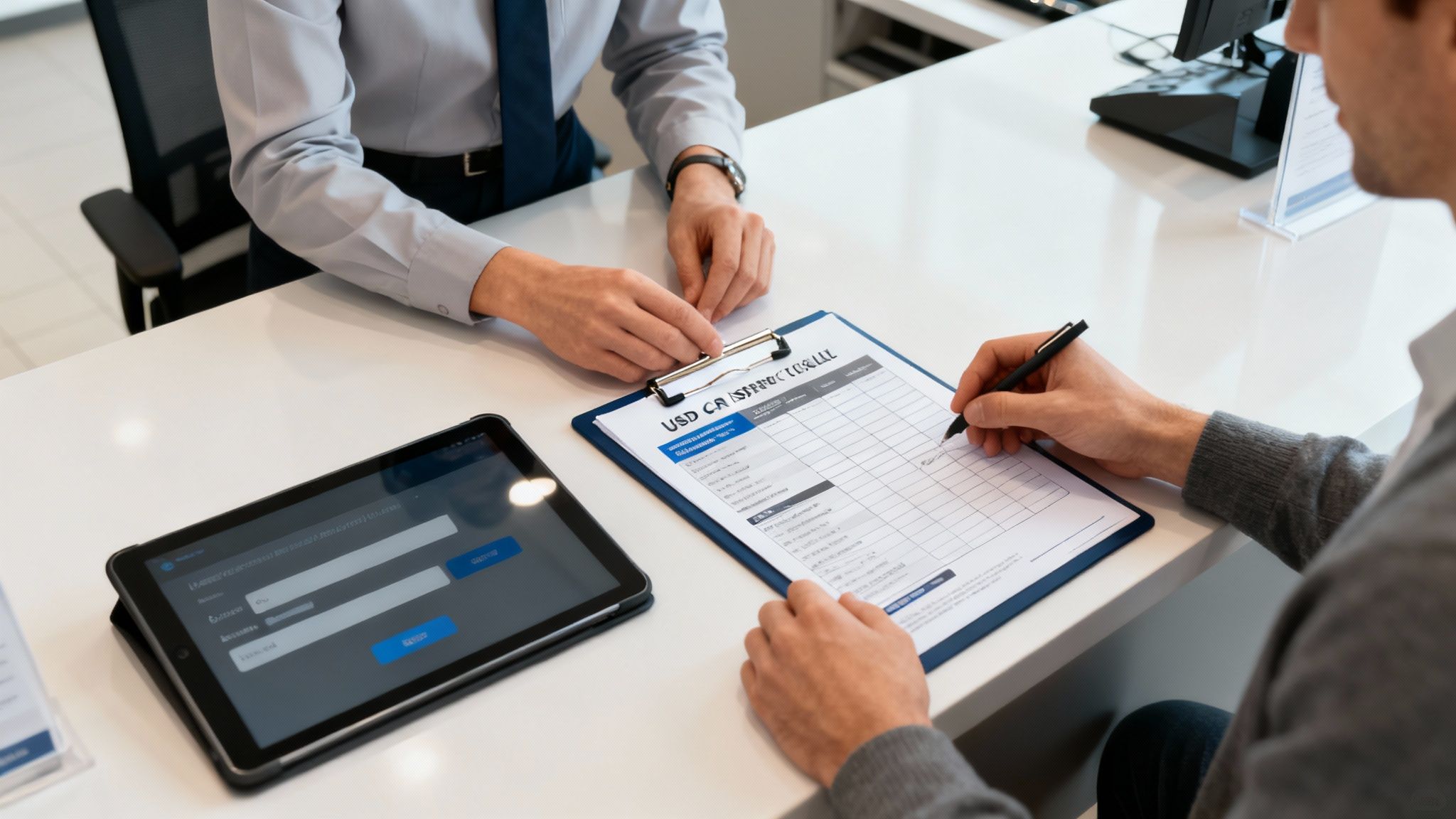
Before you even think about sending your first campaign, you have to get the foundations right. A killer email program isn't just about blasting out emails; it’s about systematically gathering quality leads, picking the right tools, and knowing the core rules that get your messages seen. If you skip this groundwork, even the best-written email campaign will fall flat.
Everything starts with your email list. A simple "subscribe to our newsletter" form on your website is a decent start, but it’s rarely enough to pull in high-intent leads. You need to look at every single customer touchpoint as a chance to grow your list.
Expanding Your Lead Capture Strategy
The best way to grow your list is to weave lead capture into your everyday operations. Forget just relying on your website—think about all the in-person and digital moments you have with customers.
- Service Centre Check-Ins: This is a no-brainer. Train your service advisors to ask every customer if they’d like to get their service reminders and exclusive maintenance deals via email. They’re already engaged and the offer is genuinely helpful.
- Post-Test Drive Follow-Ups: After someone takes a car for a spin, have your sales team grab their email to send over the vehicle specs, financing options, or even just a simple thank-you note. It keeps the conversation going.
- In-Showroom QR Codes: Stick QR codes on vehicle windows or in the customer lounge. Link them to a sign-up form for new model alerts or invites to your next VIP sales event.
These tactics capture leads who’ve already shown real interest in what you offer, making them infinitely more valuable than a cold contact from a purchased list.
Creating Lead Magnets Car Buyers Actually Want
To get people to hand over their email address online, you’ve got to give them something valuable in return. A generic discount is okay, but a tailored resource that solves a real problem for a car buyer? That’s far more effective.
Key Insight: A strong lead magnet should address a key pain point or question in the customer's journey. It positions your dealership as a helpful expert, not just a seller, building trust from the very first interaction.
Think about creating content that helps your audience feel more confident in their decisions. Here are a few ideas that work wonders for automotive businesses:
- "Used Car Inspection Checklist": A simple, downloadable PDF that walks buyers through what to look for when checking out a pre-owned vehicle.
- "The Ultimate Guide to Trading In Your Vehicle": An eBook explaining how trade-in values are calculated and, more importantly, how to maximise their car's worth.
- "Financing 101: Demystifying Car Loans": A jargon-free guide that breaks down interest rates, loan terms, and credit scores.
Choosing the Right Email Service Provider
Your Email Service Provider (ESP) is the engine powering your entire email strategy. There are hundreds of platforms out there, but dealerships and service centres have pretty specific needs. You’ll want an ESP that offers powerful segmentation and automation features built for the long, complex automotive sales cycle. Make sure it allows you to tag contacts based on things like vehicle interest, service history, and purchase date.
Finally, none of this matters if your emails don't actually land in the inbox. Getting this right is non-negotiable for long-term success. Spend some time with a comprehensive Email Deliverability Guide to master this crucial piece of the puzzle. Understanding sender reputation, authentication, and content best practices will make or break your entire effort.
Personalise Every Message with Smart Segmentation
Let's be honest, the days of sending one generic email blast to your entire contact list are long gone. Effective automotive email marketing today is all about personalisation. It’s about sending the right message, to the right person, at exactly the right time.
When you get this right, your emails transform from just another ad into a genuinely valuable piece of communication that builds trust and actually gets people to take action.
This is where smart segmentation comes in. Think of it as breaking down your massive email list into smaller, more focused groups based on what they have in common. It's how you stop shouting into a void and start having real conversations with distinct customer groups. The result? Massively better engagement and conversions.
Go Deeper Than Basic Demographics
Segmenting by location or age is a decent start, but the real magic happens with behavioural segmentation. This means grouping customers based on their actual actions—what they click, what they browse, and what they buy. This data tells you what they care about right now, letting you send incredibly timely and relevant messages.
Consider these powerful behavioural segments for your dealership or service centre:
- Website Browsing History: Group contacts who have been checking out specific models, like family SUVs or high-performance utes.
- Service History: Create lists for customers due for an oil change, those who only ever get tyre services, or clients with cars over five years old who might be ready for an upgrade offer.
- Lease-End Dates: Isolate customers whose leases are expiring in the next 3, 6, or 9 months.
- Previous Purchases: Separate your new car buyers from your used car buyers. Their motivations and needs are often worlds apart.
Create Actionable Customer Personas
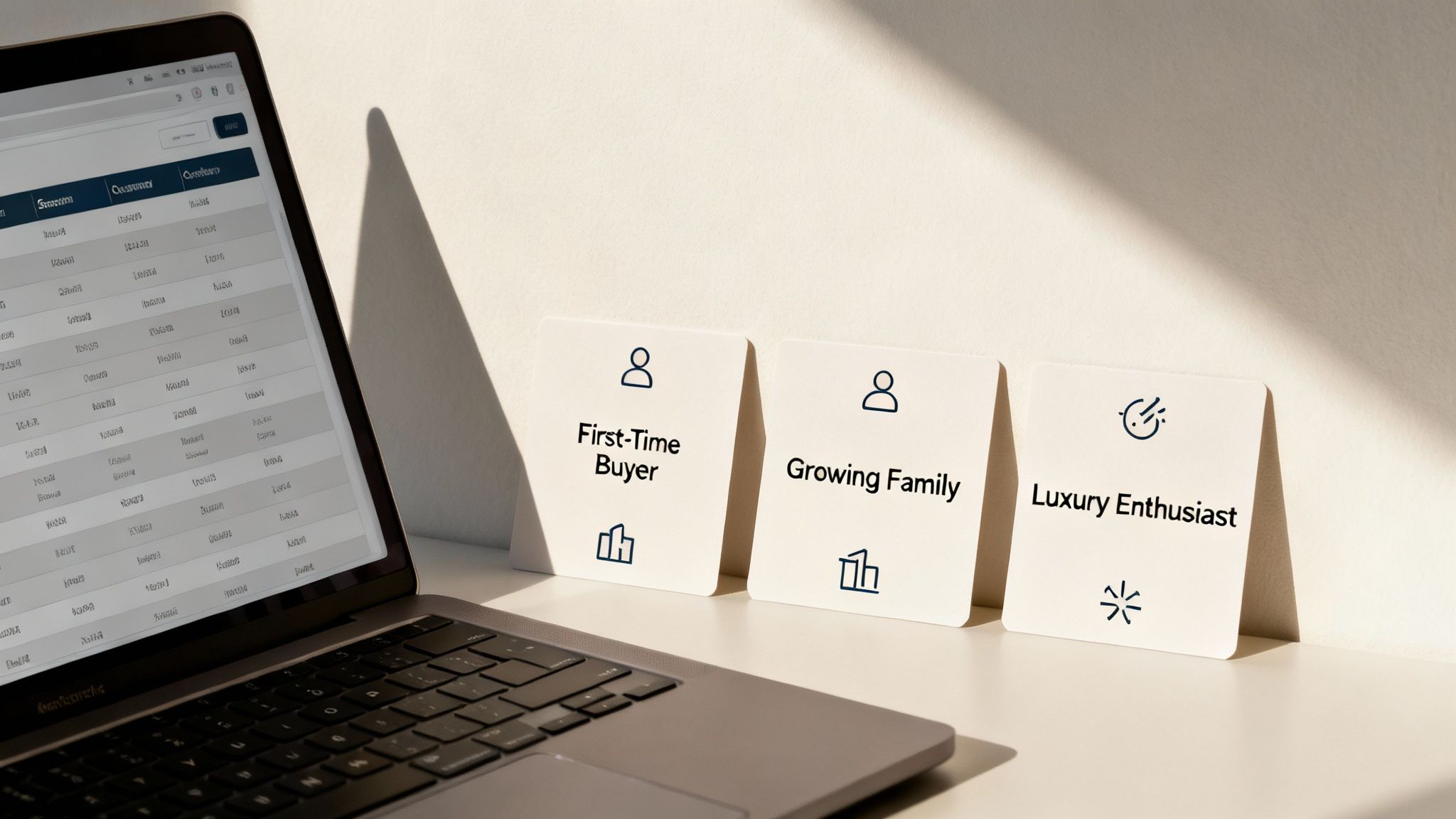
Once you've got your segments, you can bring them to life by creating customer personas. These are semi-fictional characters that represent your ideal customer in each group. Giving them a name and a backstory makes it so much easier to understand their needs and write emails that actually resonate.
Here are a few practical personas you could develop:
- "The First-Time Buyer" (Chloe): Fresh out of uni, she's on a budget and needs a reliable car with low running costs. She'll respond to clear, simple info about financing and warranty options.
- "The Growing Family" (Ben & Sarah): With a toddler and another on the way, they're researching seven-seater SUVs. Their priorities are safety features, boot space, and durability.
- "The Luxury Enthusiast" (Marcus): He's a long-time customer who loves performance, tech, and premium service. He's the perfect person to send exclusive previews and VIP service packages to.
Pro Tip: When you start thinking in terms of personas like Chloe, Ben, and Marcus, your email content naturally becomes more focused. You’re no longer writing for "everyone"; you're writing a specific message to a specific person with a specific need.
This targeted approach is precisely why this strategy is so powerful. In fact, research shows that businesses in the automotive sector see an average return on investment (ROI) of AUD $36 for every dollar spent on email campaigns, a figure that far surpasses other digital marketing channels.
Let's put this into practice. Imagine a customer owns a five-year-old hatchback and has recently been browsing new SUVs on your website. Instead of sending them a generic "20% off your next service" email, a segmented campaign would trigger a highly personalised message.
Example Scenario: Send a targeted email with the subject line, "Ready for an Upgrade? See What Your [Customer's Car Model] is Worth." The email could feature the exact SUVs they were looking at and include a personalised trade-in estimate, hitting them with a message that directly addresses what's on their mind. This is how you turn data into sales.
To really make every message land with your audience and boost engagement, dive into mastering personalization in email marketing.
Crafting Email Campaigns That Actually Convert
Alright, you've got your audience lists sorted and segmented. Now for the fun part: creating the actual emails that get people clicking, booking, and buying. A solid automotive email marketing plan isn’t just about sending random promotional blasts. It’s a smart mix of automated sequences and timely campaigns, all working together.
The real magic happens when you stop thinking in terms of single emails and start building entire campaigns. A campaign is a series of connected emails, each one designed to gently guide a customer towards a specific goal. Let's walk through the absolute must-haves for any dealership or service centre.
Automated Service and Maintenance Reminders
If you only set up one automated campaign, make it this one. Seriously. It’s easily the most profitable automation you can run. Most people don’t think about their car’s maintenance schedule until a warning light flashes. Your job is to get in front of that.
These reminders position you as a helpful partner, not just a workshop looking for business. But generic "Time for a service!" emails are lazy. Use your data to get personal. Trigger the emails based on the last service date or, even better, actual mileage if you have access to that data.
A killer service reminder email needs to be clear and direct:
- Be specific: "Your Toyota Camry is due for its 60,000 km logbook service."
- Show the benefit: "Keeping up with your schedule helps maintain performance and resale value."
- Make it easy: A big, obvious button that says "Book Your Service Online Now."
This simple workflow will keep your service bays humming and build the kind of loyalty that competitors can't touch.
The Post-Purchase Follow-Up Sequence
The moment a customer drives off the lot isn't the end of the sale; it's the beginning of a long-term relationship. A well-timed post-purchase sequence is your ticket to making that happen. It reinforces their buying decision, helps you gather crucial feedback, and paves the way for future service and sales.
Key Insight: This sequence is how you turn a one-off transaction into a lifelong customer. It’s the difference between a buyer and a brand advocate who sends you referrals.
Here’s a simple but incredibly effective three-part sequence to get you started:
- Email 1 (Send 24 hours after purchase): A quick "Thank You & Welcome" note. Ideally, this comes from the dealership manager. For a brilliant personal touch, include a photo of the sales team they dealt with.
- Email 2 (Send 7 days after purchase): A friendly "How's it going?" check-in. Ask if they have questions about their new car’s features. This is a great place to link to helpful how-to videos or guides on your website.
- Email 3 (Send 21 days after purchase): Time for the review request. They've had a few weeks to enjoy the car, so now is the perfect time to politely ask for a review on your Google Business Profile. Don't make them work for it—link them directly to the review form.
Winning Back Old Customers with Re-Engagement Campaigns
It’s a fact of life: some customers will go dark. A re-engagement campaign is your proactive strike to win them back before they're gone for good. The best place to start is by targeting customers who haven't serviced their vehicle with you in over 12-18 months.
The name of the game here is making an offer they can't refuse. Your message needs to acknowledge their absence and give them a compelling, valuable reason to come back.
Try a subject line like this: "We Miss You, [Customer Name]! Here's 20% Off Your Next Service."
Keep the email short and sweet: "It's been a while since we've seen you at [Dealership Name]. To welcome you back, we'd like to offer you a special discount on your next visit. Let's get your car running at its best." You’d be surprised how many dormant customers this simple gesture can reactivate.
Essential Automotive Email Campaign Templates
This table breaks down the core campaigns, their goals, and who you should be sending them to. Use it as a launchpad for building out your own email marketing strategy.
| Campaign Type | Primary Goal | Target Audience Segment | Example Subject Line |
|---|---|---|---|
| Service Reminders | Drive service appointments | Customers due for maintenance | It's Time for Your Next Oil Change, [First Name] |
| Post-Purchase | Build loyalty, generate reviews | Recent new & used car buyers | How are you enjoying your new [Car Model]? |
| Re-Engagement | Win back inactive customers | Customers with no service in 12+ months | A Special Offer to Welcome You Back, [First Name] |
| Promotional | Generate leads & sales | Segmented based on offer | Exclusive Trade-In Bonus on Your [Current Car Model] |
By implementing these four foundational campaigns, you’re not just sending emails—you’re building a powerful, automated system that nurtures relationships, drives revenue, and keeps your customers coming back for years.
Putting Your Marketing on Autopilot with Automation
This is where the magic happens. Automation is the engine that transforms your automotive email marketing from a manual chore into a powerful system that works for you 24/7. It nurtures leads, builds customer relationships, and drives revenue—all while you and your team are busy on the floor.
This isn’t about sending out cold, robotic messages. It's about using smart triggers to deliver incredibly relevant, timely content based on what your customers actually do. It lets you create a seamless journey that guides someone from their first enquiry to a sale, and then brings them back for servicing.
Building Your First Automated Workflow
Don't try to automate everything at once. You'll get overwhelmed. Instead, focus on a few core moments in the customer journey where automation will give you the biggest bang for your buck.
A 'New Lead Nurture' sequence is the perfect place to start. Let's say a potential buyer downloads your "Used Car Inspection Checklist" or sends an online enquiry. That single action should immediately kick off a series of helpful emails.
- Email 1 (Immediate): Send them the checklist they asked for. Right away. Use this email to also briefly introduce what makes your dealership different.
- Email 2 (2 Days Later): Showcase a few similar models you have in stock. A link to a quick video walk-around is a great touch here.
- Email 3 (4 Days Later): Build trust by sharing customer testimonials or positive reviews related to the type of car they're interested in.
- Email 4 (7 Days Later): Send a friendly, no-pressure invitation to book a test drive.
This simple, automated series makes sure every single lead gets consistent, valuable follow-up, warming them up perfectly for a chat with your sales team. To see how these messages fit into the bigger picture, it helps to understand what EDM marketing is and how all the pieces work together.
Key Workflows for Every Dealership
Once you have your lead nurture sorted, there are a few other essential sequences that will maximise the lifetime value of every customer. These keep your dealership top-of-mind long after they've driven off the lot.
The 'Post-Test Drive' follow-up is a huge missed opportunity for many dealerships. A simple automated email sent a couple of hours after a test drive keeps the excitement going. Follow it up the next day with a personal-touch email from the salesperson, recapping the car's best features and suggesting the next steps.
Another high-impact automation is the 'Lease Expiry' workflow. You need to start this one early—about 6-9 months before the lease is up.
Actionable Advice: Kick it off by reminding the customer of their upcoming expiry date. Over the next few months, drip-feed them info on new models, exclusive loyalty offers, and simple instructions for the lease return process. This proactive approach massively boosts retention.
There's a reason marketing automation is taking off in the Australian automotive industry: it delivers results. In fact, research shows automated emails in the auto sector generate an average of $5.47 per recipient—a massive return that proves just how efficient these systems are.
The image below shows how these essential emails work together to build loyalty, send timely service reminders, and win back customers who've gone quiet.
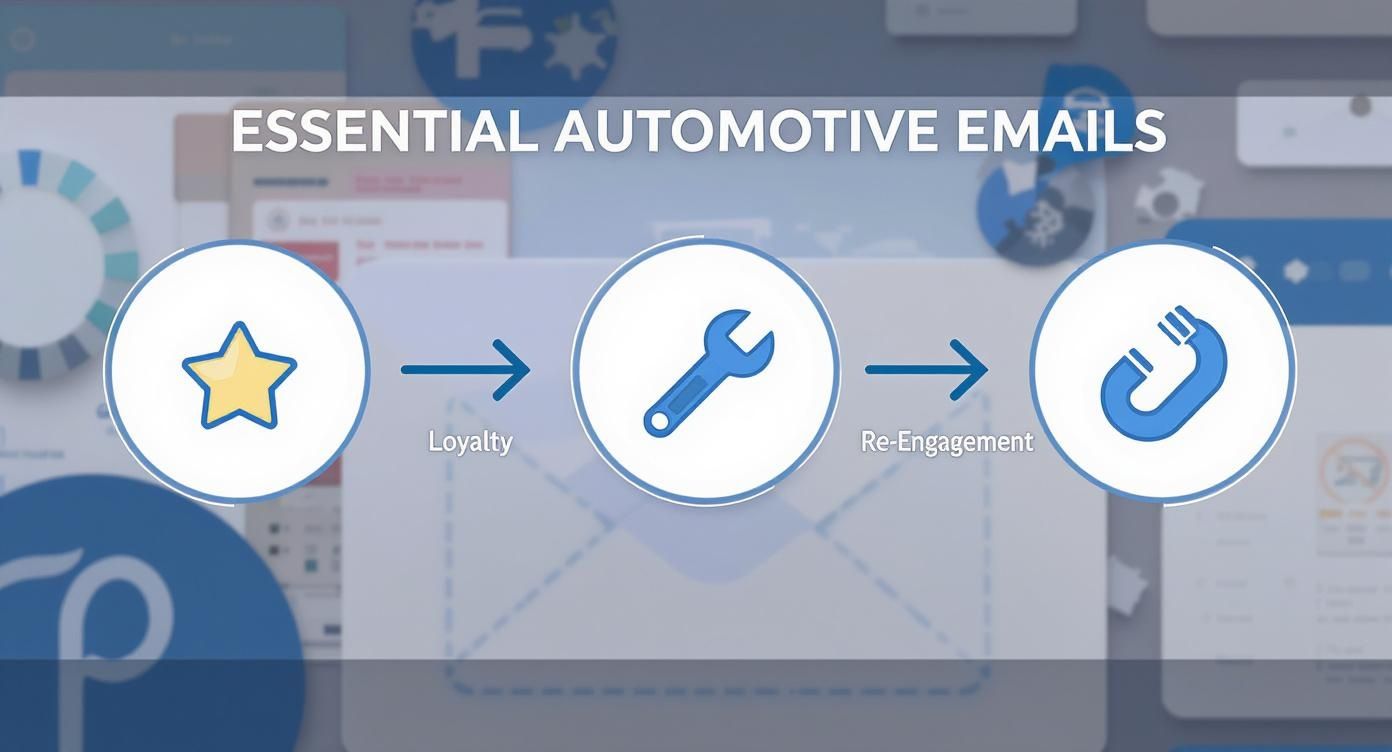
This flow really highlights how a solid automation strategy covers the entire customer lifecycle, turning one-off buyers into loyal, repeat clients.
Measuring What Matters to Improve Performance
A great automotive email marketing strategy is driven by data, not guesswork. Firing off campaigns without checking the numbers is like driving blind—sure, you're moving, but you have no idea where you're headed. It’s time to look past basic vanity metrics and drill down into the key performance indicators (KPIs) that actually grow your business.
Forget obsessing over open rates. While it's nice to see people opening your emails, it doesn't pay the bills. The real value is in tracking the numbers that link directly to your goals, like service bookings and test drives.
Key Performance Indicators That Truly Matter
To sharpen your approach, you need to track the right data. These KPIs paint a clear picture of what’s hitting the mark and what’s falling flat, letting you make smart, data-backed decisions instead of just guessing.
-
Click-Through Rate (CTR): This is the percentage of people who clicked on a link in your email. A healthy CTR tells you the message and call-to-action were strong enough to get someone to act. You can use a handy click-through rate calculator to quickly see how your campaigns stack up.
-
Conversion Rate: This is the big one—the ultimate measure of success. It tracks how many people completed the goal after clicking, like finalising a service appointment or submitting a finance application. This is the metric that ties your email efforts directly to revenue.
-
Unsubscribe Rate: This number shows you how many people are opting out. A sudden jump is a major red flag. It could mean your content is off, you’re emailing too often, or your segmentation isn't working.
-
List Growth Rate: A healthy email list is a growing one. Tracking this ensures your lead magnets and sign-up forms are actually pulling in new potential customers.
The industry knows where the value is. Email advertising spend in Australia's automotive sector is projected to hit US$259.01 million in 2025. This kind of sustained investment shows the confidence workshops and dealerships have in email as a core driver of business. You can explore more on the steady growth of email advertising in Australia's automotive market on Statista.com.
Using A/B Testing to Continuously Improve
A/B testing, or split testing, is your secret weapon for optimisation. It's simple: you send two slightly different versions of an email to small chunks of your audience to see which one performs better. Once you have a clear winner, you send that version to everyone else.
It’s a powerful way to let your audience tell you what they actually want.
Pro Tip: Don't assume you know what works best. A/B testing removes ego and guesswork from the equation, letting real data guide your decisions. Even tiny tweaks can lead to massive improvements in engagement and conversions over time.
The key is to test one thing at a time to get clean results. Here are a few high-impact elements to start with:
- Subject Lines: Pit a straightforward subject line ("Your Service Reminder") against something more benefit-focused ("Keep Your Car Running Smoothly This Winter").
- Calls-to-Action (CTAs): Test different button text ("Book Now" vs. "See Available Times") or even change up the button colours to see what grabs more attention.
- Sending Times: Does your audience respond better to emails sent on a Tuesday morning or a Thursday afternoon? There's only one way to find out.
Protecting Your Sender Reputation and Deliverability
Finally, none of these metrics mean a thing if your emails are landing in the spam folder. Your sender reputation is like a credit score for your email address. Internet service providers (ISPs) use it to decide whether you're trustworthy enough to land in the inbox.
Keep that reputation healthy by regularly cleaning your email list to get rid of inactive subscribers and invalid addresses. High bounce rates and spam complaints will tank your reputation fast. By keeping an eye on these deliverability metrics, you make sure your carefully crafted messages actually get a chance to make an impact.
Automotive Email Marketing FAQ
Even with a killer strategy, you're bound to hit a few roadblocks. Navigating the world of automotive email marketing means you’ll be fine-tuning your approach as you learn what works. Here are the answers to some of the most common questions we hear from dealerships and service centres.
How often should a car dealership actually send marketing emails?
There’s no magic number here. The right frequency comes down to who you're talking to and where they are in their buying journey.
For hot leads actively researching cars, sending 2-3 emails a week can work wonders. The key is making sure every single email is packed with value—think model comparisons, finance tips, or new inventory alerts. But for your general list of past customers? A monthly newsletter paired with automated service reminders is a much better rhythm.
The golden rule is simple: prioritise value over volume. If your unsubscribe rate starts creeping up, that’s your audience telling you you’re sending too often or your content just isn’t connecting. Let the data be your guide.
What are the key email compliance rules in Australia?
In Australia, the Spam Act 2003 is the law of the land, and it's not something you can afford to ignore. Staying compliant really boils down to three core rules for any commercial email you send.
- Get Consent: You absolutely must have permission—either express or inferred—to email someone.
- Identify Yourself: Your email has to make it crystal clear who it's from. No hiding behind vague names.
- Include an Unsubscribe Link: Every email needs a working, easy-to-find unsubscribe link. And you have to honour those opt-outs quickly.
While you might have ‘inferred consent’ from an existing customer (like someone who just got their car serviced), best practice is always to get their express permission when they sign up. The fines for getting this wrong are hefty, so it pays to be on top of it.
What’s the best way to grow a service centre email list?
Your most powerful list-building tool is already in your workshop: your front desk. Seriously, don't underestimate a simple, direct conversation.
Train your service advisors to ask every customer if they want to get their service reminders and exclusive maintenance offers via email. A small sweetener, like 5% off their next oil change for signing up, can make a huge difference to your subscription rate.
On top of that, make it easy for people to sign up digitally. Add a clear form to your online service booking page and pop a few QR codes in the customer lounge that link straight to your subscription form.
Ready to stop guessing and start getting real results from your marketing? At Homer Digital Marketing, we build the proven, automated systems that attract your ideal clients and drive growth for your automotive business.
Book a consultation with us today to see how we can put our 27+ years of experience to work for you.
