

Feeling like your website is a ghost town? You’ve built a beautiful site, but the visitor counter is stuck in the low double digits. It’s a frustratingly common problem. But before you can even think about a surge of new visitors, you need to get your house in order. That starts with a rock-solid Search Engine Optimisation (SEO) foundationto increase website traffic, specifically.
Think of SEO less like a box of tricks and more like the architectural blueprint for your website. It’s about structuring your site and content so search engines like Google can easily find, understand, and ultimately, reward you with traffic. This guide will show you exactly how to increase website traffic with proven, actionable steps. Without a solid SEO setup, even the most amazing content can get lost in the digital noise.
A strong SEO foundation ensures your website is speaking Google’s language. It means every blog post, every service page, and every product description has a clear job to do—attracting the right people. It’s the difference between shouting into an empty room and having a direct conversation with potential customers who are already searching for exactly what you offer. By the end of this article, you will have a clear, step-by-step plan to drive more of the right visitors to your site.
Uncovering What Your Audience Really Wants (Keyword Research)
First things first: you need to get out of your own head and into your customer’s. This means ditching the guesswork and diving into practical keyword research to find the exact phrases and questions your ideal clients are typing into Google. It’s not just about finding popular terms; it’s about understanding the intent behind the search. Are they just browsing for information, comparing their options, or are they ready to pull out their credit card?
- Focus on High-Intent Keywords: A broad term like “marketing” is useless. Instead, focus on long-tail keywords that signal a specific need, like “LinkedIn profile makeover for real estate agents” or “best way to remove negative reviews fast.” These keywords attract users who are ready to take action.
- Use the Right Tools: Take a look at what keywords your competitors are ranking for. Tools like Ahrefs or SEMrush are brilliant for spotting gaps in their strategy—topics they’ve overlooked that you can swoop in and own.
- Integrate LSI Keywords: Think in topics, not just keywords. Integrate related terms and phrases (Latent Semantic Indexing or LSI keywords) into your content. If you’re writing about “how to increase website traffic,” you should also mention things like “organic search,” “content promotion,” and “user engagement.” This shows Google you’re covering the topic comprehensively.
Crafting Pages That Rank and Convert (On-Page SEO)
Once you know which keywords to target, it’s time to put them to work. This starts with crafting compelling titles and meta descriptions that not only help you rank but, more importantly, convince a real person to click. Your title tag is your first impression in the search results—make it count by placing your primary keyword at the beginning and keeping it under 70 characters.
This is what a well-optimised page looks like in the wild. Notice how the title, URL, and description work together.
It’s immediately clear what the page is about because the main keyword is right there in the title and description. Simple, but so many people get it wrong.
Key Insight: A strong SEO foundation is non-negotiable for sustainable growth. Organic search is the primary traffic driver for many of Australia’s most successful websites. Just look at the major tourism hub australia.com—it gets over 56% of its visitors directly from Google organic search. That’s the immense power of a well-executed SEO strategy in action.
Before you jump into more complex tactics, it’s crucial to nail these basics. This checklist covers the core tasks you should prioritise to start seeing both immediate and long-term traffic improvements.
Your Foundational SEO Action Plan
| SEO Area | Action Item | Why It Matters for Traffic |
|---|---|---|
| Keyword Research | Identify 5-10 high-intent “money” keywords. | Attracts visitors who are ready to take action, not just browse. |
| On-Page SEO | Optimise title tags & meta descriptions for every core page. | Your first and best chance to earn a click from the search results. |
| Content | Create a piece of content targeting a question-based keyword. | Answers a direct user need, establishing you as a helpful authority. |
| Technical SEO | Check your website’s mobile-friendliness and page speed. | A poor user experience kills rankings and sends visitors bouncing. |
| Local SEO | Set up and fully optimise your Google Business Profile. | Captures “near me” search traffic, which is critical for local businesses. |
Nailing these fundamentals sets you up for long-term, sustainable traffic growth. It’s the work you do now that pays dividends for years. Ultimately, getting this foundation right is what separates the businesses that thrive online from those that just exist. For a deeper dive into the nitty-gritty, check out our guide on how to improve your Google rankings, which covers all the critical on-page factors in more detail.
Creating Content That People Actually Want to Read

Getting your SEO sorted gets you in the game, but it’s killer content that actually wins it. Just pumping out blog posts for the sake of it won’t cut it if you want to increase website traffic. The real goal is to create resources so valuable that your audience actively seeks them out and search engines can’t help but rank them.
You need to become the go-to authority in your space.
That means flipping your mindset from “what can I write about today?” to “what problem can I solve for my ideal client?”. Every single piece of content should have one clear job: answer a burning question, make a complex process simple, or offer a solution that genuinely makes your reader’s life easier.
Brainstorming Topics That Solve Real Problems
Forget about generic, rehashed ideas. Your most powerful content will come directly from the real-world headaches your clients are dealing with every single day. What questions do they ask you in every consultation? What frustrations do you see popping up again and again in industry Facebook groups or on forums like Reddit? That’s your content goldmine.
Here are a few practical ways to find these topics:
- Listen to your clients. Seriously. Pay attention during your calls and meetings. What are their biggest roadblocks? What do they completely misunderstand about your industry?
- Lurk in online communities. Spend some time on Reddit, Quora, or niche-specific Facebook groups. Find the recurring questions that nobody has answered properly.
- Check “People Also Ask” on Google. Type a broad topic into the search bar and see what Google suggests. It’s a literal cheat sheet for what real users are curious about.
Structuring Content for Maximum Engagement
Once you’ve got a brilliant topic, how you structure it is make-or-break. Let’s be honest, people don’t read online—they scan. Your job is to make your content as easy to skim and digest as possible. Short paragraphs, clear H2 and H3 headers, and plenty of white space aren’t optional. Break up dense sections with bullet points or numbered lists to make the information feel less overwhelming.
Data Point: Creating content that hits home with a specific audience is everything. Take Australia, for example. With 26.1 million internet users—a staggering 97.1% penetration rate—the fight for attention is fierce. Knowing that 51.9% of Facebook’s ad audience in the country is female can help you shape your content’s tone, examples, and even imagery to connect better with that demographic. You can dig into more stats on the Australian digital landscape over at DataReportal.com.
When you understand who you’re talking to, you can create content that not only solves their problems but also speaks their language. This is how you build a loyal following, not just a list of readers. And remember, content is more than just words. Adding custom graphics, helpful screenshots, or even short embedded videos can massively boost engagement and keep people on your site longer.
If you’re just starting out and feeling a bit lost in all this, our guide on how to start digital marketing is a great place to get your bearings on the core strategies.
Get Your Content Seen: Smart Promotion That Actually Works

Let’s be honest. Writing a brilliant article is only half the job. If you want to genuinely increase website traffic, you need a smart plan to get that content in front of the right eyeballs. Hitting “publish” and hoping for the best isn’t a strategy; it’s a recipe for crickets.
This is where content promotion comes in. It’s the intentional, strategic hustle of getting your content onto the channels where your ideal audience already hangs out. Without this crucial step, even the most valuable article will just gather digital dust.
Take Your Content to Where Your Audience Lives
The first rule of promotion? Stop waiting for people to find you. You need to take your content to them. This means getting active in the online communities and platforms your audience frequents. For example, don’t just drop a link into a Facebook group and run. Find a real discussion, offer a thoughtful comment that adds genuine value, and then you can mention that you’ve written a detailed article on the topic for anyone who wants to go deeper.
Here are a few channels to focus on first:
- Social Media Communities: Get involved in niche Facebook Groups, LinkedIn Groups, and relevant subreddits. Answer questions and offer insights before you even think about dropping a link.
- Email Marketing: Your email list is gold. Send a dedicated email to your subscribers telling them about your new post and exactly why it’s worth their time. This is key for driving repeat visits.
- Quality Backlinks: Forget spamming comment sections. Earning links from reputable sources is what moves the needle. This often happens naturally when you create exceptional content, but you can speed it up with strategic outreach to relevant blogs and publications in your space.
Work Smarter: Repurpose Your Best Content
One of my all-time favourite promotion tactics is content repurposing. This is where you take one big, in-depth “pillar” article and slice it into numerous smaller assets for different platforms. It’s the secret to maximising your reach without tripling your workload.
Expert Tip: Don’t just write one blog post and move on. It is much smarter to write fewer, high-quality posts and do a better job of marketing them, than to write many and have no one read them after the first week.
Think about it. A single 2,000-word guide on how to increase website traffic can easily become:
- A 10-tweet thread pulling out the key takeaways.
- A sharp, visually appealing infographic for Pinterest.
- A short, punchy video script for YouTube Shorts or Instagram Reels.
- A series of bite-sized tips for your email newsletter.
- A professional slide deck for platforms like SlideShare.
This strategy ensures your core message hits a much wider audience across multiple formats. You’re meeting people where they are, in the way they prefer to consume content, and driving all that fresh traffic back to your original article.
Using Paid Channels and Technical SEO to Accelerate Growth
While building a strong organic presence is the long game, sometimes you just need to pour fuel on the fire. This is exactly where paid channels and technical SEO come in. Think of them as powerful levers you can pull to get qualified visitors to your site—fast—and make sure the experience they have keeps them coming back.
When you blend paid strategies with your organic efforts, you create a powerful flywheel. You can use paid ads to quickly test out messaging and keywords, feeding those insights straight back into your SEO strategy. At the same time, your growing organic authority makes your paid campaigns cheaper and more effective. It’s a win-win.
Driving Immediate Traffic with Paid Advertising
Paid advertising on platforms like Google Ads or social media gives you a direct, almost instant, line to your ideal audience. Unlike organic methods that take time to build momentum, paid campaigns can start funnelling targeted traffic to your site almost overnight.
The trick is to be strategic. Don’t just “boost” a post and hope for the best. A truly effective paid campaign starts with knowing your customer inside and out. Who are they? Where do they hang out online? What problems are they desperately trying to solve? When you can answer these questions, you can build laser-focused campaigns that turn your ad spend into a predictable stream of leads and sales.
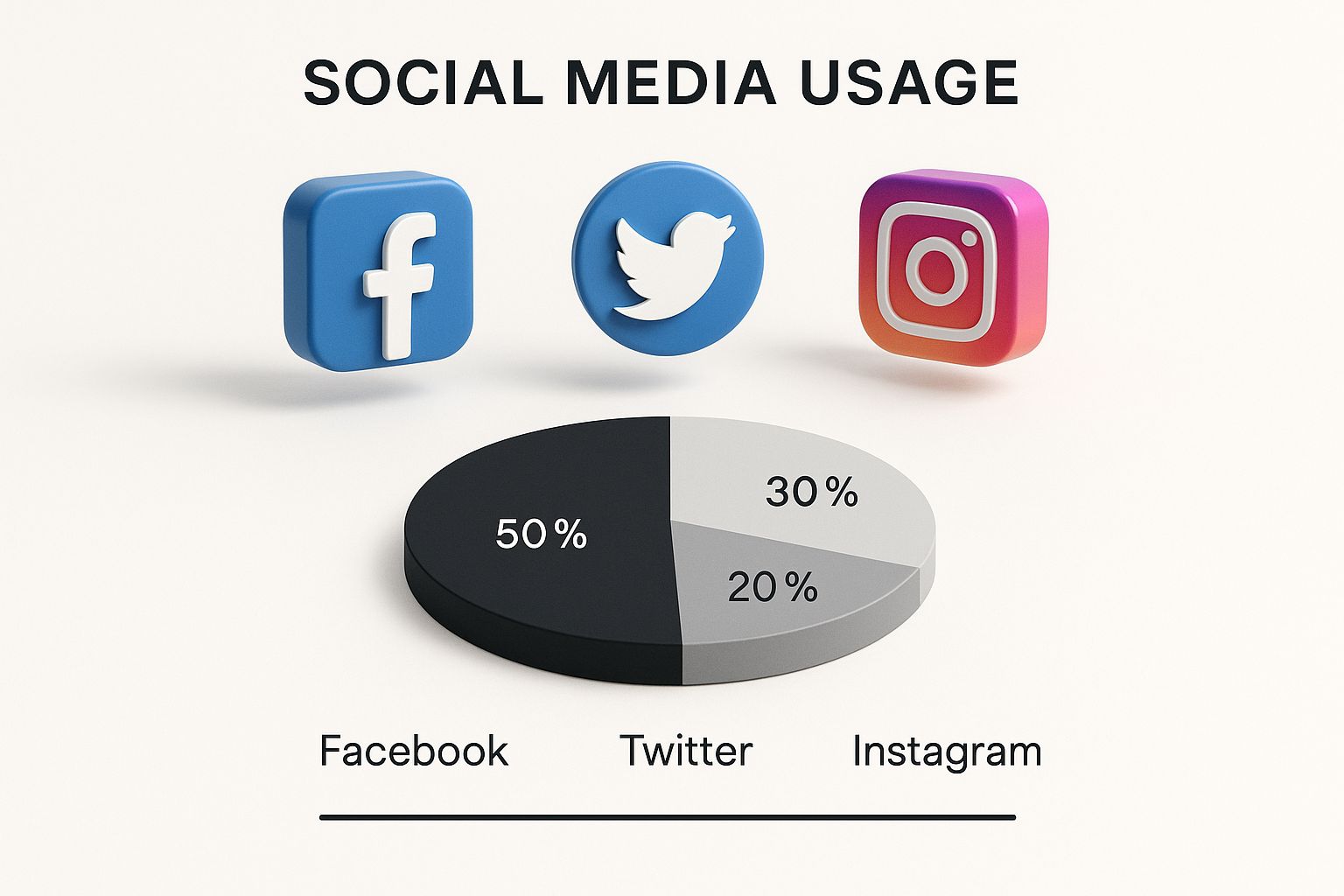
Paid Traffic Channels Comparison
Choosing the right platform is critical. Here’s a quick comparison to help you decide where to put your budget for the best return.
| Platform | Best For | Typical Audience | Key Consideration |
|---|---|---|---|
| Google Ads | Capturing high-intent users actively searching for a solution. | Broad, but can be targeted by keywords, location, and demographics. | Can be competitive and expensive. Requires sharp keyword research. |
| Facebook Ads | Building brand awareness and reaching highly specific audiences. | Diverse user base, great for targeting interests and behaviours. | Works best with visually engaging content. Less direct buying intent. |
| LinkedIn Ads | B2B lead generation and reaching professional audiences. | Professionals, decision-makers, and specific industries. | Higher cost-per-click, but leads are often higher value. |
| Instagram Ads | E-commerce, lifestyle brands, and visual storytelling. | Younger demographic (18-34), highly engaged with visual content. | Needs high-quality images and video. Reels are key. |
This table should give you a starting point, but the best approach is often to test a couple of channels to see what resonates with your specific audience.
The Non-Negotiable Role of Technical SEO
Think of technical SEO as the backstage crew for your website. Your visitors don’t see them, but without them, the whole show falls apart. It’s all about optimising your site’s foundation so search engines can easily crawl and index your pages, and just as importantly, so users have a brilliant, frustration-free experience.
A few technical elements are absolutely critical:
- Site Speed: Slow-loading pages are a massive turn-off. A tiny one-second delay in mobile load times can slash your conversion rates by up to 20%. It’s that serious.
- Mobile Experience: Your site has to look and feel fantastic on a smartphone. With more than half of all web traffic coming from mobile, a clunky mobile site is just costing you money.
- Clean URL Structure: Keep your URLs simple and descriptive. Something like
yoursite.com.au/services-for-accountantsis much easier for both people and search engines to understand than a jumble of letters and numbers.
Important Note: A fast, mobile-friendly website isn’t just a “nice-to-have” anymore. It’s a core signal of trust and a massive ranking factor for Google. If your site is slow or broken on mobile, you’re actively losing traffic and potential clients.
This isn’t just theory; it’s how Australia’s biggest online players operate. Take amazon.com.au or kmart.com.au—they handle millions of visits by ensuring their sites are perfectly optimised for every device. Interestingly, for major marketplaces, nearly 57% of traffic still comes from desktop, proving you need a flawless experience across the board. You can dig into more data on how Australian users access different websites from Statista.com.
Ultimately, paid ads get people in the door, and a technically sound website convinces them to stay. To see how these pieces fit into the bigger puzzle, have a look at our overview of what SEO and digital marketing truly entail.
Analysing Your Performance to Refine Your Strategy
Let’s be honest: you can’t improve what you don’t measure. The final, and arguably most important, part of growing your website traffic is getting your hands dirty with analytics. This isn’t about drowning in spreadsheets; it’s about making smarter decisions to increase website traffic again and again.
Think of your analytics as a direct feedback loop from your audience. Every click, every page view, and every visit tells you a story. It shows what your visitors love and where they’re getting stuck. By learning to read this data, you can stop guessing and start making strategic moves that get real results.
Identifying Your Most Valuable Content
Your first job is to pinpoint which pieces of content are doing the heavy lifting. In Google Analytics, you can easily see your top-performing pages. These are your proven winners—the articles, guides, and pages that already resonate with your audience and pull in visitors.
Once you know what they are, you can double down on what’s working. Can you update that popular blog post with fresh stats and insights? Could you create a follow-up article that dives deeper into a sub-topic? This is how you build on your existing wins instead of starting from scratch every time. For example, if a guide on “increasing Instagram followers” is your top post, consider creating a video on the same topic or a new article on “best Instagram hashtag strategies.”
Tracking the Metrics That Actually Matter
It’s easy to get distracted by “vanity metrics” like total page views. Sure, it feels good to see that number go up, but it doesn’t tell you anything about the quality of your traffic. It’s far more effective to focus on metrics that reveal how people are actually behaving on your site.
Remember: The goal isn’t just to get more traffic; it’s to get the right traffic. A thousand visitors who leave immediately are less valuable than one hundred visitors who are genuinely engaged and on the path to becoming a client.
Look for a combination of data points to get a clearer picture of what’s really going on:
- Average Engagement Time: This shows how long people are actually spending on your pages. A higher number suggests your content is holding their attention and delivering value.
- Conversions: This is the ultimate measure of success. Are visitors taking the actions you want them to, like filling out a contact form or signing up for your newsletter?
- Traffic by Channel: Where are your most valuable visitors coming from? Is it organic search, social media, or referrals? Knowing this helps you focus your time and money where they’ll have the biggest impact.
By regularly analysing these key performance indicators, you can shift from a “publish and pray” approach to a data-informed strategy. You’ll spot opportunities for improvement, fix what isn’t working, and build a reliable system for sustainable traffic growth.
Your Website Traffic Questions, Answered (FAQ)
Even with the best strategy laid out, you’re bound to have questions. Getting more eyes on your website is a process, and it’s easy to get tangled up in the details of SEO, content, and promotion. Here are the most common questions we get, with straight-up answers to keep you moving forward.
How Long Does It Take to See Results from SEO?
This is the big one, and the honest answer is: it depends. SEO is a long game. It’s all about building a solid foundation that pays dividends for years. You’ll generally need to wait four to six months to see significant, lasting results from your organic search efforts.
However, that doesn’t mean you have to wait that long for visitors. Paid ads and a sharp social media plan can start sending people your way almost immediately. The smartest approach is to do both. Use paid campaigns for quick wins while your long-term SEO and content marketing build momentum in the background.
What Is a Good Amount of Website Traffic?
Chasing a random traffic number is a huge distraction. Instead of asking “how much?”, you should be asking “who?”. The real goal is attracting the right kind of traffic—people who are genuinely looking for what you do.
Key takeaway: A hundred qualified visitors who are potential clients are far more valuable than a thousand who land on your site by mistake and leave instantly. Your conversion rate is the true benchmark of success, not just raw visitor numbers.
Focus on quality over quantity. Keep an eye on your analytics to see how many visitors turn into actual leads or enquiries. That’s the number you want to improve.
Should I Focus on SEO or Paid Ads First?
For sustainable, long-term growth, you need to start with SEO from day one. Think of it as the bedrock of your online presence—an asset that only becomes more valuable over time.
If you have the budget and need to get leads in the door faster, layer in targeted paid ads. The two work brilliantly together. Paid campaigns give you rapid market feedback, letting you test keywords and offers, while your organic authority steadily grows to deliver “free” traffic for years to come.
How Often Should I Publish New Content?
Consistency and quality will always beat sheer frequency. It’s far better to publish one exceptional, in-depth article each week than five short, forgettable posts. Flooding your audience with mediocre content is a fast way to get them to tune out.
Start with a realistic schedule you know you can stick to, whether that’s weekly or bi-weekly. Your focus should be on making every single piece of content the absolute best resource for your audience. That’s how you build trust and become the go-to expert in your field.
Ready to stop guessing and start building a predictable system for attracting your ideal clients? At Homer Digital Marketing, we help service-based businesses implement the proven authority and automation strategies needed to scale. Let’s talk about how we can grow your visibility and get you real results.
