

Struggling to boost your Google rankings without a hefty budget? You are not alone. Many service-based business owners in Australia believe that effective Search Engine Optimisation (SEO) requires expensive software subscriptions. While premium tools offer advanced features, the surprising truth is that you can achieve significant, scalable results using the industry’s best free SEO tools. These platforms are not just stripped-down demos; they are robust solutions trusted by professionals worldwide to drive organic growth.
This comprehensive guide is your actionable roadmap to cut through the noise and show you exactly how to leverage these no-cost powerhouses. We will move beyond simple feature lists to provide in-depth analysis of 12 top-tier tools. For each one, you will find direct links, screenshots, and practical implementation guidance tailored for service businesses like yours. We will explore specific use cases, from pinpointing high-intent keywords that attract ready-to-buy clients to performing technical audits that improve your site’s health.
Our goal is to equip you with the knowledge to select the right combination of free tools for your specific needs, whether it’s enhancing your Google visibility, optimising your LinkedIn presence, or managing your online reputation. Forget the overwhelming cost, let’s unlock your website’s true potential.
1. Google Search Console: Your Direct Line to Google
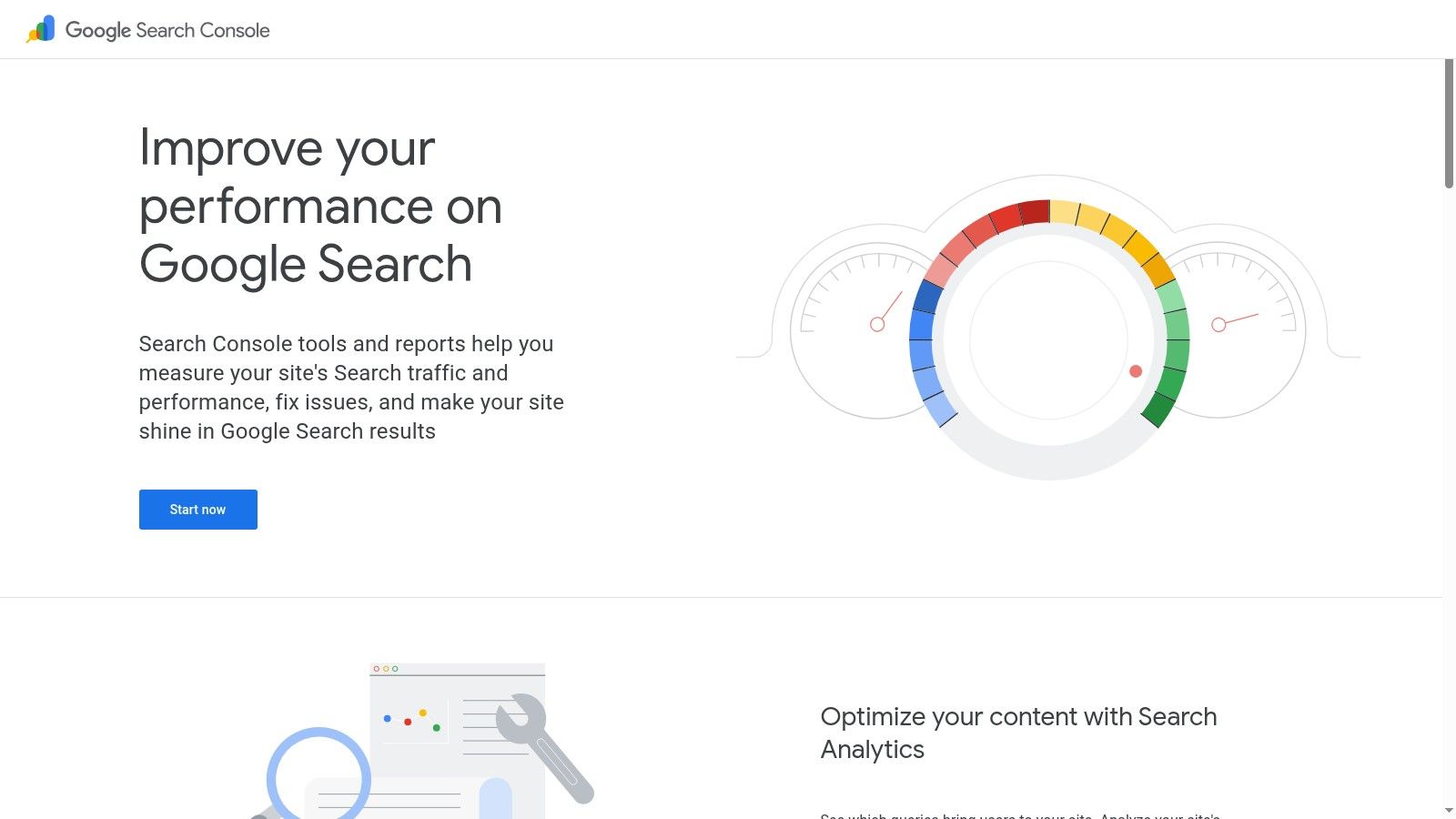
Considered an absolute necessity for any website owner, Google Search Console (GSC) is the definitive source for understanding how Google views and ranks your website. It’s less of a tool and more of a foundational dashboard, providing unfiltered, first-party data directly from the source. This makes it one of the best free SEO tools available, as it eliminates guesswork regarding your site’s technical health and search performance.
Why It’s a Top Free Tool
Unlike third-party platforms that estimate traffic and rankings, GSC provides 100% accurate data on clicks, impressions, click-through rate (CTR), and average keyword positions. Its primary function is to diagnose technical and indexing issues. For small business owners, the URL Inspection tool is invaluable for requesting indexing for a new page or understanding why an existing one isn’t appearing in search results. The platform is completely free to use for any website you can verify ownership of. To gain a deeper understanding of how your business appears on Google, you can learn more about Google’s visibility tools here.
Pros:
- Provides 100% accurate performance data directly from Google.
- Completely free with no data or website limits.
- Essential for diagnosing indexing errors, manual actions, and security issues.
Cons:
- Data is limited to Google Search, offering no insights into Bing or competitor performance.
- The user interface can feel disjointed, requiring navigation between different reports.
2. Google Analytics 4 (GA4): Measuring What Matters
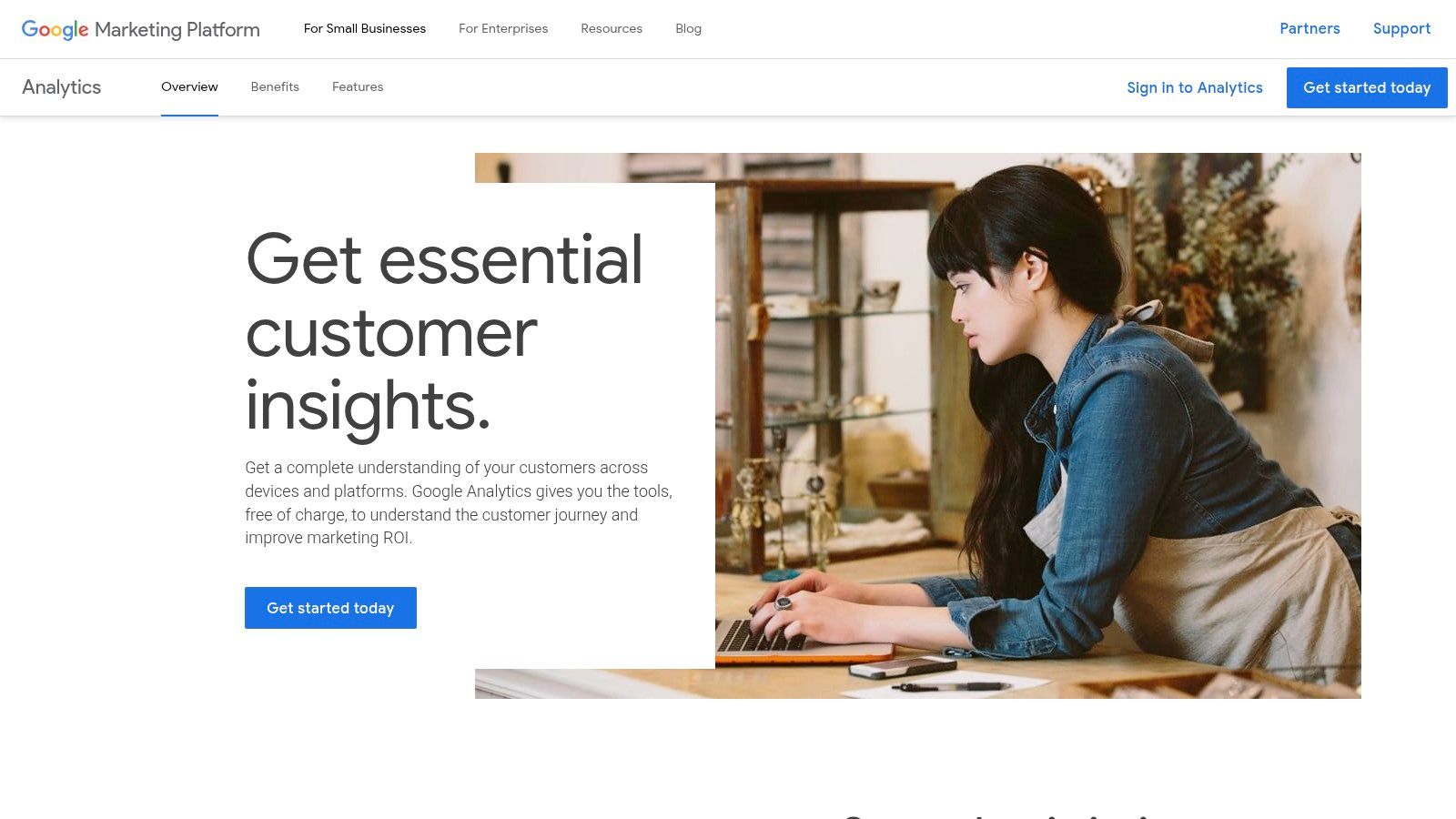
While Google Search Console tells you what happens before a user clicks, Google Analytics 4 (GA4) explains what happens after they land on your site. As the successor to the long-standing Universal Analytics, GA4 shifts the focus to an event-based model. This provides a more unified view of the user journey across your website and app, making it one of the best free SEO tools for understanding audience behaviour and conversion paths.
Why It’s a Top Free Tool
GA4 is completely free and offers powerful insights into how SEO-driven traffic interacts with your content. You can track which pages lead to goal completions, analyse user engagement, and build custom funnels to identify drop-off points. For businesses aiming to scale, its native integration with Google Ads and BigQuery is a game-changer. The BigQuery export feature, offered for free, allows for deep, unsampled analysis of raw data, a capability previously reserved for enterprise-level tools. This helps you connect SEO efforts directly to business outcomes.
Pros:
- Robust, event-based tracking model provides a flexible view of user interactions.
- Free integration with BigQuery for advanced, unsampled data analysis.
- Seamlessly connects with other Google ecosystem products like GSC and Google Ads.
Cons:
- The interface has a steeper learning curve compared to its predecessor, Universal Analytics.
- Data retention is limited to 14 months on the free tier, and reports can be subject to data sampling.
3. Google Keyword Planner: Uncovering Search Intent Directly from Google
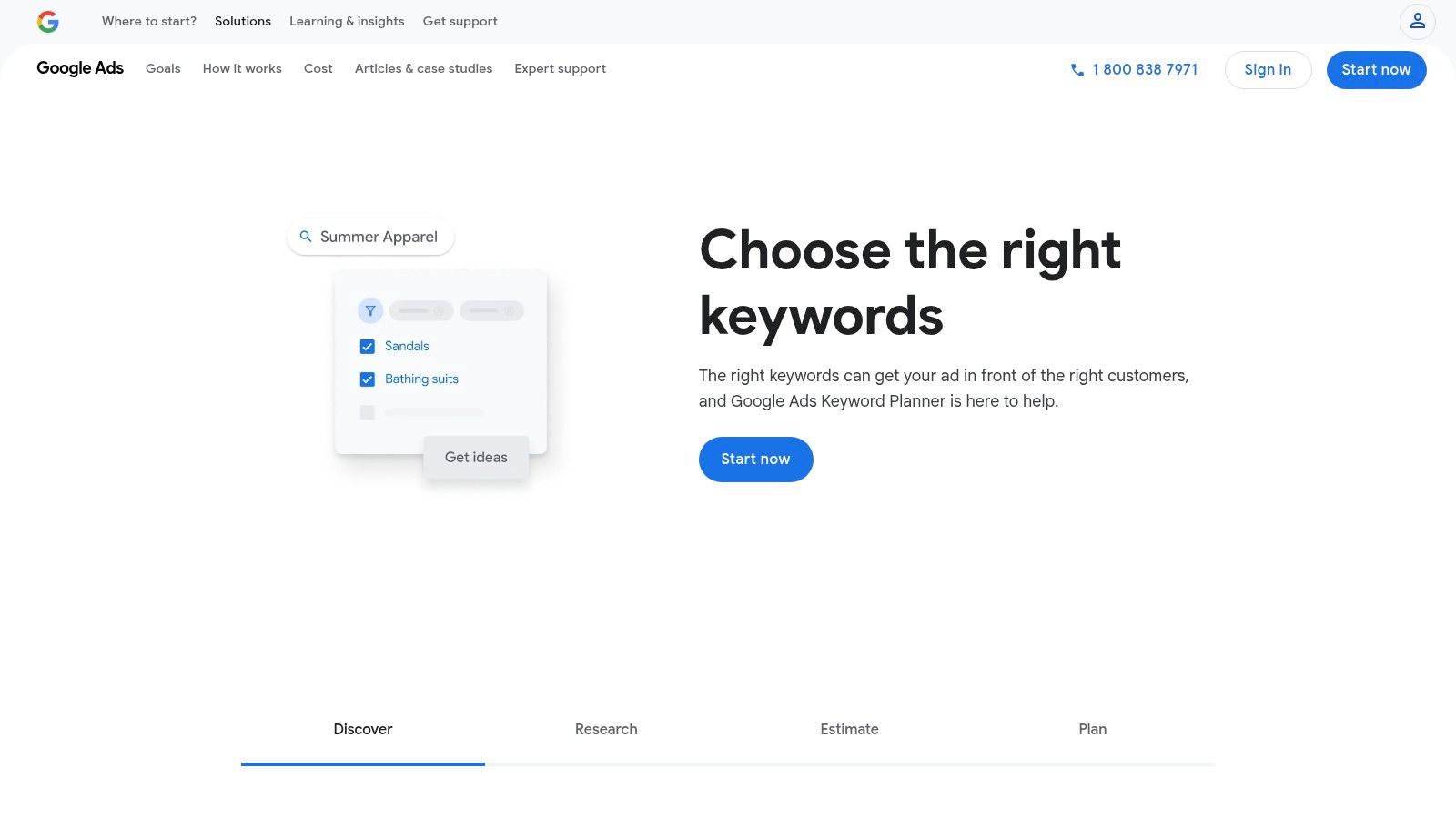
While primarily housed within the Google Ads platform, Google Keyword Planner is an indispensable resource for foundational SEO. It provides direct insight into what users are searching for, making it one of the best free SEO tools for content strategy and initial keyword research. Its strength lies in offering first-party data, allowing business owners to base their content decisions on real-world search behaviour rather than estimations.
Why It’s a Top Free Tool
Google Keyword Planner excels at two core functions: discovering new keyword ideas and analysing their search volume trends. You can enter a seed keyword or a website URL to generate hundreds of related terms, complete with monthly search volume estimates and seasonality data. Although you need a Google Ads account to access it, no ad spend is required. For business owners, this is a powerful, cost-free way to validate content ideas and understand user intent, which is a critical first step to learning how to improve your Google rankings.
Pros:
- Provides official search volume data directly from Google’s ecosystem.
- Excellent for discovering new long-tail keywords and organising them into topic clusters.
- Completely free to use with a Google account.
Cons:
- Search volume data is often presented in broad ranges for non-advertising accounts.
- Key metrics like competition and bid estimates are heavily focused on paid search (PPC), not organic SEO.
4. Google Trends: Uncovering Search Demand and Seasonality
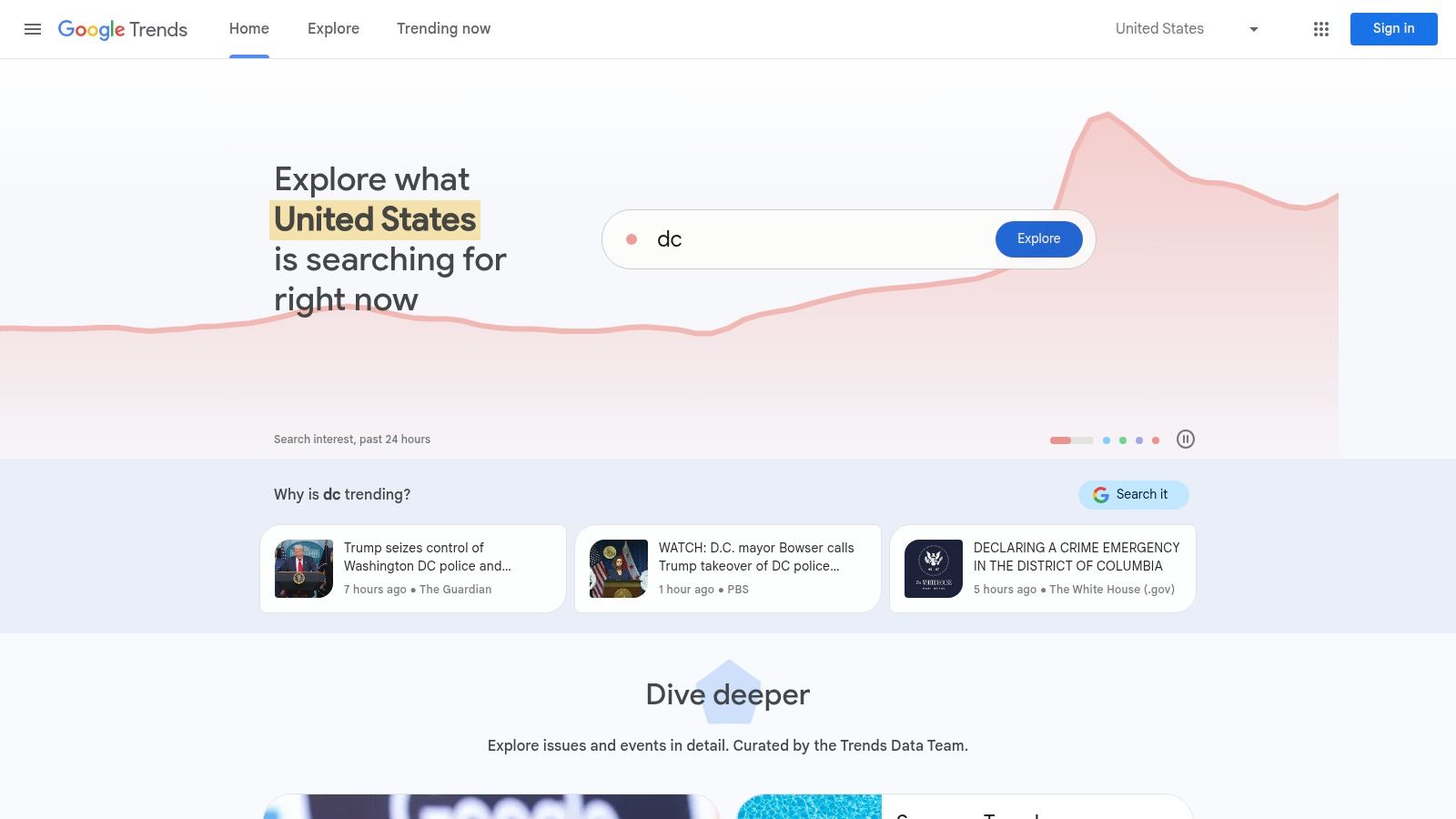
While many SEO tools focus on what people have already searched for, Google Trends excels at showing you what they are searching for right now and how that interest changes over time. It’s an indispensable resource for content ideation, understanding market seasonality, and capitalising on emerging topics before they become saturated. For any business owner looking to align their marketing with public interest, this is one of the best free SEO tools for strategic planning and staying relevant.
Why It’s a Top Free Tool
Google Trends provides a visual representation of a keyword’s popularity over time, which is invaluable for identifying seasonal patterns. For example, a real estate agent can see when search interest for “buy a house” peaks in their local area. The platform is completely free and offers powerful features like regional breakdowns, topic comparisons, and related queries that show what else your audience is looking for. It’s perfect for brainstorming blog post ideas or validating a new service offering by gauging its current search demand.
Pros:
- Excellent for discovering seasonal trends and surfacing rising topics.
- Completely free with an intuitive, easy-to-use interface.
- Provides valuable “related queries” to fuel content and keyword strategy.
Cons:
- Displays relative interest (on a scale of 0-100), not absolute search volume.
- Can encourage creating thin content around fleeting trends if not used with a clear strategy.
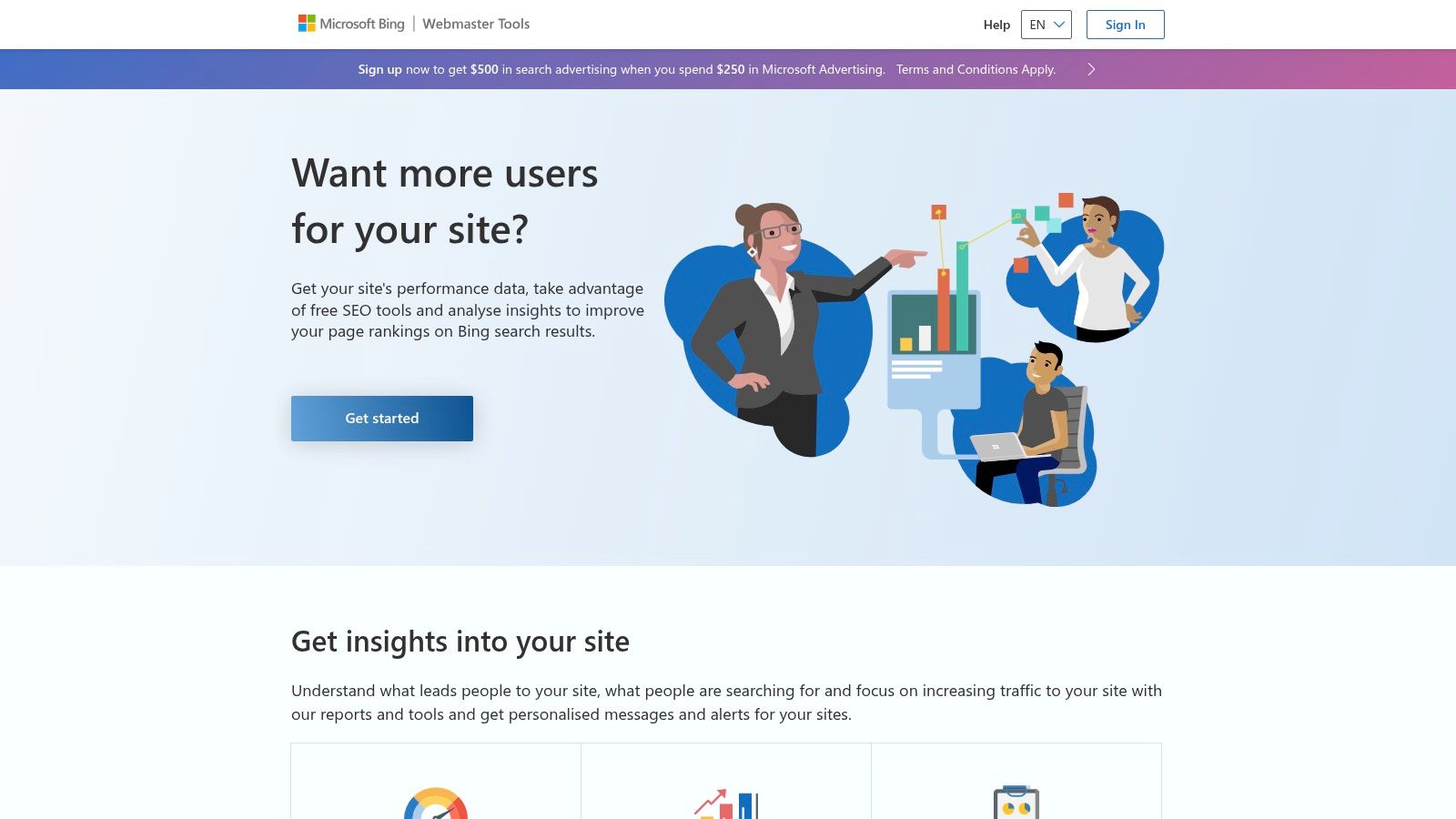
5. Bing Webmaster Tools: A Powerful Alternative Perspective
While Google dominates the search landscape, ignoring Bing means missing out on a significant segment of potential traffic. Bing Webmaster Tools is Microsoft’s answer to Google Search Console, and it stands out as one of the best free SEO tools by offering a surprisingly robust suite of features. It provides crucial performance data, technical SEO diagnostics, and unique tools that even Google doesn’t offer, all completely free of charge.
Why It’s a Top Free Tool
Bing Webmaster Tools offers a surprisingly clean interface and a set of powerful utilities that make it essential for any comprehensive SEO strategy. Its built-in Site Scan tool functions like a technical SEO auditor, crawling your site to identify common issues. A major standout feature is its integration with IndexNow, a protocol that instantly notifies Bing and other participating search engines when your content is updated, leading to much faster indexing. The platform also provides valuable backlink data and keyword research tools based on its own search index.
Pros:
- Provides a complete set of technical audit tools, including a site scanner and backlink analysis, for free.
- IndexNow integration allows for near-instant indexing of new or updated pages.
- Offers a different dataset, giving insights into a search audience you might be overlooking.
Cons:
- All performance data is exclusive to the Bing search engine, not Google.
- It requires a separate setup and monitoring process from your Google-focused tools.
6. Ahrefs Free SEO Tools + Ahrefs Webmaster Tools
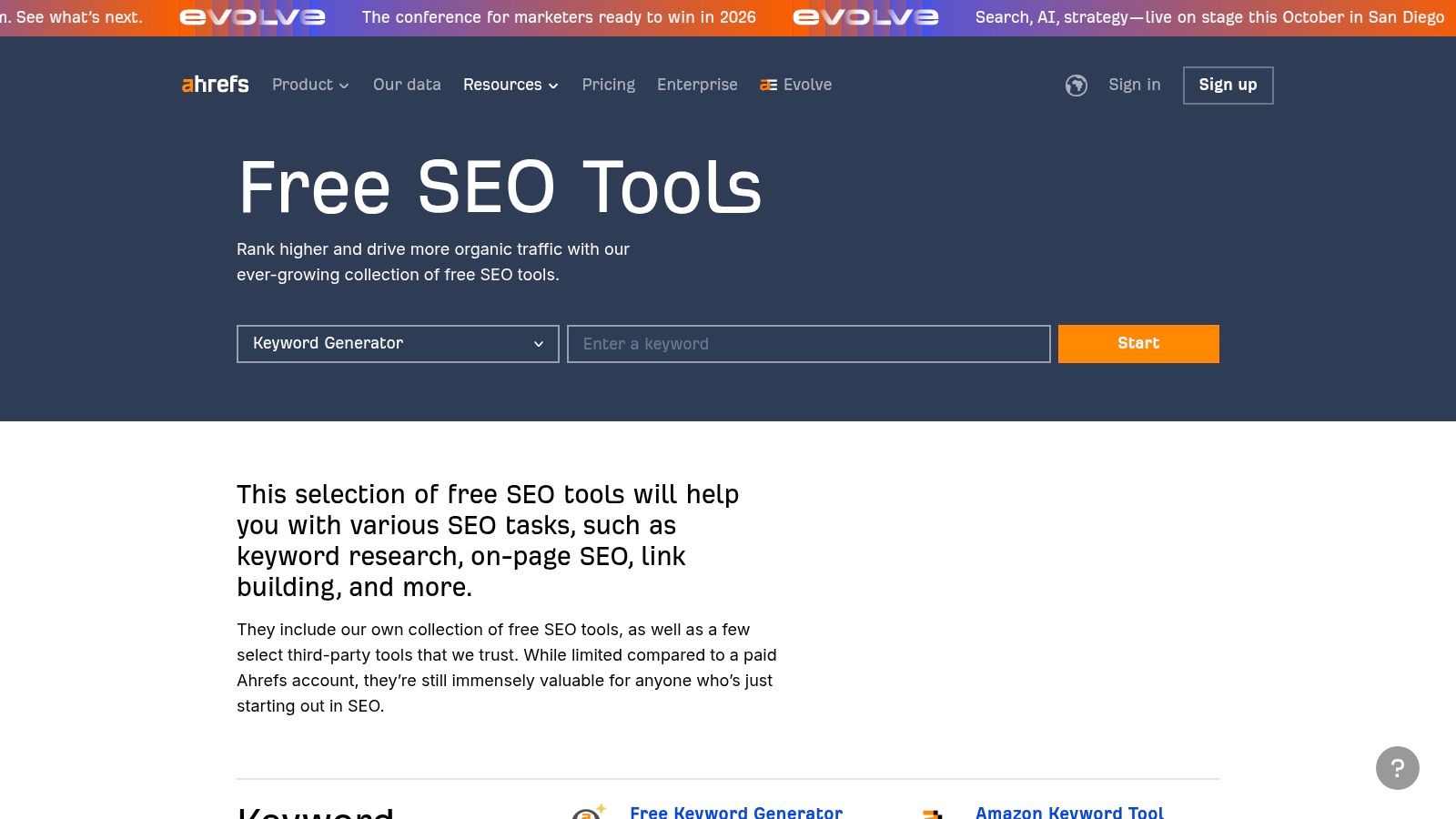
Ahrefs is a powerhouse in the SEO industry, and while its full suite is a premium product, it offers a surprisingly robust collection of free tools. This makes it one of the best free SEO tools for getting a taste of enterprise-level data without the cost. The offering is split between individual, task-specific tools and the more comprehensive Ahrefs Webmaster Tools (AWT), which provides ongoing site analysis for verified websites.
Why It’s a Top Free Tool
What sets Ahrefs’ free offerings apart is the quality of the underlying data, which is famously comprehensive. While individual tools like the Keyword Generator and Backlink Checker provide valuable snapshots, the real highlight is AWT. By verifying your site, you unlock a lite version of their acclaimed Site Audit and Site Explorer tools. This allows you to crawl your website for over 100 technical SEO issues, see your top 1,000 backlinks, and view keyword ranking data, all completely free. Understanding these elements is a core part of a strong online strategy, and you can learn more about what SEO digital marketing involves here.
Pros:
- Provides access to industry-leading data for free, albeit in a limited capacity.
- AWT offers powerful site audit and backlink analysis for your own verified sites.
- Includes a wide array of free tools for various platforms, including Google, Bing, and Amazon.
Cons:
- Most free tools have strict usage limits or provide sampled data to encourage upgrading.
- The data in AWT is limited to your own properties, offering no competitor insights.
7. Semrush (Free Account): The All-in-One Powerhouse
Semrush is a titan in the SEO industry, and its free account offers a tantalising glimpse into its comprehensive suite of tools. While significantly limited compared to its paid plans, the free version acts as a powerful demo, providing valuable snapshots of competitor data, keyword rankings, and technical site health. This makes it one of the best free SEO tools for businesses wanting to dip their toes into advanced analytics without an initial financial commitment. It provides a broad, high-level overview that many singular-function tools cannot match.
Why It’s a Top Free Tool
What sets the free Semrush account apart is its breadth of features. Even with strict daily limits, you can perform basic competitor analysis by entering a rival’s domain to see their top organic keywords and backlink sources. The free project slot allows you to run a technical audit for up to 100 pages and track 10 keywords daily, which is perfect for monitoring your most critical search terms. These features provide actionable insights that can guide your strategy, even if you never upgrade to a paid subscription.
Pros:
- Provides a taste of a broad, all-in-one professional toolkit.
- Offers reliable rank tracking and quick domain overviews for competitive research.
- The Site Audit feature is excellent for identifying critical technical errors.
Cons:
- Very strict limitations on daily searches and report depth on the free plan.
- Most advanced content marketing and link-building tools are behind a paywall.
8. Moz Free SEO Tools (Link Explorer, Keyword Explorer, MozBar)
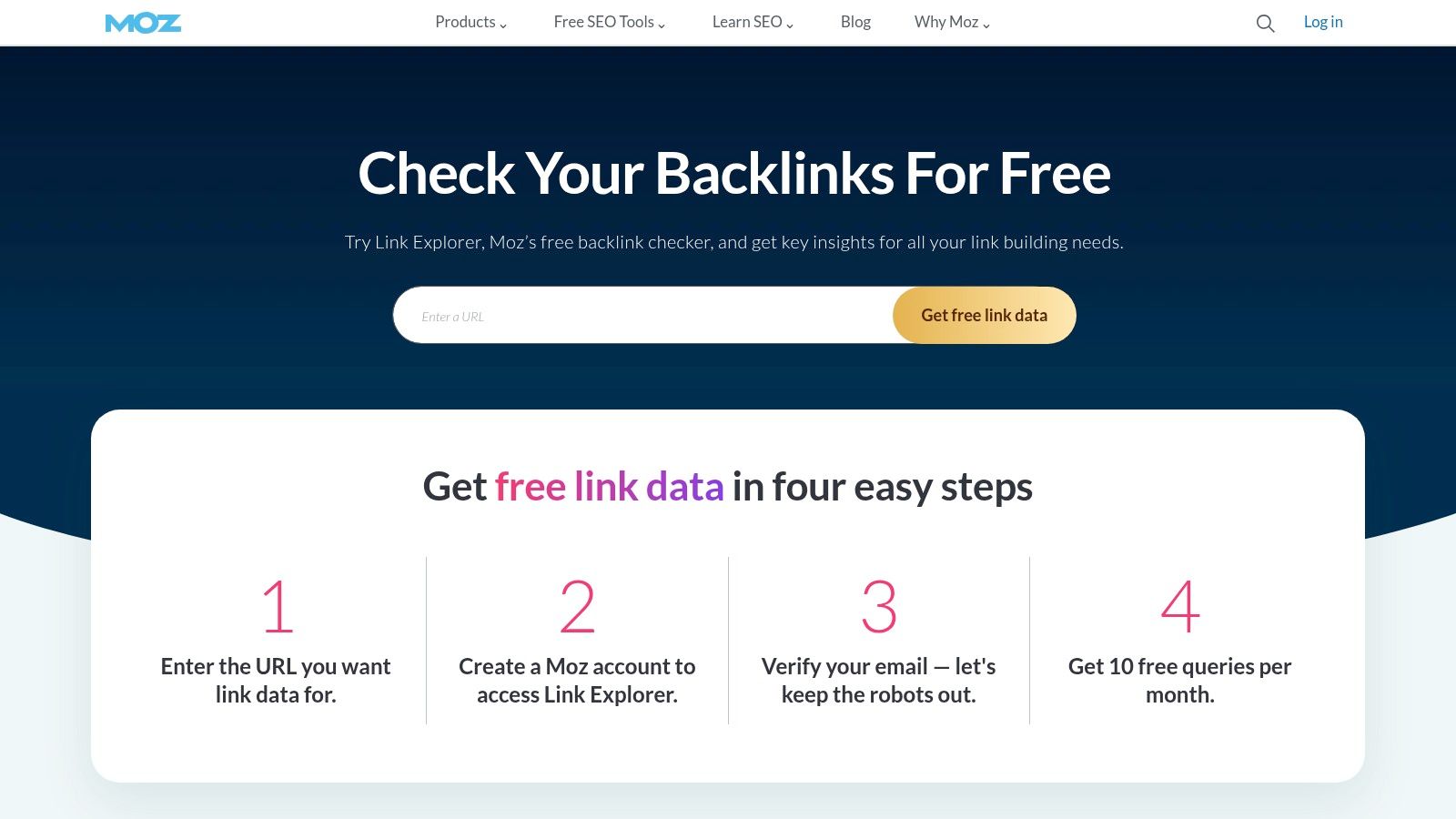
A long-standing name in the SEO industry, Moz offers a suite of powerful tools, and their free offerings provide a valuable gateway into advanced analytics. The trifecta of Link Explorer, Keyword Explorer, and the MozBar browser extension gives business owners a solid foundation for competitor analysis and on-page optimisation without a paid subscription. These tools are excellent for quick, actionable insights, making them some of the best free SEO tools for initial research.
Why It’s a Top Free Tool
Moz is famous for popularising metrics like Domain Authority (DA) and Page Authority (PA), which help you quickly gauge the relative strength of a website or page. The free version of Link Explorer grants you a limited number of queries each month to analyse your own backlink profile or peek at a competitor’s. The MozBar extension for Chrome is particularly useful for real-time analysis, overlaying DA/PA data directly onto Google’s search results pages and providing an on-page SEO checklist for any page you visit. Access requires a free Moz community account.
Pros:
- Provides industry-standard metrics like Domain Authority and Page Authority for quick site comparisons.
- MozBar offers convenient, real-time SERP and on-page analysis directly in your browser.
- Backed by extensive educational resources, guides, and a well-regarded SEO blog.
Cons:
- The free account has very strict monthly query limits, which can be used up quickly.
- Full functionality and comprehensive data are locked behind a premium Moz Pro subscription.
9. Screaming Frog SEO Spider (Free “Lite” Desktop Crawler)
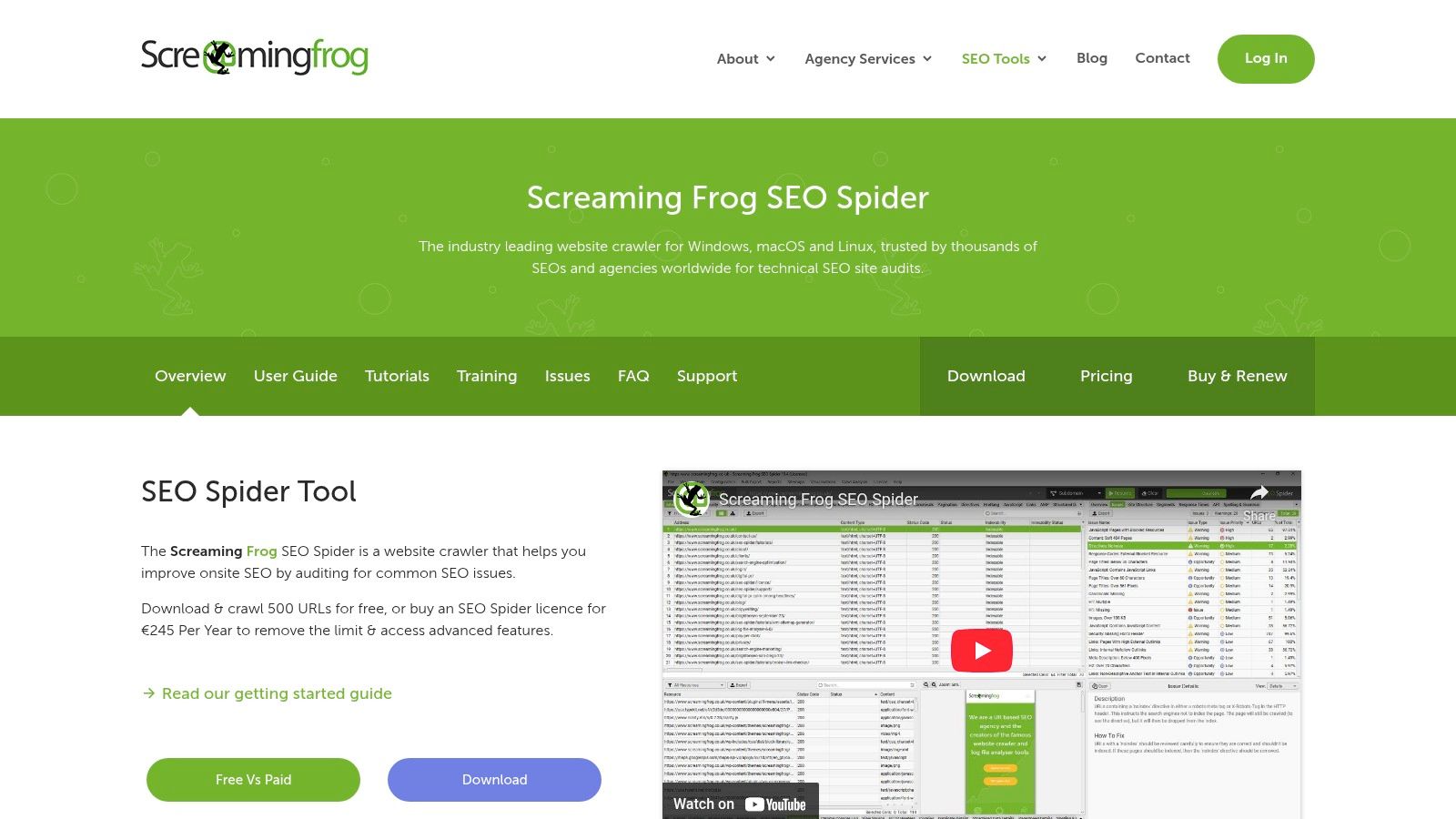
For any business owner serious about technical SEO, Screaming Frog SEO Spider is the industry-standard desktop crawler. It acts like a search engine bot, methodically crawling your website’s URLs to provide a comprehensive technical health report. While the full version is a paid product, its free “lite” version is incredibly powerful and remains one of the best free SEO tools for smaller websites or targeted audits. It allows you to analyse on-page elements and site architecture with a level of detail unmatched by most web-based tools.
Why It’s a Top Free Tool
The free version of Screaming Frog lets you crawl up to 500 URLs, which is more than enough for many small business websites or for performing a specific audit on a larger site section. You can instantly find broken links (404s), identify redirect chains, analyse page titles and meta descriptions, and discover duplicate content. For business owners in Australia, this tool is invaluable for performing a quick, precise health check before a website redesign or after a major content update, ensuring no critical errors are harming your Google visibility. The downloadable software is available for PC, Mac, and Linux.
Pros:
- Provides incredibly detailed, fast, and reliable technical SEO auditing.
- The 500 URL crawl limit is generous for small sites and targeted checks.
- Widely used and trusted by SEO professionals worldwide, making it a valuable skill.
Cons:
- Strictly limited to 500 URLs in the free version.
- Advanced features like scheduling, Google Analytics integration, and configuration saving require a paid licence.
10. Ubersuggest by Neil Patel
Ubersuggest, developed by marketer Neil Patel, is an all-in-one SEO platform designed with a beginner-friendly approach. It packages complex data into a highly visual and easy-to-navigate interface, making it one of the best free SEO tools for small business owners or those just starting their SEO journey. It provides a comprehensive suite of features, including keyword research, competitor analysis, rank tracking, and site audits, with a generous free tier that offers significant value before requiring an upgrade.
Why It’s a Top Free Tool
Ubersuggest excels at simplifying SEO. While advanced tools can be overwhelming, Ubersuggest presents keyword ideas, content suggestions, and backlink data in an accessible format. Its Domain Overview feature gives a quick, high-level snapshot of a competitor’s top keywords and pages, which is perfect for busy business owners needing fast insights. Although it has daily limits on its free plan, the data provided is substantial enough for daily checks and initial research, with paid plans being among the most affordable on the market.
Pros:
- Extremely intuitive user interface, ideal for SEO novices.
- Offers a broad range of features (keywords, audits, rank tracking) in its free tier.
- Affordable paid upgrades provide a low-cost entry into more advanced SEO.
Cons:
- Free usage is restricted by daily search limits.
- Data accuracy and volume may not match enterprise-level tools like Ahrefs or Semrush.
11. AnswerThePublic: Discover What Your Audience is Asking
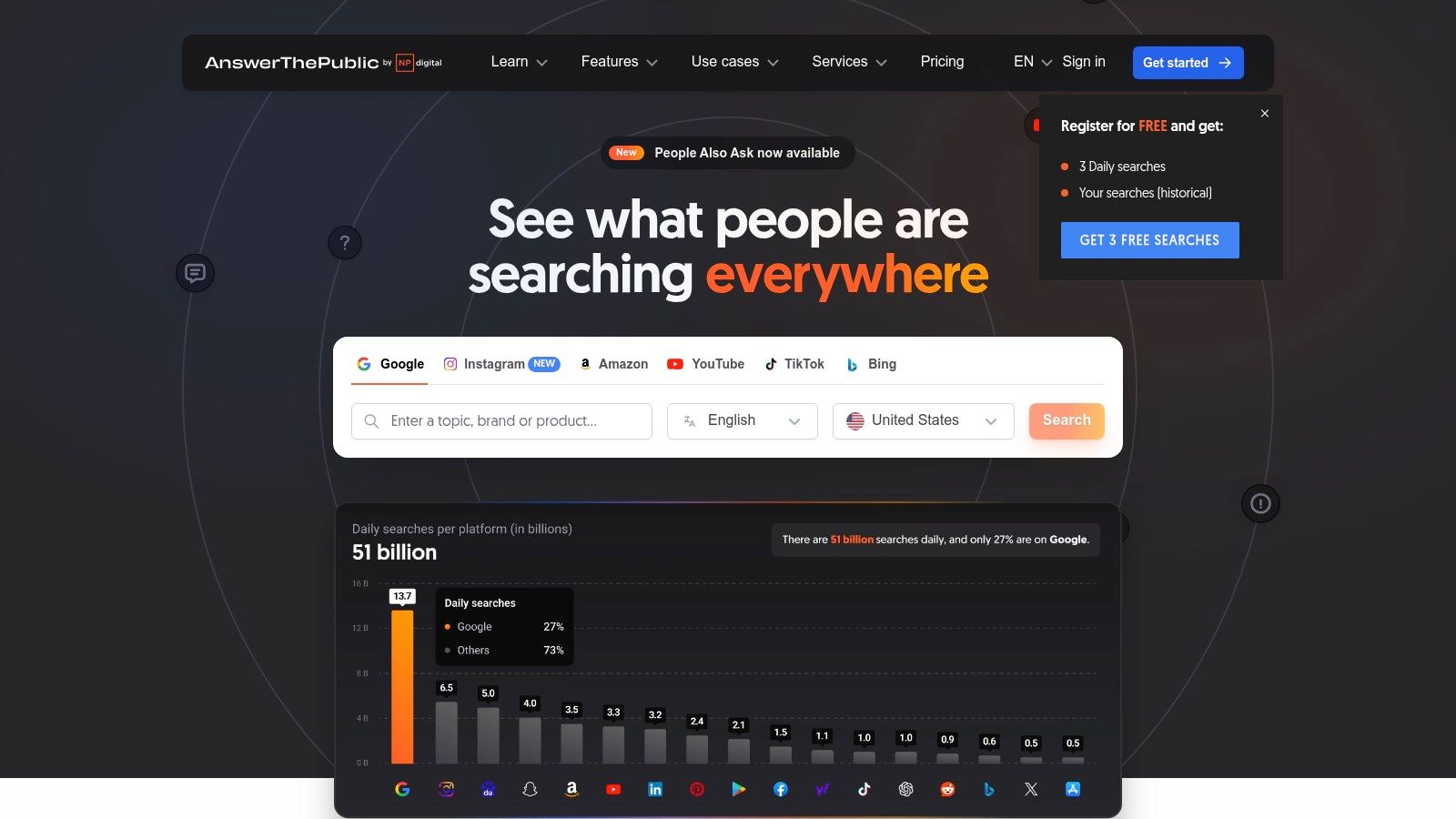
AnswerThePublic is an ingenious keyword ideation tool that taps directly into the user psyche. It fetches and visualises search queries from Google and Bing, organising them into intuitive mind maps based on questions (who, what, where, why), prepositions (for, to, with), and comparisons (versus, like, and). This makes it one of the best free SEO tools for content creators looking to build articles, FAQ sections, and video scripts that directly address real user queries.
Why It’s a Top Free Tool
Its primary strength is uncovering long-tail keywords and content ideas you might otherwise miss. Instead of just guessing what your audience wants to know, you get a visual breakdown of their exact phrasing. For a small business owner, this is invaluable for creating highly targeted blog posts or service pages. The free tier allows a few searches per day, which is often sufficient for brainstorming your next few pieces of content without needing a paid subscription.
Pros:
- Excellent for brainstorming user-centric content and FAQ ideas.
- Intuitive and fast visualisation helps to quickly plan content clusters.
- Provides a wealth of long-tail keyword variations based on real searches.
Cons:
- Free daily searches are very limited, resetting every 24 hours.
- Full data access, including search volume and CPC data, requires a paid subscription.
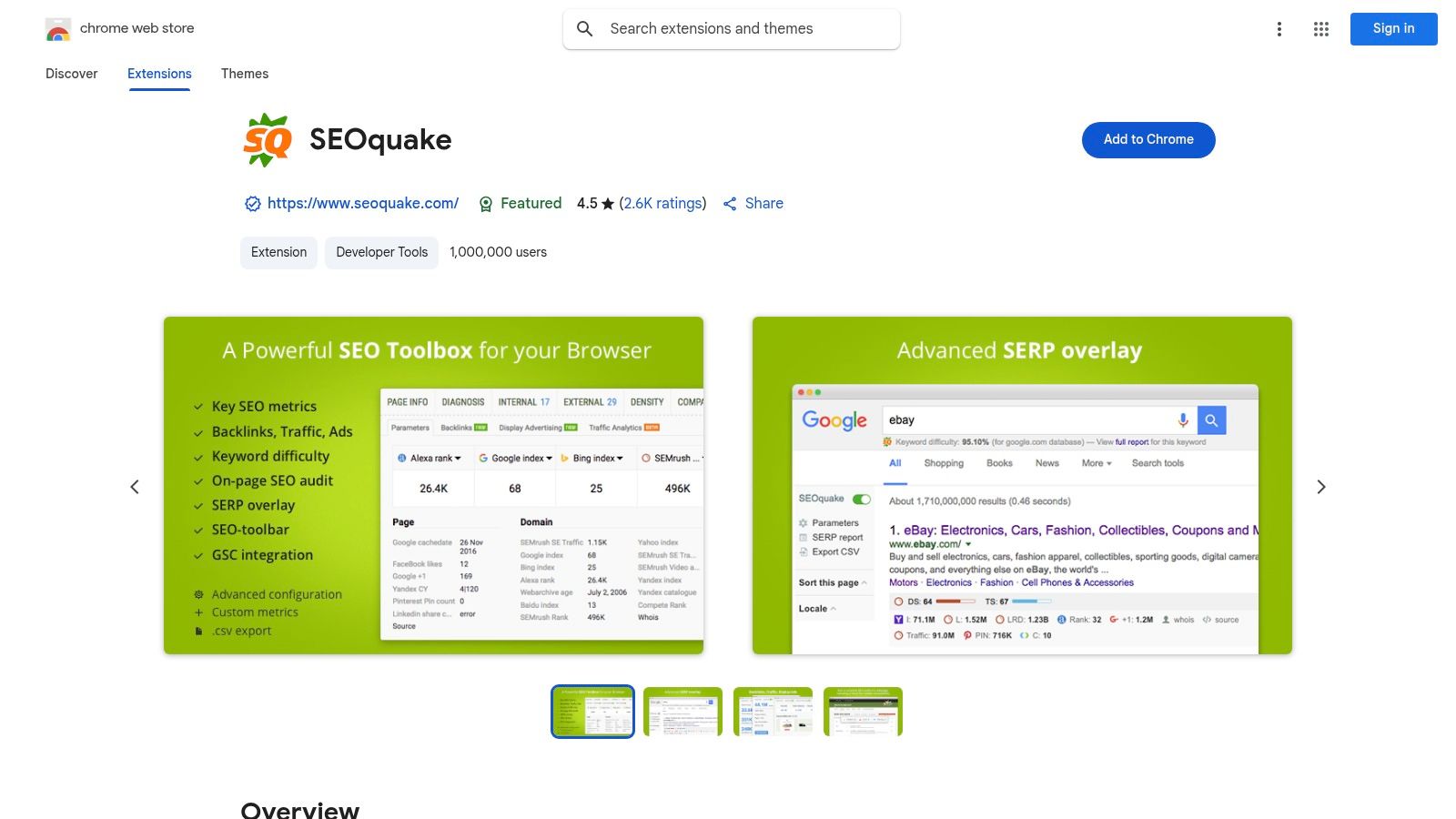
12. Chrome Web Store – SEO Extensions (e.g., SEOquake, MozBar, Ahrefs Toolbar)
While not a single tool, the Chrome Web Store is a gateway to some of the most efficient and best free SEO tools available: browser extensions. These add-ons integrate directly into your browser, overlaying crucial SEO data on search engine results pages (SERPs) and websites as you browse. This provides immediate, page-level diagnostics without needing to switch to a separate platform, making them indispensable for quick analysis and competitor research.
Why It’s a Top Free Tool
SEO extensions like SEOquake by Semrush excel at providing on-the-fly insights. You can instantly see on-page SEO metrics, check keyword density, analyse internal and external links, and even compare domains right from the SERP. They act as a powerful complement to core platforms like Google Search Console. For service-based business owners, this means faster competitor analysis and content opportunity spotting. Most extensions are free to install and use, with optional paid features unlocked by connecting them to a vendor’s main subscription.
Pros:
- Provides immediate, page-level diagnostics and SERP data while browsing.
- Complements other primary SEO tools for faster, more efficient workflows.
- Most core features are free to install and use, with optional vendor account integration.
Cons:
- Data sources and accuracy can vary significantly between different extensions.
- They are best used for quick checks rather than in-depth, project-wide analysis.
Key Feature Comparison of 12 Free SEO Tools
| Tool | Core Features ✨ | User Experience ★★★★☆ | Value Proposition 💰 | Target Audience 👥 | Unique Selling Points 🏆 |
|---|---|---|---|---|---|
| Google Search Console | Performance reports, Indexing, URL inspection | Reliable diagnostics, Google-first data | Free | Service businesses, SEO pros | Direct Google data & alerts |
| Google Analytics 4 (GA4) | Event tracking, Conversions, BigQuery export | Powerful but steep learning curve | Free | Marketers, analysts | Deep integrations, free BigQuery export |
| Google Keyword Planner | Keyword volumes, Trends, Bid estimates | PPC-focused, requires Google Ads account | Free | PPC advertisers, SEO beginners | First-party keyword data |
| Google Trends | Search interest trends, Regional breakdowns | Very easy to use | Free | Content creators, marketers | Real-time & historical trend insights |
| Bing Webmaster Tools | Performance, keyword reports, backlink analysis | Comprehensive audit utilities | Free | SEO professionals, Bing users | IndexNow integration for fast indexing |
| Ahrefs Free SEO Tools + Webmaster Tools | Keyword generator, backlink audits, site audit | High-quality snapshots, limited free use | Free | SEO pros, site owners | Strong technical audits & multiple free SEO tools |
| Semrush (Free Account) | Site audits, rank tracking, content tools (limited) | Broad toolkit but strict free limits | Free | Agencies, SEO pros | All-in-one suite with reliable rank tracking |
| Moz Free SEO Tools | Link & keyword explorer, MozBar extension | Established, limited queries | Free | SEO beginners, educators | MozBar SERP overlays & educational resources |
| Screaming Frog SEO Spider (Free) | Crawl up to 500 URLs, broken links, exportable reports | Fast, reliable desktop crawler | Free | SEO pros, technical SEOs | Industry-standard technical audit tool |
| Ubersuggest by Neil Patel | Keyword ideas, rank tracking, site audits | Beginner-friendly UI, low-cost upgrades | Free + affordable upgrades | Beginners, small businesses | Intuitive interface & generous free tier |
| AnswerThePublic | Visual keyword ideation, question wheel | Fast, intuitive ideation tool | Limited free, paid plans | Content marketers, bloggers | Visual content brainstorming wheels |
| Chrome Web Store – SEO Extensions | SERP overlays, on-page audits, link & keyword metrics | Immediate diagnostics, complementary tools | Free | Marketers, SEOs using browsers | Instant on-page SEO data & popular extensions |
Your Next Step: Turn Free Tools into Real Growth
You’ve just navigated a comprehensive list of the best free SEO tools available today. From the foundational, non-negotiable insights of Google Search Console to the creative keyword brainstorming power of AnswerThePublic, the resources at your fingertips are genuinely powerful. The myth that you need to spend thousands on sophisticated software to get results is just that: a myth. The real challenge, and the greatest opportunity, lies not in accumulating more tools, but in mastering a select few that align with your specific business goals.
The journey from data to profit is paved with strategic implementation. A free tool can reveal a “money” keyword, but it can’t write the expert article that ranks for it. It can highlight a technical site issue, but it can’t execute the fix. This is where your expertise as a business owner, combined with a smart SEO workflow, creates unstoppable momentum. The key takeaway from this guide isn’t to download all twelve tools at once. Instead, it’s to realise that a targeted, consistent approach with the right combination of platforms is what separates stagnant websites from those that climb the search engine results pages.
How to Build Your Free SEO Toolkit
So, where do you begin? Don’t get overwhelmed. The path to effective SEO management with these resources is a process of strategic selection.
- For the Absolute Beginner: If you’re just starting, your focus should be on the fundamentals. Install Google Search Console and Google Analytics 4 immediately. These aren’t optional; they are the bedrock of any SEO effort, providing direct feedback from Google on your site’s performance and user behaviour. Pair them with Google Keyword Planner to start your initial keyword research. This trio forms your essential starting lineup.
- For the Content-Focused Business: If your primary growth lever is content marketing (e.g., consultants, coaches, bridal shops), your toolkit should centre on ideation and on-page optimisation. AnswerThePublic and the free version of Semrush are invaluable for understanding user intent and discovering topic clusters. Use the Screaming Frog SEO Spider (free version) to periodically audit your on-page elements like titles, headers, and meta descriptions to ensure your brilliant content is technically sound.
- For the Technically-Minded Growth Hacker: If you’re comfortable with the technical side of things and want to find a competitive edge (e.g., IT companies, automotive services), your advanced toolkit should include Ahrefs Webmaster Tools for its powerful site audit and backlink data. Using the MozBar or SEOquake Chrome extensions during competitor analysis can provide quick, actionable insights right in your browser, saving you time and revealing strategic gaps.
Ultimately, the best free SEO tools are the ones you use consistently. Create a simple monthly routine: check your core rankings and traffic, run a quick site audit for new errors, and research one or two new content opportunities. By transforming this list from a passive resource into an active part of your marketing operations, you’ll turn free data into tangible, measurable business growth.
Tools provide the data, but a proven strategy turns that data into paying clients. At Homer Digital Marketing, we integrate these powerful tools into our AI-driven marketing systems to build authority and generate a predictable stream of customers for service-based businesses just like yours. If you’re ready to stop guessing and start growing, book a free, no-obligation strategy session with our team today at Homer Digital Marketing.
