
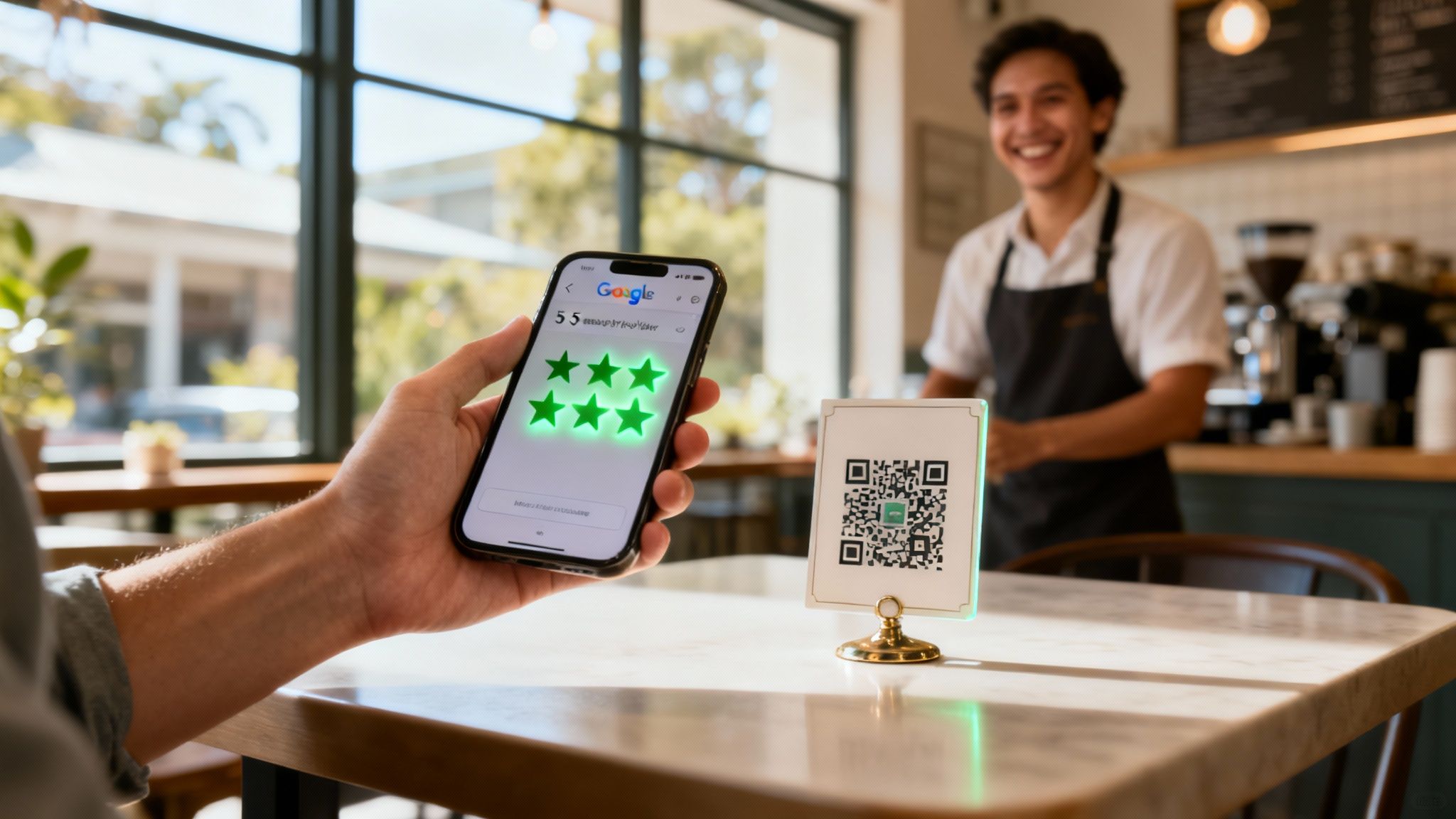
So, you want to know how to get more Google reviews? You’re in the right place. It’s not about luck or magic; it’s about having a simple system to proactively ask your happy customers for feedback and making it incredibly easy for them to share it. Understanding how to get more Google reviews consistently is one of the most powerful ways to improve trust, visibility and customer conversions.
This guide provides an actionable blueprint using direct links, QR codes, and a well-timed, friendly request. It’s all about turning a great in-person experience into powerful online proof that helps your business stand out and attract more customers.
Why Google Reviews Are a Game Changer for Aussie Businesses
Before we get into the how, let’s quickly cover the why. For any Aussie business today, Google reviews are far more than just a nice-to-have. They’re a fundamental part of growing your business, driving trust, visibility, and—most importantly—revenue.
Whether you’re a real estate agent in Sydney or running a wellness clinic in Melbourne, a solid profile of genuine reviews is non-negotiable.
Your potential customers are already looking for you on Google. A huge 61% of Australians use Google to research their shopping decisions, making it the undisputed king of local business discovery. What’s more, 46% of all Google searches in Australia have local intent. Nearly half the people searching are looking for a business just like yours, right now. The message is loud and clear: your next client is on Google.
The Direct Link Between Reviews and Growth
This is where your reviews come in. They act as the social proof that turns a curious searcher into a paying customer. Authentic feedback from real people builds that critical bridge of trust, giving someone the confidence they need to pick up the phone or book an appointment.
But it doesn’t stop there.
Google reviews also have a massive impact on your online visibility and search rankings. A consistent flow of recent, positive feedback tells Google that your business is active, relevant, and valued by the local community. There’s a lot of great info on how Google reviews impact SEO, but the short version is that they’re a core part of any good local SEO strategy. Google itself confirms that review quantity, quality and recency influence local search rankings and customer trust signals in Google Business Profiles.
The difference is huge. We’ve seen businesses with plenty of recent reviews get up to 8 times the visibility and credibility compared to competitors with just a handful of old ones. And you don’t even need a perfect 5-star rating.
Turning Happy Clients Into Your Best Marketers
Here’s the thing—most happy customers won’t think to leave a review on their own. In fact, less than 5% of customers leave feedback without being asked.
This isn’t a problem; it’s a massive opportunity. The businesses with hundreds of great reviews aren’t just getting lucky. They have a system.
By simply asking your satisfied customers at the right moment, you can turn your quiet supporters into your most vocal advocates. It’s not about being pushy. It’s about making it easy for people who already love what you do to share their experience. A simple, friendly ask is the first step in building a self-sustaining engine for attracting more of your ideal clients.
Making It Effortless for Customers to Leave a Review
Let’s be honest. The biggest reason happy customers don’t leave reviews isn’t because they don’t want to. It’s because we make it too hard for them.
If leaving feedback means they have to search for your business, find the right page, and then figure out where to click, you’ve already lost. The real secret to getting more Google reviews is to cut out every single point of friction.
Your goal is to make the process so ridiculously simple it can be done in under 30 seconds. By getting rid of these small but frustrating barriers, you turn what feels like a chore into a quick tap that customers are way more likely to do. This means creating a direct, one-click path from your request straight to the review box.
Create Your Direct Google Review Link
First up, you need to stop sending customers to your main Google Business Profile and just hoping they’ll find the review button. That’s a dead end. Instead, you need a direct link that opens the review pop-up box automatically. This is non-negotiable.
Luckily, creating this link is easy.
- Find Your Place ID: Every business location on Google has a unique Place ID. You can find yours using Google’s official Place ID Finder tool. Just type in your business name and address, and it’ll spit out the ID.
- Build the URL: Once you have your Place ID, stick it on the end of this URL:
https://search.google.com/local/writereview?placeid= - Shorten It: That final URL is long and ugly. Use a link shortener like Bitly to create a clean, memorable link that you can also track.
Pro Tip: Save this short link somewhere your whole team can grab it. Make it your official “review link” so that everyone is using the exact same one, whether it’s in an email, a text message, or a social media post. Consistency is key.
Put Your Link Where It Counts
Now that you have your magic link, it’s time to put it to work. Think about every single touchpoint a customer has with your business and plant the link there. The aim is to catch them at moments of peak happiness.
For example, a local Brisbane mechanic could slap a QR code linked to their review URL right on the final invoice. When a customer picks up their car, thrilled with the service, they can scan the code and leave feedback before they even drive away. It’s immediate and it works.
Consider these high-impact spots:
- In-Store Signage: A small, well-designed sign with a QR code at your point of sale, on cafe tables, or in your reception area.
- Email Signatures: Add a simple line to every team member’s email signature, like “Happy with our service? Leave a review!” hyperlinked with your direct URL.
- Receipts and Invoices: Both digital and physical invoices are perfect for including your link or QR code.
- On Your Website: Create a dedicated “Reviews” page that shows off existing feedback and includes a clear call-to-action button that uses your direct link.
By making the whole process seamless, you take the guesswork and effort out of it. And that dramatically increases the chances a happy customer will tell the world about their great experience.
Building a Proactive Review Request System
If you’re just sitting back and waiting for reviews to trickle in, you’re playing a slow and unreliable game. To really get ahead and learn how to get more Google reviews, you need to switch from passive hope to a proactive, repeatable system. It’s all about building a process that consistently asks your happy customers for feedback right when they’re feeling the most positive about your service.
Having a system doesn’t mean being pushy. It’s about making the request feel like a natural and valued part of their journey with you. When you systematise your approach, that random trickle of feedback turns into a predictable and powerful stream of social proof that actually fuels your business growth.
Timing Your Request for Maximum Impact
I can’t stress this enough: timing is everything. Ask too early, and you seem presumptuous. Ask too late, and that initial buzz and delight have worn off. The sweet spot is what I call the “peak happiness” moment.
So, what does that look like in the real world?
- For service businesses like consultants or mechanics: The best time is immediately after you’ve delivered that final, successful result. Think the project sign-off email or that moment you hand back the keys to a perfectly serviced car.
- For appointment-based businesses like wellness clinics or real estate agents: Send a request a few hours after a great appointment or a successful property viewing. Let the positive experience settle in first.
- For businesses selling products: Wait about 1-2 weeks after delivery. This gives your customer enough time to actually use and appreciate what they bought.
The table below breaks down the best timing and methods for different business types to help you pinpoint that perfect moment.
Review Request Timing and Method
| Business Type | Optimal Time to Ask | Recommended Method |
|---|---|---|
| Consultants & Agencies | Immediately upon project completion or milestone approval. | Personalised email with a direct review link. |
| Tradespeople (Plumbers, Electricians) | At the point of payment, once the job is successfully finished. | QR code on the invoice or a follow-up SMS. |
| Health & Wellness Clinics | 2-4 hours after a positive appointment. | Automated SMS or email follow-up. |
| Real Estate Agents | After a successful property inspection or contract signing. | A personal email or a follow-up call. |
| E-commerce Stores | 7-14 days after the product has been delivered. | Automated email sequence triggered by delivery confirmation. |
Finding your “peak happiness” moment and making the ask a standard part of your process is the key to turning a trickle of reviews into a flood.
Crafting the Perfect, Non-Intrusive Ask
Your request needs to feel personal and be incredibly simple. Forget long, complicated emails—they just get ignored. Focus on a short, friendly message that gets straight to the point. For a deep dive into different methods, check out these proven strategies to get Google reviews.
The link between review volume and business success is undeniable. We tracked 36 Australian businesses across 28 industries and found that the top performers in review volume saw an average 8x difference in performance compared to their lower-ranked competitors.
Local Aussie consumers read an average of 10 reviews before making a decision, and 88% trust them as much as a personal recommendation. This is why embedding simple review requests into your customer touchpoints—like follow-up emails or QR codes on invoices—is one of the most cost-effective things you can do. It boosts your review numbers and signals to Google’s algorithm that your business is active and trustworthy.
This simple flowchart shows how to make the journey from request to review completely seamless for your customer.
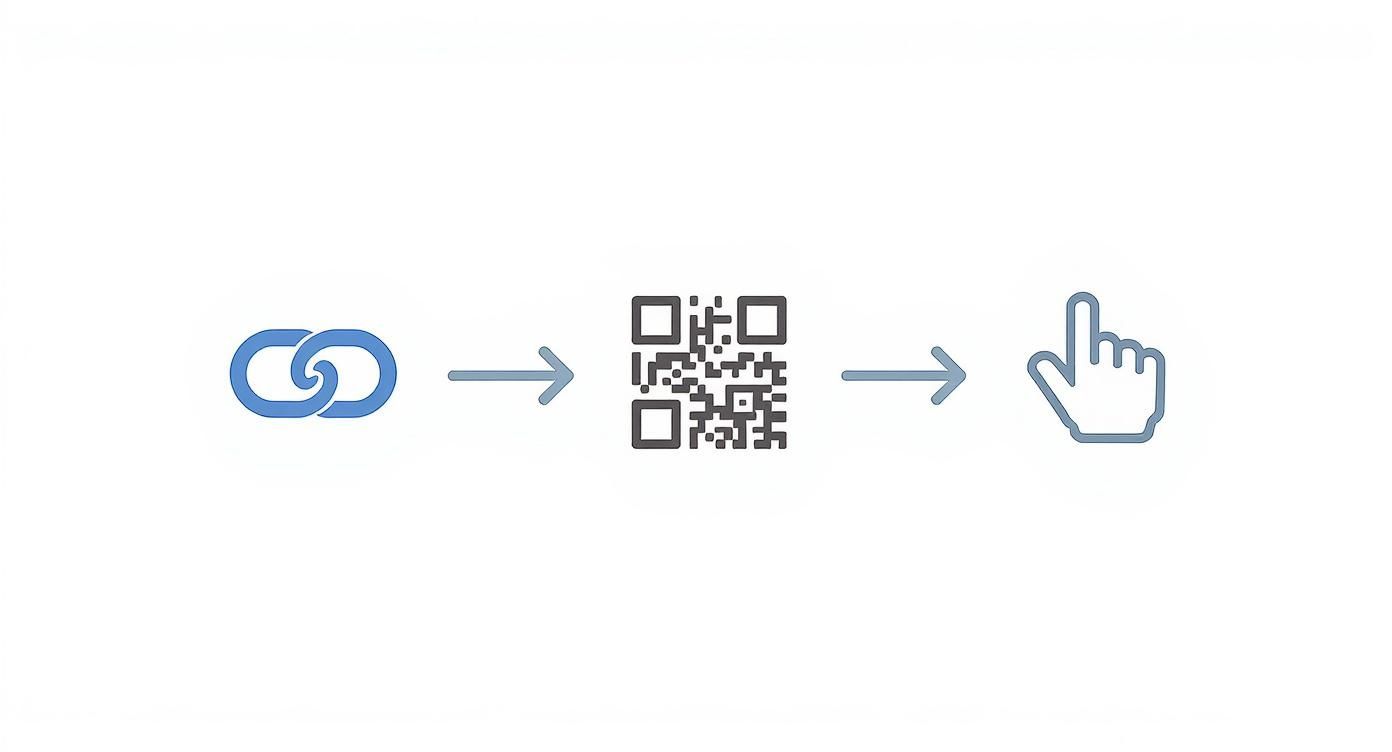
By giving them a direct link or a scannable QR code, you remove all the friction. They can act immediately, right when they’re most motivated to do so.
Important Note on ACCC Compliance: You absolutely cannot offer incentives (like discounts or gifts) in exchange for reviews in Australia. The ACCC has very clear guidelines against this. Your system should focus on asking for genuine, unbiased feedback from all customers—not just filtering for the happy ones. Honesty and transparency are non-negotiable.
How to Automate and Scale Your Review Collection
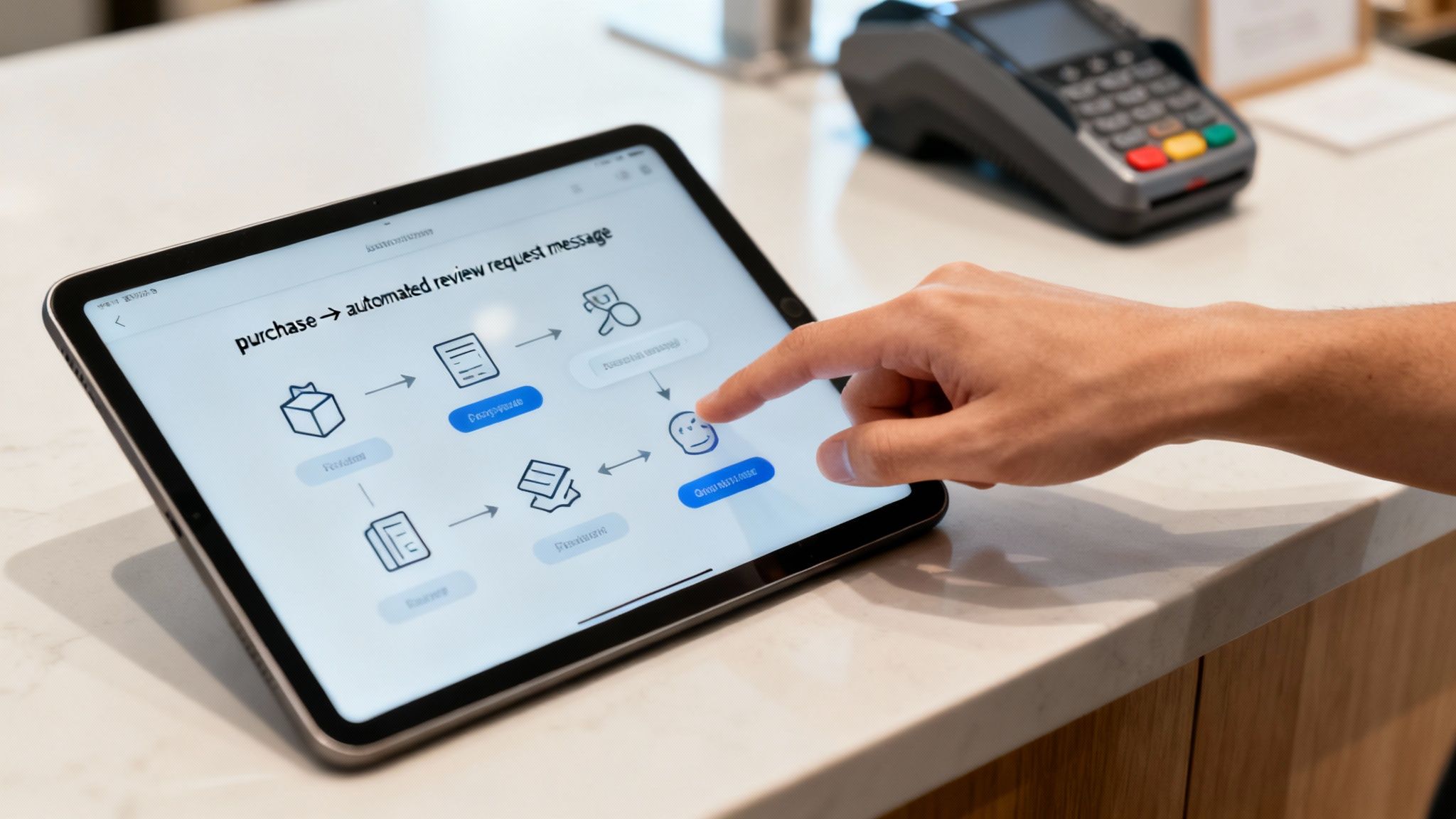
As your business grows, manually asking every customer for a review becomes a massive bottleneck. It’s hit-or-miss, a pain to track, and just doesn’t scale.
If you want a reliable stream of fresh reviews, you have to move from one-off manual requests to a hands-off, automated engine that works for you 24/7.
This is where automation becomes your secret weapon in the mission for more Google reviews. By connecting review software with the systems you already use, you create a seamless process that ensures no happy customer slips through the cracks. It’s a small investment in tech that pays huge dividends in social proof.
Setting Up Smart Triggers for Timely Requests
The heart of automation is using triggers from the systems you already rely on every day. Think about your Customer Relationship Management (CRM) or Point of Sale (POS) system. These platforms know exactly when a job is done, making them the perfect launchpad for a review request.
You can set up smart triggers based on specific customer actions, such as:
- A completed purchase: The moment a payment is processed in your POS, an automated email or SMS can go out.
- A closed support ticket: After you’ve successfully solved a customer’s issue, a request can be sent.
- A finished appointment: When an appointment is marked “completed” in your scheduling software.
These triggers make sure your request lands at that “peak happiness” moment we talked about, without you lifting a finger. If you’re looking to get started, our guide on marketing automation for small business is a great place to explore what’s possible.
Choosing the Right Tools for Your Business
For Australian businesses, using review generation tools that plug into a CRM or POS is a total game-changer. It creates a steady, compliant flow of authentic feedback with almost zero manual effort.
In fact, Australian-based research has found that review volume has a stronger correlation with local business performance than even page speed or backlink counts. For any business serious about growth, a proactive, tech-driven review collection process is no longer a “nice-to-have”—it’s a non-negotiable part of modern reputation management.
The goal isn’t just to automate, but to create a consistent and personalised experience. Good software will let you customise message templates, schedule send times, and track your results, turning review collection into a measurable and scalable part of your marketing strategy.
Engaging With Every Review to Build Your Brand

Getting a steady stream of Google reviews is a huge win, but that’s only half the job. The real magic happens in how you respond. Every single reply—whether it’s to a glowing 5-star rave or a critical 1-star comment—is a public performance of your brand’s character and commitment to your customers.
Responding to reviews shows potential customers you’re engaged, you care, and you’re actually listening. In fact, a whopping 93% of consumers expect businesses to respond to their feedback. Ignoring them isn’t just a missed opportunity; it’s a massive red flag for anyone checking you out online.
Responding to Positive Reviews
It’s tempting to see a 5-star review, feel good, and just move on. But taking a moment to write a thoughtful response can turn a happy customer into a lifelong advocate for your business. It reinforces their great experience and shows you appreciate them, making them far more likely to come back and recommend you to others.
Your reply doesn’t need to be a long-winded essay. A simple, personalised thank you is often more than enough.
- Use their name: Address the reviewer directly. It makes the whole interaction feel personal, not canned.
- Mention a specific detail: If they mentioned a particular service or a team member by name, acknowledge it. This proves you’ve actually read what they wrote.
- Invite them back: End with a warm, genuine invitation to use your services again.
For example, you could write something like: “Thanks so much for the kind words, Sarah! We’re thrilled you had a great experience with our team. We look forward to seeing you again soon!” It’s a simple formula, but it works wonders for deepening customer loyalty and building a real community around your brand.
Handling Negative and Neutral Reviews
Let’s be honest, negative reviews are tough to read. But they are also your single greatest opportunity for growth and building a stellar reputation. A calm, professional, and genuinely helpful response can neutralise a bad situation and sometimes even win back an unhappy customer.
More importantly, it shows every other prospective client how you handle things when they don’t go perfectly.
Responding to negative feedback isn’t about winning an argument; it’s about demonstrating your commitment to customer satisfaction for everyone else who is watching.
Here’s a clear process for responding without losing your cool:
- Acknowledge and Apologise: Kick off by thanking them for taking the time to leave feedback and apologise for their bad experience. Do this even if you don’t fully agree with their side of the story.
- Take it Offline: Provide a direct way to get in touch, like an email address or a phone number, to sort the issue out privately. This shows you’re serious about finding a resolution.
- Keep it Professional: Whatever you do, don’t get defensive or emotional. Your public response is for all your future customers to see.
This proactive approach is a cornerstone of effective reputation management for small businesses and can turn a potential disaster into a masterclass in excellent customer care.
Flagging Fake or Inappropriate Reviews
Every now and then, you’ll get a review that is obviously fake, pure spam, or violates Google’s content policies. When that happens, your best move is to report it. Google lets you flag reviews for removal if they contain things like hate speech, spam, or clear conflicts of interest.
To flag a review, just find it on your profile, click the three little dots, and hit “Report review.” Just be aware that this process can take a while, and Google will only take down reviews that clearly break their rules.
Got Questions About Google Reviews? We’ve Got Answers.
When you’re trying to get more Google reviews, a lot of questions pop up. It’s a bit of a minefield, and it’s smart to make sure you’re playing by the rules.
Let’s tackle the most common questions we hear from Australian business owners. Here are the clear, no-fluff answers you need to move forward confidently and sidestep any costly mistakes.
Can I Offer a Discount for a Google Review?
Short answer: definitely not.
Offering any kind of incentive—whether it’s a discount, a gift card, or a freebie—in exchange for a review is a huge no-no. It’s a direct violation of policies from both Google and the Australian Competition and Consumer Commission (ACCC).
Getting caught can lead to some serious headaches, like having all your hard-earned reviews wiped out and taking a major hit to your credibility. The focus should always be on delivering a fantastic service that makes genuinely happy customers want to share their experience.
Honestly, the best incentive you can offer is an amazing customer experience. When people feel looked after and are genuinely impressed, they’re far more likely to leave a glowing review without you even asking.
How Many Reviews Do I Actually Need?
There’s no magic number here. What really matters is consistency and recency.
Think about it: a business with 50 recent reviews and a solid 4.7-star rating looks way more trustworthy than a business with just 10 perfect 5-star reviews from two years ago. An old, dusty review profile makes potential customers wonder if you’re even delivering that same quality anymore.
Your goal should be to create a steady stream of new reviews coming in every month. This tells both Google and your future customers that your business is active, reliable, and delivering great service right now.
What’s the Best Way to Handle an Unfair Negative Review?
First thing’s first: take a breath. The key is to always respond publicly with a calm, professional, and empathetic tone.
Acknowledge the person’s concerns without getting defensive. Remember, your reply isn’t just for them—it’s for every single future customer who reads it.
If the review is a clear violation of Google’s policies (like it contains hate speech, spam, or is obviously fake), you should absolutely flag it for removal.
Otherwise, the best strategy is to respond constructively and then shift your energy back to getting a steady flow of new, positive reviews. This drowns out the odd negative comment and paints a far more accurate and balanced picture of your business.
Editorial Note
Homer Digital Marketing publishes practical guides on digital visibility, reputation management and lead generation for service based businesses.
