

In today's digital world, reputation management for small business isn't just a marketing task—it's a core survival strategy. Wondering how to remove negative reviews fast or what the best online reputation management services are? You've come to the right place. This guide is your complete roadmap to monitoring online chatter, responding to all customer feedback (the good, the bad, and the ugly), and proactively shaping a digital presence that builds unshakable trust.
Why Your Online Reputation Is Everything
Think about it: nearly every decision a potential customer makes today starts with a quick online search. That means your online reputation is your new digital storefront. It's the critical first impression you make long before someone walks through your door.
For a small business, that first digital handshake is make-or-break. A single negative review or a poorly handled complaint can have a devastating impact, turning a potential customer away in a heartbeat. This isn't just a theory; it's a real, measurable risk to your bottom line.
The Real Cost of a Bad Reputation
Reputational risk is now one of the top financial threats facing Australian small businesses. The numbers don't lie. Alarming research from cockatoo.com.au shows a stark reality: 71% of Australians will abandon a brand after just one bad experience.
This is especially damaging for the 2.5 million small businesses that form the backbone of our economy. Most depend on local, repeat customers to keep the lights on.
Ignoring what people are saying about you online is no longer an option. It's like leaving your front door unlocked and hoping for the best.
Key Takeaway: A strong online reputation is a powerful competitive advantage. It builds the trust required to not only attract new customers but also to retain them, creating a loyal base that fuels growth and shields you from the occasional negative comment.
The Three Pillars of Small Business Reputation Management
Getting your reputation management for small business strategy right doesn't have to be complicated. It boils down to three core pillars that any business owner can put into action immediately.
The table below breaks down these foundational activities.
The Three Pillars of Small Business Reputation Management
| Pillar | Key Activities | Why It Matters for Your Business |
|---|---|---|
| Active Monitoring | Setting up alerts and regularly checking review sites, social media, and forums for mentions of your brand. | You can't manage what you don't know. This is your early warning system for both issues and opportunities. |
| Strategic Responding | Replying promptly and professionally to all feedback—positive and negative. Thanking happy customers and resolving complaints. | This shows you care about customer experience, builds trust, and can turn a negative situation into a positive one. |
| Proactive Building | Actively asking happy customers for reviews, sharing positive testimonials, and creating content that showcases your expertise. | This lets you take control of the narrative, drowning out the odd negative comment with a flood of genuine, positive feedback. |
These three pillars work together to create a powerful, positive loop for your business.
What's more, these activities are directly linked to your visibility in local search results. Google loves to see businesses with a steady stream of recent, positive reviews. To learn more, check out our guide on what is local search optimisation.
Setting Up Your Online Listening Post
You can't manage a conversation you don't know is happening. The first step in smart reputation management for small business is to listen. This isn’t about buying expensive software; it’s about setting up a simple, effective listening post.
The goal is to build a sustainable habit—just 15 minutes a day—that turns online chatter into a powerful business advantage.
Start with Free and Powerful Tools
You don’t need a huge budget to monitor your brand reputation. In fact, some of the best tools are completely free.
Think of Google Alerts as your non-negotiable starting point. It's your digital alarm system. You can create alerts for:
- Your Business Name: Include common misspellings.
- Key Products or Services: Track your signature offerings.
- Your Name (and Key Staff): An owner's reputation is the brand's reputation.
- Your Competitors' Names: Gain direct insight into their customer feedback.
Setting these up means you get an email digest of new mentions from across the web. This is your first line of both defence and opportunity.
Master Your Key Review Platforms
While Google Alerts scans the web, the most potent feedback lives on specific review platforms. You must know where your customers are talking and show up there.
For nearly every local business, your Google Business Profile is ground zero. It’s often the very first thing a potential customer sees. Claiming your profile is step one; actively monitoring it is where the real work begins.
Beyond Google, your industry will tell you where to focus next:
- Hospitality (Cafes, Restaurants): TripAdvisor and Zomato are essential.
- Trades & Home Services: HiPages is a critical hub.
- Real Estate Agents: Reviews on Domain and realestate.com.au carry immense weight.
- Professional Services: LinkedIn recommendations are key.
Don't try to be everywhere. Pinpoint the top two or three platforms where your ideal clients hang out and make a habit of checking them daily.
Real-World Example: Imagine a local bakery in Melbourne sets up these alerts. They spot a new Google review mentioning stale pastries. The owner immediately investigates, finds a supplier delivered an old batch, contacts the customer with an apology and voucher, and switches suppliers. The problem is fixed before it snowballs into a reputation crisis. That's proactive listening in action.
Create a Sustainable Monitoring Routine
The secret is making it manageable. Create a simple daily workflow that takes no more than 15 minutes.
Here’s a practical daily checklist:
- Review Google Alerts (2 mins): Scan your daily email for anything urgent.
- Check Google Business Profile (5 mins): Respond to new reviews or questions.
- Check Primary Industry Platform (5 mins): Log into your top site (e.g., TripAdvisor).
- Quick Social Media Scan (3 mins): Check DMs on your main channel.
By building this small, consistent habit, monitoring shifts from a chore to a source of incredible business intelligence.
How to Respond to Every Type of Customer Review
How you handle customer reviews is a public performance of your customer service. Getting it right can turn fence-sitters into loyal fans.
Speed is everything. A quick response tells the reviewer—and everyone else watching—that you're paying attention.
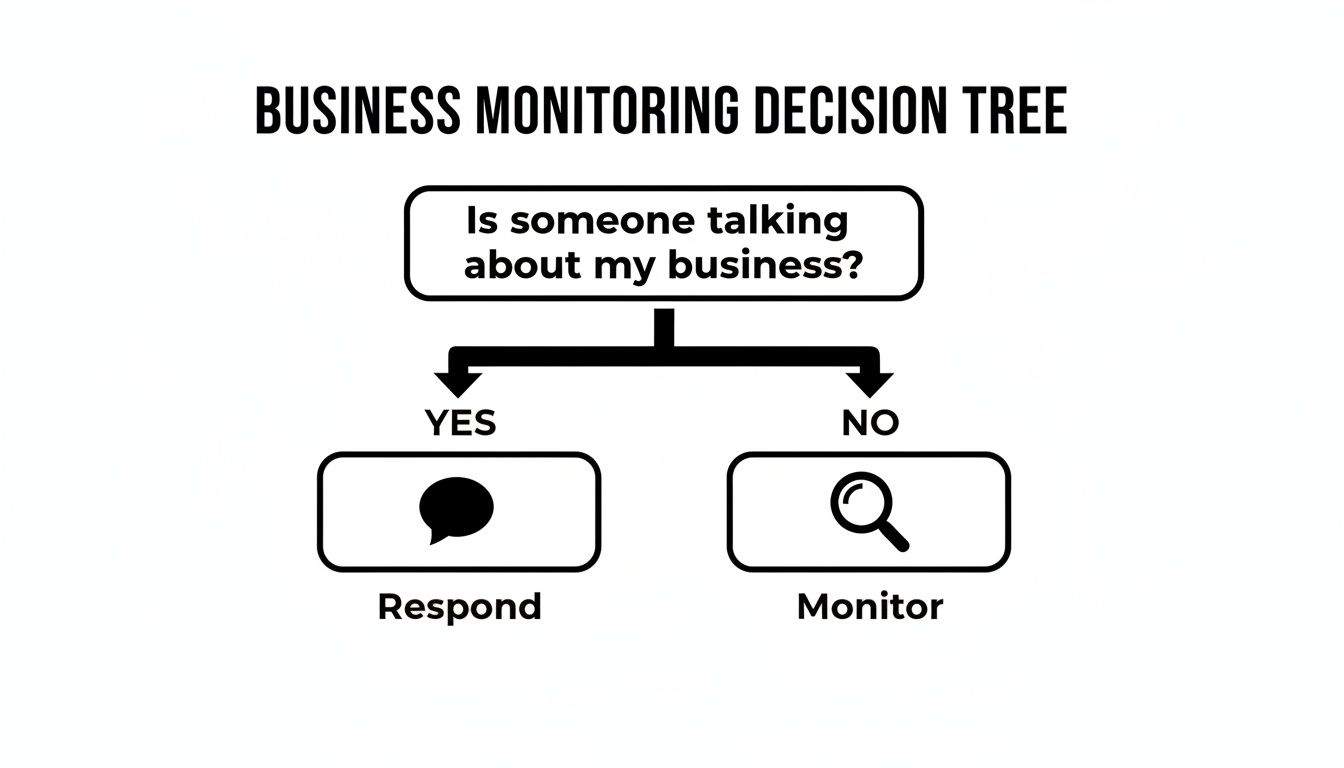
This simple chart nails the core decision every business owner must make. You either engage or you get left behind.
Handling Negative Reviews with the AAA Model
A negative review can feel like a punch to the gut, but it's an opportunity to show your professionalism. The goal is to de-escalate the situation publicly and solve it privately. For this, we use the ‘Acknowledge, Apologise, Act’ (AAA) model.
- Acknowledge: Show them you’ve read their complaint. Validate their feelings by mentioning the specific issue, like "the late delivery" or "the cold coffee."
- Apologise: Offer a genuine apology for their bad experience. This isn't about admitting fault; it's about showing empathy.
- Act: Give them a clear next step. Offer to make it right and provide a direct email or phone number to take the conversation offline.
Here's how that looks for a local cafe:
"Hi [Customer Name], thank you for sharing this. I'm so sorry to hear your flat white wasn't up to scratch and that you felt rushed. That’s not the experience we want for anyone. I'd really like to make this right. Could you please email me directly at owner@yourcafe.com.au so I can get a few more details?"
It’s professional, empathetic, and moves the conflict to a private channel.
Turning Positive Reviews into Marketing Gold
A glowing review is free marketing—don't waste it with a generic "Thanks!" A thoughtful, personalised response makes your happy customer feel seen and boosts your local SEO.
When you get a good one, make sure you:
- Thank them by name. Personalisation goes a long way.
- Mention a specific detail. Talk about the product they loved.
- Invite them back. Mention an upcoming promotion or new item.
- Be real. Let your brand's personality come through.
For a boutique bridal shop, it might sound like this:
"Thank you so much, Jessica! We're absolutely thrilled you found the perfect dress with us. It was a pleasure helping you. We can't wait to see the photos from your big day and would love to help you find the perfect accessories when you're ready!"
Navigating Tricky Neutral Reviews
Those 3-star reviews can be tricky. The customer isn't furious, but they aren't singing your praises either. These are often packed with valuable, honest feedback.
Your response needs to show you appreciate their honesty. Thank them, acknowledge both the good and the not-so-good, and show you're serious about improving.
"Hi [Customer Name], thanks for leaving a review. We're glad you enjoyed our location, but we're sorry the wait time was longer than expected. We're always working on our service speed, so we appreciate you flagging this."
A fast response is non-negotiable. Research from InMoment shows that responding within 24 hours directly boosts local SEO.
Proactively Building a Five-Star Reputation
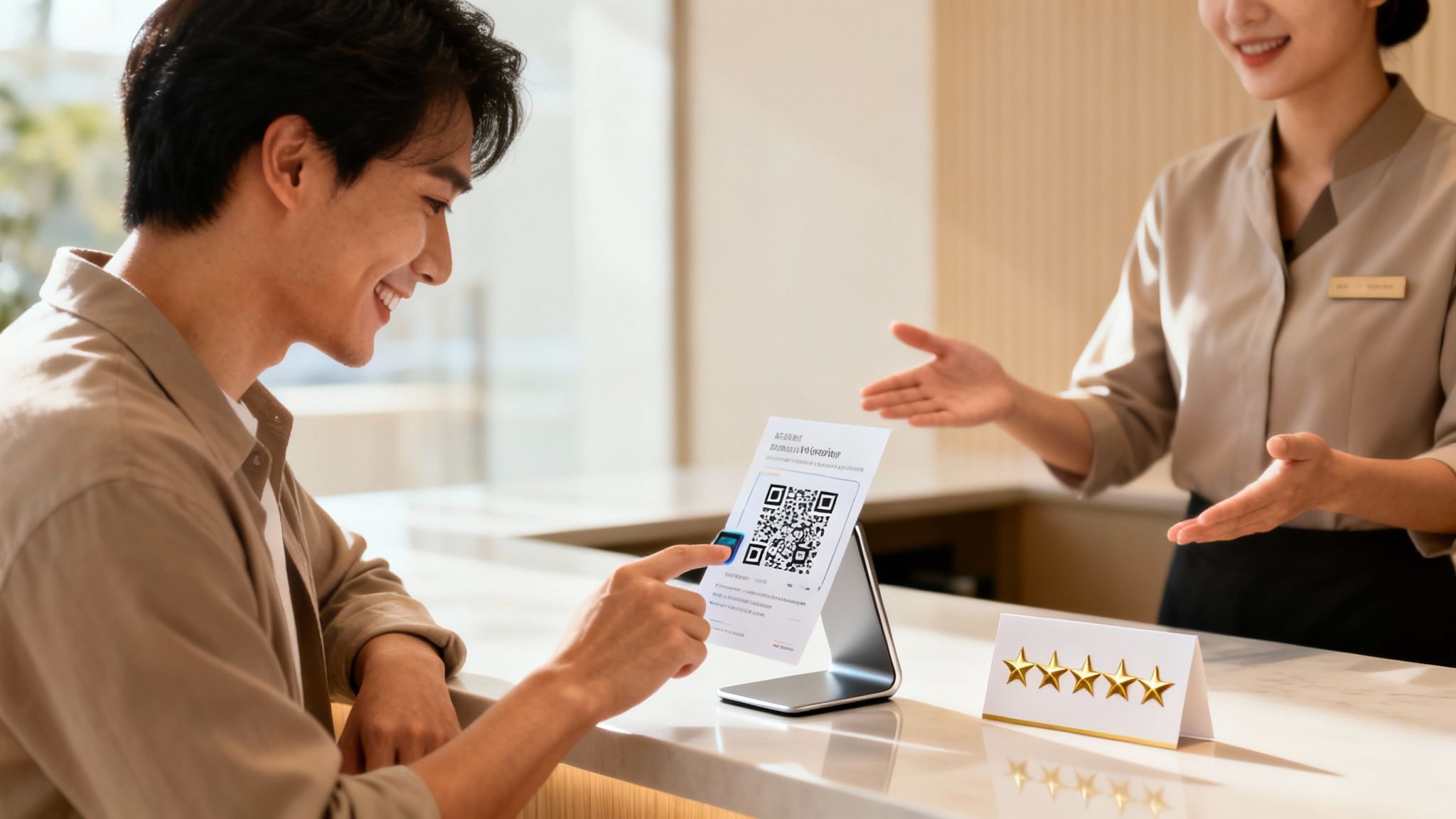
Real reputation management for small business is more than damage control. The smartest businesses actively build a reputation that can withstand a few knocks.
It's about shifting from a defensive crouch to an offensive play. The goal? A steady stream of authentic, positive reviews that acts as a 'reputation buffer'.
Master the Art of the Ask
It sounds simple, but it’s the one thing most businesses forget: consistently ask for a review. How and when you ask is everything.
The best time to ask is at the peak of their happiness. For a real estate agent, that’s right after a successful settlement. Train your team to spot these moments and make a simple, genuine request.
A friendly, "So glad you enjoyed everything today! If you have a spare moment, a quick review on Google would mean the world to us," works wonders. It's personal and effective.
Make Leaving a Review Ridiculously Easy
Even your most loyal customer won't jump through hoops. Your job is to remove every single bit of friction.
Here are a few proven tactics:
- QR Codes: Place a QR code that links straight to your Google review page on receipts or at the counter.
- Email & SMS Follow-ups: Send a quick follow-up message a day later with a direct link.
- Website Links: Add a clear "Review Us" button in your website's footer.
The aim is one or two clicks. For a deeper look, our guide on how to get more Google reviews breaks down the specifics.
Choosing the Right Review Tactic
Not every approach fits every business. Here’s a quick comparison to help you decide where to focus your energy.
Review Generation Tactics Comparison
| Tactic | Effort Level | Potential Impact | Best For |
|---|---|---|---|
| In-Person Ask | Low | High | Service businesses with face-to-face interaction (cafes, salons). |
| Email & SMS Automation | Medium | High | E-commerce or businesses with a customer database. |
| QR Codes on Materials | Low | Medium | Hospitality, retail, and any business with a physical location. |
| Website "Review Us" Button | Low | Low | All businesses as a passive, ongoing collection method. |
A mix of tactics is usually the most effective strategy. Start with the lowest-effort options and build from there.
Turn Positive Reviews into Powerful Marketing Assets
Don't let your best reviews gather dust. They're powerful marketing tools loaded with social proof. Considering 98% of consumers read online reviews for local businesses, putting your best ones in the spotlight is a no-brainer.
Here’s how you can amplify them:
- Website Testimonials: Create a dedicated page featuring your most glowing reviews.
- Social Media Graphics: Turn a killer quote from a review into a shareable graphic.
- Sales Materials: Weave compelling review snippets into your brochures and proposals.
This creates a self-fuelling cycle: generate great reviews, use them as marketing, attract more customers, and get more positive feedback.
Using Technology to Streamline Your Efforts
As a busy business owner, the thought of adding another job to your list is daunting. But effective reputation management for small business isn’t about creating more work—it’s about working smarter.
The right tech can automate, simplify, and amplify your efforts, turning a manual chore into a powerful source of business intelligence.
Why Digital Adoption Matters
The 2025 State of Small Business Report from COSBOA and Square found a direct link between a good reputation and digital tool adoption. The numbers are staggering: tech-enabled sellers process 94% more sales volume than businesses that don't use them.
Why? A strong online reputation builds the trust needed for customers to comfortably use digital payments. This creates a self-sustaining cycle of trust, transactions, and feedback.
Centralise Your Reviews in One Dashboard
Manually checking Google, Facebook, and a dozen other sites every day isn’t going to happen. It's inefficient and unsustainable.
This is what reputation management software is for. It pulls all your reviews into a single dashboard.
Think of it as your command centre, giving you:
- Real-Time Alerts: Get instant notifications for new reviews.
- A Unified Inbox: Respond to all reviews from one place.
- Performance Analytics: Track your average star rating and review volume over time.
To get on top of your online presence without the manual grind, it’s worth exploring the best online reputation management tools available. These platforms empower you to act fast.
Turn Feedback into Actionable Insights
Modern tools do more than collect reviews; they help you understand them. Using keyword and sentiment analysis, you can spot recurring themes.
Imagine a boutique owner noticing "fitting room" in a few 3-star reviews. She realises the lighting is unflattering. A simple fix leads to happier customers and better reviews—a critical insight she might have missed.
This is where technology becomes a strategic asset. It helps you listen at scale, turning scattered comments into concrete business improvements. This process is a key part of a wider strategy. Learn more by exploring our guide on marketing automation for small business.
Your Reputation Management Questions Answered
Diving into reputation management can feel overwhelming. Let's tackle some of the most common questions from business owners.
What Should I Do About a Fake or Malicious Review?
Finding a fake review is infuriating. The natural reaction is to fire back, but a calm, strategic response is your best weapon.
First, report it. Platforms like Google have policies against fake content. Gather evidence—show the person was never a customer—and submit it for removal.
While you wait, respond publicly. This isn't about starting a fight; it's about showing other readers you’re on top of things.
Here’s a perfect template:
"Thanks for your feedback. We’ve checked our records and can't find any client matching your name or the situation you've described. We take every review seriously, so if there's been a mix-up, please reach out to us directly at [your email] so we can investigate."
This response is polite but firm, alerting other readers that the review is likely bogus without getting into a messy public argument.
How Much Time Should This Take Each Week?
Good reputation management isn't about spending hours glued to your screen. It’s about consistency. A small, daily habit is far more effective than a panicked clean-up.
Try the '15-minutes-a-day' habit.
- Daily Check-in (15 minutes): Quickly scan your Google Business Profile and social media for new reviews or comments.
- Monthly Review (1 hour): Block out an hour to analyze trends. Is your average rating climbing? Are there recurring issues to address?
This approach turns a daunting task into a simple part of your daily routine.
Can I Just Delete a Bad Review?
This is the most asked question, and the short answer is almost always no. On third-party sites like Google or TripAdvisor, you cannot delete reviews, even if they’re unfair.
Trying to delete negative feedback is a waste of time. More importantly, it misses the point. A business with a perfect 5.0-star rating can seem less trustworthy than one with a 4.8-star rating that shows they handle criticism gracefully.
Instead, pour that energy into two actions you can control:
- Respond Like a Pro: Use the 'Acknowledge, Apologise, Act' framework. A genuine, helpful response can completely neutralize the impact of a bad review.
- Drown it Out with Positivity: Actively encourage your happy customers to leave reviews. One grumpy comment loses its power when it's buried under a mountain of recent, glowing five-star feedback.
When you focus on responding well and generating fresh praise, you build an authentic, resilient reputation. For more practical advice, check out these actionable reputation management tips.
Ready to take full control of your online reputation and turn it into your most powerful marketing asset? The team at Homer Digital Marketing has over 27 years of experience helping service-based businesses build the visibility and authority they need to attract their ideal clients. We specialise in creating systems that protect your brand and fuel your growth.
Schedule a consultation with us today to see how we can help you build a five-star reputation that lasts.
