

In a competitive real estate market, effective content marketing for real estate agents isn't just another buzzword—it's your ultimate digital open house. Surprised to hear that? The strategy is simple: create and share genuinely useful online material, like in-depth blog posts, local market videos, and actionable social media updates, to attract your ideal clients and build unwavering trust long before they’re even thinking about a transaction. This guide promises to show you exactly how to do it.
Why Content Is Your New Open House

Think about the traditional way of doing things. Agents used to spend their days cold calling and door-knocking, constantly chasing down leads. Today, that entire client journey begins online.
Your potential buyers and sellers are already on Google, typing in their biggest property questions. They want to know "what's happening in the [suburb] market?" or "how much is my home worth?". This is where your content becomes your most powerful tool.
Instead of interrupting people with a sales pitch, you meet them right where they are with helpful information. You’re not just selling houses; you're solving problems and starting relationships.
Shift From Selling to Educating
The entire game here is to provide value first. When you consistently share your expertise, you build a reputation as the go-to authority in your local area. This isn't about running a one-off ad; it's a proven, long-term strategy that nurtures leads over months, sometimes even years.
This modern approach helps you:
- Build Real Trust and Credibility: When you answer someone's question in a blog post or a quick video, you’re not just an agent anymore. You’re a knowledgeable professional they can rely on.
- Generate Qualified Leads: The people reading your content are actively interested in real estate. They’re a world away from a random name on a purchased list.
- Stay Top of Mind: With a steady stream of useful content, your name will be the first one that pops into their head when they're finally ready to make a move.
The modern client journey begins with a search query, not a sales call. Your content is your first handshake, your digital storefront, and your 24/7 expert on call. It allows you to build a connection before you’ve even met.
The Power of Answering Questions
Every single piece of content you create should have one clear goal: answer a specific question for your target audience. A first-home buyer has completely different worries than a seasoned investor hunting for their next rental property. For instance, a first-home buyer might search for "checklist for first time home buyer," while an investor may look for "best rental yield suburbs in Sydney."
To really get a handle on how powerful this is, you might find it useful to check out a complete guide to content marketing.
By creating content that speaks directly to these different needs, you stop adding to the noise and start providing targeted solutions that pull the right people toward your business. It's how you stop chasing leads and start attracting them instead.
Defining Your Niche and Ideal Client

Before you write a single word or film a single video, let’s get one thing straight: great content marketing for real estate agents starts by asking, who are you actually talking to?
Creating content without a clear audience is like hosting an open house but forgetting to share the address. You can put in all the effort, but the people who matter will never find you.
Broadcasting generic messages to everyone is a surefire way to connect with no one. The secret is to narrow your focus, get laser-specific about your niche, and build a crystal-clear picture of your ideal client. This groundwork ensures every piece of content you create is sharp, targeted, and hits home with the exact people you want to attract.
Identify Your Niche Market
Think back to your best deals. Who were those clients? The ones you genuinely enjoyed working with, who valued your expertise and referred you to others. What did they all have in common?
Looking at your past successes is the fastest way to uncover your natural niche. You're not just another agent; you're a specialist.
Your niche could be built around:
- Property Type: Are you the go-to expert for heritage-listed homes, chic inner-city apartments, or sprawling rural properties?
- Client Demographics: Do you click with first-home buyers, luxury downsizers, or savvy property investors?
- Geographic Area: Can you become the undisputed authority for a specific suburb or a cluster of neighbouring communities?
Choosing a niche doesn’t shrink your business; it focuses your marketing. It makes you the obvious choice for a specific group of people, which is how you stand out in a crowded market.
Create a Detailed Client Persona
Once you’ve nailed your niche, it’s time to bring your ideal client to life with a persona. This isn't just a creative exercise; it's about building a semi-fictional character based on real-world data and insights about your target market.
Give them a name and a story. It makes them feel real, and that makes guiding your content decisions a whole lot easier.
Let's imagine you're an agent targeting young families looking to upgrade in a growing suburb.
Client Persona Example: 'The Millennial Upgrader'
- Name: Sophie and Tom, aged 32 and 34.
- Background: They have a toddler and another baby on the way. Their two-bedroom city apartment is bursting at the seams, and they’re desperate for more space, a backyard, and a family-friendly community.
- Pain Points: They feel completely overwhelmed by the market. They're anxious about overpaying and confused about the logistics of selling their current place while buying a new one. Their biggest fear is choosing a suburb without good schools and parks.
- Online Habits: They spend their evenings scrolling Instagram for home inspiration, use Google to research suburb profiles, and are active in local Facebook parenting groups asking for advice.
- What They Value in an Agent: Transparency, patience, and someone who is tech-savvy. Quick replies via text or email are a must, and they deeply value an agent who provides educational content that demystifies the whole process.
By truly understanding Sophie and Tom's specific anxieties and where they hang out online, you can create content that speaks directly to them. Think: a blog post on "How to Time Your Sale and Purchase Perfectly" or an Instagram Reel showcasing the best family parks in your hero suburb.
Define Your Unique Value Proposition
With your niche and ideal client locked in, the final piece of the puzzle is clarifying what makes you different. Your Unique Value Proposition (UVP) is a simple, powerful statement that explains the benefit you offer and what sets you apart.
Forget generic taglines like "Your Local Real Estate Expert." A strong UVP is specific and client-focused.
Consider these much more powerful alternatives:
- "I help growing families find their forever home in the Hills District by providing exclusive access to off-market properties."
- "I specialise in helping downsizers sell their large family homes for a premium, ensuring a seamless and stress-free transition."
Your UVP becomes the north star for all your marketing. It’s the core message you’ll weave through your website, your social media bio, and every piece of content you create. This ensures everything is consistent, clear, and compelling.
To see how other businesses have successfully targeted their ideal clients, you can explore the diverse range of industries we partner with. This foundational work transforms your marketing from a scattergun approach into a precision strategy that attracts the right people, every single time.
Creating High-Impact Content That Converts
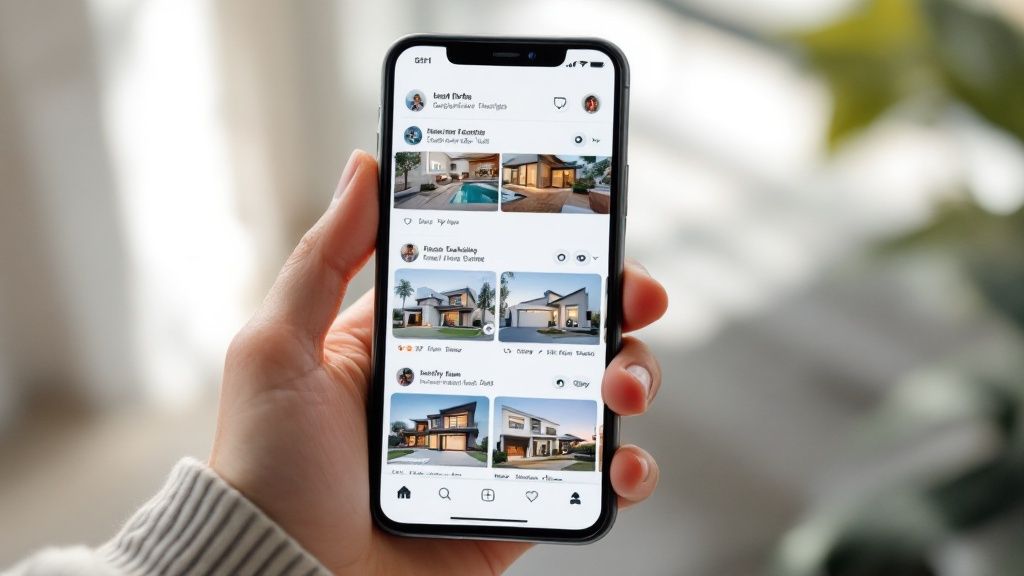
Alright, you know who you’re talking to. Now it’s time to move from strategy to action. Creating content isn't just about filling a calendar; it’s about crafting valuable assets that attract the right people, keep them engaged, and turn them into clients.
The best content marketing for real estate agents is built on one simple idea: solve problems and show you know your stuff. That means focusing on formats that build trust and prove why you’re the go-to expert in your local market.
The Undeniable Power of Video Content
If you take one thing away from this guide, let it be this: video is no longer a "nice to have." It's the most powerful tool you have for building a personal connection, and doing it fast.
In Australia, video is a game-changer. A massive 73% of Australian homeowners say they’d rather list with an agent who uses video. On top of that, listings that feature a video pull in 49% more qualified leads. Yet, as of 2021, most agencies still weren't producing video content, which leaves a huge gap in the market for you to fill. You can dig into the latest real estate marketing statistics to see just how big that opportunity is.
In real estate, trust is your most valuable currency. Video accelerates the trust-building process like nothing else, allowing potential clients to see your personality and expertise before they even pick up the phone.
And don't get caught up in production value. Your smartphone, a bit of good lighting, and clear audio are all you need to create videos that connect with your audience.
Here are a few proven video ideas you can start with today:
- Neighbourhood Tours: Forget property lines. Create short, punchy reels showing off the best cafes, parks, and schools in your key suburbs. Show people what it’s really like to live there.
- 'Day in the Life' Reels: Pull back the curtain and show the hustle. This makes your brand feel human and builds a real connection on platforms like Instagram and TikTok.
- Quick Market Updates: Film a 60-second video breaking down the latest local stats. You’ll make complex data easy to digest and position yourself as the expert with their finger on the pulse.
Writing In-Depth, Searchable Blog Posts
While video is brilliant for grabbing attention, detailed blog posts are your secret weapon for capturing high-intent search traffic from Google. These are the articles that answer your clients' biggest questions and work for your business 24/7.
Just think about the questions clients ask you every single day. Every single one is a potential blog post topic that can bring qualified leads to your door.
Your goal should be creating long-form, hyper-local content that offers genuine value. An article titled, "A Complete Guide to Buying Your First Home in Parramatta" is an SEO goldmine that will attract exactly the audience you want.
A Practical Content Pillar Framework
Feeling a bit overwhelmed? A content pillar framework will bring some much-needed structure to your planning. Instead of starting from a blank page every week, you can organise your content around a few core themes that mirror your client's journey.
This approach ensures you cover all your bases and never run out of fresh ideas.
Example Content Pillars:
| Pillar Theme | Description | Content Examples |
|---|---|---|
| Buying Guides | Educational content that simplifies the purchasing process. | "5 Costly Mistakes First-Home Buyers Make," "Your Ultimate Pre-Approval Checklist," Video: "What to Look for During a Home Inspection." |
| Seller Tips | Actionable advice to help homeowners get the best possible price. | "How to Prepare Your Home for Sale in 30 Days," "The Best ROI Home Improvements," Template: "Hyper-Local Market Report." |
| Local Lifestyle | Content that proves your deep connection to the community. | "Top 5 Family-Friendly Cafes in [Suburb]," "A Weekend Guide to the Northern Beaches," Instagram Reel: "Exploring the [Local] Farmers Market." |
| Market Analysis | Data-driven insights that cement your authority. | "Quarterly Market Wrap-Up for [Region]," "Is Now a Good Time to Invest in [Suburb]?," Video: "What a Rate Rise Means for You." |
A structured approach like this makes content marketing for real estate agents feel manageable and, most importantly, sustainable.
To see this in action, imagine you're creating a client success story video. You don’t need a film crew. Just a simple, authentic chat.
Client Success Story Video Outline:
- Intro (10s): "I'm here with [Client Name], who just sold their beautiful home in [Suburb]!"
- Their Challenge (20s): Ask them, "What were your biggest concerns before you decided to sell?"
- The Process (30s): "Walk us through the experience. What was it like working together?"
- The Outcome (15s): "And now, you're onto your next chapter! How does it feel?"
- Call to Action (5s): "If you're thinking about a move, let's have a chat."
This simple framework can be used for videos, blog posts, and social media, ensuring every single piece of content you create has a clear purpose and helps grow your business.
Distributing Your Content for Maximum Reach
Creating amazing content is one thing, but getting it in front of the right people? That’s the other half of the puzzle. If your brilliant market analysis or stunning neighbourhood tour never gets seen, it can't build your brand or bring in leads.
A smart distribution plan is what turns your content from a monologue into a conversation. It’s how you make sure your expertise reaches your ideal clients on the platforms they’re scrolling through every single day. Forget the old "post and pray" method—we're talking about a thoughtful, multi-channel strategy where every platform has a purpose.
Choosing the Right Social Media Channels
Not all social media platforms are built the same, especially for real estate. It's far better to dominate one or two channels than to spread yourself thin across five.
Here's the lowdown on the main players:
- Instagram: This is your visual playground. Think high-quality photos, Reels of property tours, 'before and after' shots, and behind-the-scenes Stories. A "Just Sold" post isn't just a picture of the house; it's a carousel telling the story of the family you helped.
- Facebook: Perfect for building community and running hyper-local ads. Share your blog posts in local community groups (where it’s allowed, of course) and use Facebook Ads to boost listings or promote a seller's guide to a specific postcode. It's still a powerhouse for connecting with local homeowners.
- LinkedIn: Your professional headquarters. This is the spot for your in-depth market analysis, articles on property investment, and professional wins. Use it to connect with investors, developers, and other industry pros to grow your referral network.
The Power of an Email Newsletter
Social media is great for grabbing new attention, but your email list is where you build real relationships. It’s a direct line to your most engaged audience, and you're not at the mercy of some algorithm. An email newsletter keeps you top-of-mind and cements your status as a trusted advisor.
The key is to deliver pure value. Don't just spam listings.
Your email newsletter should feel less like a sales pitch and more like a personal update from the most knowledgeable property expert your subscribers know. It's an opportunity to build loyalty and trust over the long term.
Pack your emails with content people actually want to read:
- A quick summary of your latest blog post with a link to the full article.
- A curated list of the best local events happening that month.
- Exclusive market insights you haven't shared anywhere else.
- A "property of the week" feature that tells a compelling story.
In Australia, the numbers don't lie. With social media ad spending expected to hit AU$7.5 billion, it’s obvious where businesses are focusing their energy. Platforms like Facebook and Instagram offer massive reach, while TikTok's high engagement is gold for connecting with first-home buyers. And considering 97% of buyers use online resources in their property search, a solid distribution plan isn't optional—it's essential. You can discover more insights about the Australian marketing scene to stay ahead of the trends.
Building a Cohesive Multi-Channel Strategy
Your channels need to work together, not in silos. A single blog post can be sliced, diced, and repurposed across your entire ecosystem to squeeze every last drop of value from it. This approach consistently drives people back to your website, which is your main digital hub. For more on this, check out our guide on how to increase website traffic.
A solid plan matches the right content to the right platform. It’s about being strategic, not just busy.
Real Estate Content and Platform Matrix
Here’s a simple matrix to help you match your content types with the most effective platforms to achieve your goals in the Aussie market.
| Content Type | Primary Platform(s) | Strategic Goal |
|---|---|---|
| High-Quality Property Photos/Videos | Instagram, Facebook, RealEstate.com.au | Attract active buyers and showcase listings |
| Local Market Updates (Blog Posts) | Your Website, LinkedIn, Email Newsletter | Build authority and capture seller leads |
| "Day in the Life" Stories & Reels | Instagram, Facebook, TikTok | Humanise your brand and build trust |
| Client Testimonial Videos | Your Website, Facebook, YouTube | Provide social proof and build credibility |
| Neighbourhood Guides | Your Website, Pinterest | Attract out-of-area buyers and rank in search |
| Home Seller/Buyer Checklists | Landing Page (promoted on all channels) | Generate email subscribers and nurture leads |
By aligning your content this way, you ensure every piece you create is working as hard as possible to grow your business.
This infographic shows a simple way to track how well your distribution is working.
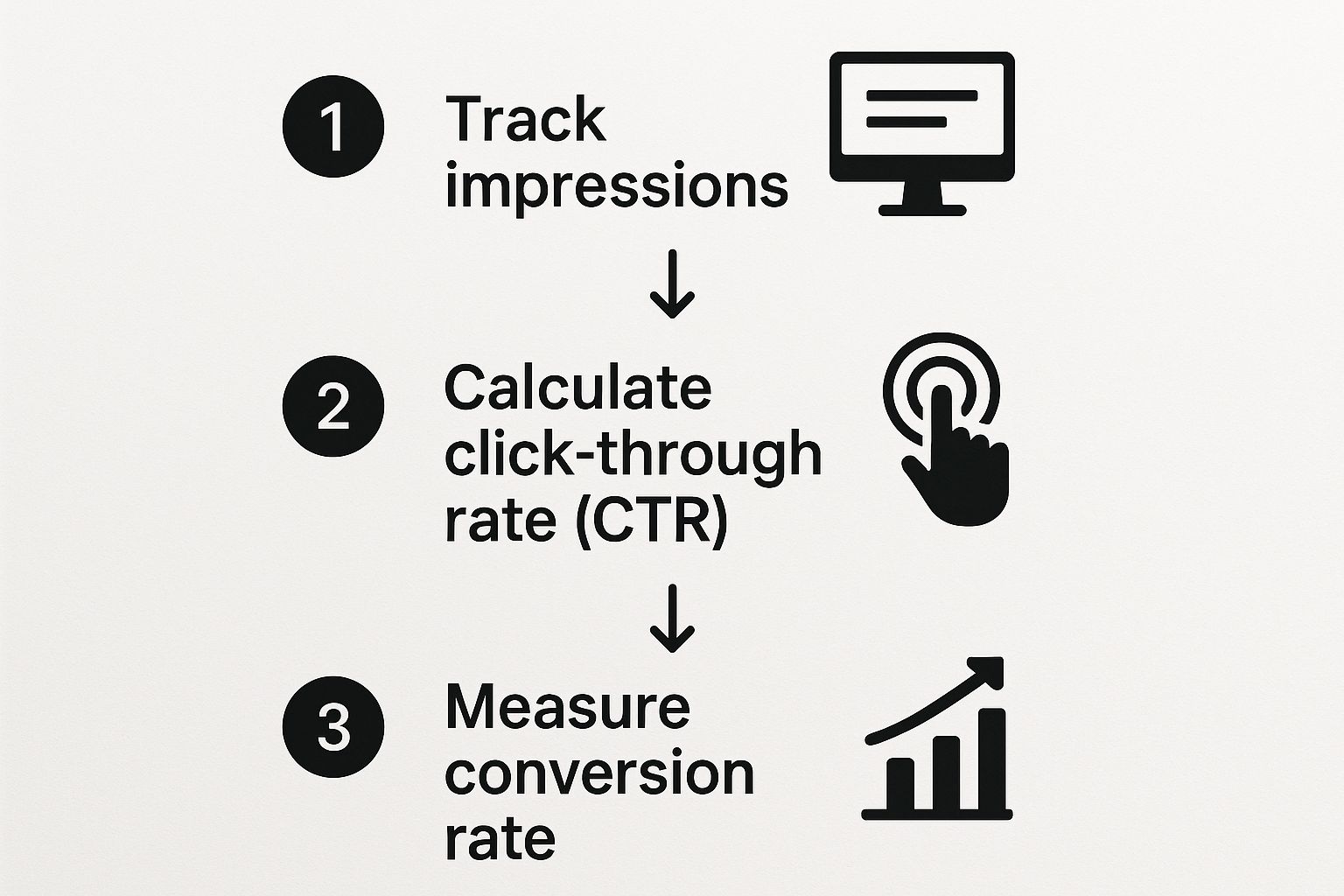
Following these steps lets you see which channels are driving real results—not just views. It gives you the data you need to double down on what works and ditch what doesn’t.
Turning Content Views into Client Conversations
Look, creating great content is a massive win. Pat yourself on the back. But it’s only half the job.
The real goal of content marketing for real estate agents is to turn those views, likes, and shares into actual business. This is where we stop chasing vanity metrics and start tracking the results that hit your bank account—leads generated, appraisals booked, and your reputation as the go-to agent in your area.
It’s all about connecting the dots. How does a blog post lead to a new listing? How does a video tour turn into a qualified buyer? This final piece of the puzzle is what shows you your return on investment (ROI) and helps you sharpen your strategy so every bit of content works as hard as you do.
Measuring What Truly Matters
Likes and comments feel great, but they don't pay the mortgage. To know if your content is actually working, you need to track Key Performance Indicators (KPIs) that signal a potential client is ready to talk. You don’t need fancy, expensive software either. Free tools like Google Analytics and the built-in insights on your social media accounts are more than enough to get started.
Here’s what you should be watching:
- Website Traffic from Content: Jump into Google Analytics. Which blog posts or social updates are sending the most people to your website? That’s your gold.
- Lead Magnet Downloads: Are people grabbing your "Suburb Seller's Guide" or "First-Home Buyer's Checklist"? This is a direct sign of a warm lead.
- Direct Inquiries: Keep a tally of DMs, emails, or contact form submissions where someone mentions a specific post, video, or article they saw.
- Appraisal or Consultation Bookings: This is the big one. Make a note of which channels or content pieces are sparking these high-value conversations.
Weaving in Compelling Calls to Action
Your audience is busy. They won't take the next step unless you make it crystal clear and easy for them. A strong, obvious Call to Action (CTA) is the bridge between someone enjoying your content and becoming your next client.
Forget the generic "Contact Me." Get specific and offer genuine value.
- In a blog post about market trends: "Curious what this means for your property's value? Download our free, no-obligation suburb report for a detailed analysis."
- At the end of an Instagram Reel touring a local park: "Thinking of making a move to this family-friendly neighbourhood? DM me the word 'GUIDE' for my exclusive buyer's guide."
- In your email newsletter: "Ready to take the next step? Book a complimentary 15-minute property appraisal to discuss your goals."
A great CTA makes the next step feel easy, logical, and beneficial for the client. It’s not a hard sell; it’s a helpful invitation.
Creating a Simple Monthly Review Framework
Consistency is everything in real estate, and that applies to your marketing review too. Block out just one hour each month to look at the data. This simple habit will show you exactly what to double down on and what to stop wasting time on. It's a game-changer.
Your monthly check-in should answer these four questions:
- Which format killed it? (e.g., Reels, long-form blogs, carousel posts)
- What topics got people talking? (e.g., seller tips, market data, local lifestyle)
- Which channel sent the most traffic? (e.g., Facebook, Instagram, email)
- How many new leads or subscribers did I get this month?
This data-driven approach separates the pros from the amateurs. For more targeted tactics, exploring personalized real estate lead generation ideas can add some serious firepower to your conversion efforts.
This process is critical for success in the Australian market. Why? Because agents who are active on social media close 30–40% more leads than those who aren't. Top performers are all in on consistent, mobile-friendly content like short-form video. It builds trust and positions them as the local authority.
By measuring, refining, and using powerful CTAs, you turn your content from a simple broadcast into a smart system for attracting your ideal clients. And for agents ready to scale, looking into marketing automation for small business can help put this entire process on autopilot, making sure no lead ever slips through the cracks.
Your Content Marketing Questions Answered
Even with the best plan in hand, getting started with content marketing for real estate agents can feel a bit daunting. Let's tackle some of the most common questions I hear from agents, so you can move forward with total confidence.
How Much Time Should I Realistically Dedicate to Content Each Week?
For a solo agent, consistency will always trump volume. Aim for 3-5 hours a week. That might sound like a lot, but the trick is to work smarter, not harder, by batching your tasks.
You don't need to be creating something new every single day. Try this instead:
- Hours 1-2: Plan out your content for the next fortnight. Brainstorm a few topics, outline one solid blog post, and maybe script a couple of quick videos.
- Hours 3-4: Create the actual content. This is when you sit down and write that blog post or head out to film three short Reels of your favourite local spots.
- Hour 5: Schedule everything. Use a simple tool to get your social media posts locked and loaded for the week ahead.
Trust me, one high-value blog post and three engaging social media updates a week are far more powerful than posting random, rushed content whenever you remember.
I Am Not a Pro Writer or Videographer—How Can I Create Quality Content?
This is probably the biggest fear I see, but here's the good news: in real estate, authenticity is your superpower. Your clients want a trustworthy expert, not a Hollywood producer.
When you're writing, just focus on being clear and genuinely helpful. Use a tool like Grammarly to catch any little typos, and simply write the way you'd talk to a client over a coffee.
As for video, your smartphone is more than enough to get started.
Your local market knowledge and genuine personality are your biggest assets—not your camera equipment. A simple tripod and an inexpensive lapel microphone (you can get one for around $30) will dramatically improve your video quality and make you look like a total pro.
What Is the Fastest Way to Get Leads From My Content?
Organic growth is a long game, but you can absolutely speed things up with a small, targeted ad budget. You don’t need to spend thousands to see results.
For the quickest wins, create content that solves an immediate, pressing problem for your ideal client. Think about it: a blog post titled "Top 5 Mistakes to Avoid When Selling in [Your Suburb]" is going to attract motivated sellers much faster than a generic market update.
To really put your foot on the accelerator, try these tactics:
- Boost a Post: Put a small budget behind a Facebook post about a new listing or a recent successful sale. Target it to a local audience, and you'll get way more eyeballs on your win.
- Promote a Lead Magnet: Run a small ad campaign for a genuinely useful resource, like a "First-Home Buyer's Checklist." This is a brilliant way to build your email list with qualified leads who are actively searching for help.
The goal here is to combine great content with smart, targeted promotion. That’s how you get your message in front of the right people, right when they need you.
Ready to stop chasing leads and start attracting your ideal clients? At Homer Digital Marketing, we build powerful, AI-driven marketing systems that turn your expertise into a lead-generation machine. Let us handle the strategy and automation so you can focus on what you do best—selling properties. Book a discovery call with us today and see how we can help you scale your business.
