

Are you tired of treating LinkedIn like an online resume and seeing zero results? Let's reframe it. LinkedIn is not just a networking site; it's a powerful client attraction system waiting to be unlocked. Your personal profile and Company Page are your digital storefronts, and for effective marketing with LinkedIn, they must be engineered to convert visitors into clients from the very first click. Get this right, and you've built the foundation for a steady stream of high-quality leads.
This guide will provide you with the proven strategies to turn your presence into a lead generation machine.
Why Your LinkedIn Presence Is Your Greatest Marketing Asset
Before you post content or send a single connection request, you must get your house in order. Your LinkedIn profile and Company Page are the front door to your business. If they're half-finished, confusing, or just plain boring, potential clients will turn around and leave.
A sharp, optimised presence builds instant trust. It tells people exactly what you do and the value you deliver, making every other marketing effort you put in ten times more effective.
The numbers speak for themselves. As of early 2025, LinkedIn boasts over 17 million Australian users—a staggering 61.7% of the entire population.
The sweet spot? The 25 to 34-year-old demographic, which includes 7.9 million users. For any B2B or service-based business, that’s a direct line to the decision-makers you want to reach. The visibility for lead generation is simply unmatched.
Optimising Your Personal Profile for Client Attraction
Your personal profile is almost always the first place a potential client will look. It needs to speak directly to their problems, not just list your past jobs.
- Your Headshot: This is non-negotiable. Get a high-quality, professional photo where you look approachable and trustworthy. No holiday snaps or cropped wedding photos.
- Your Headline: This is prime real estate. Ditch the generic job title like "Financial Advisor." Instead, write a client-focused headline like "Helping Sydney's Tech Executives Secure Their Financial Future with Strategic Wealth Management."
- Your 'About' Section: Think of this as your sales page. Tell a story. Start with the problem your ideal client has, explain exactly how you solve it, and show proof of the results you get. Sprinkle in LSI keywords related to your services (e.g., "investment portfolio management," "superannuation advice") to boost your visibility in searches. For a deeper dive, check out our guide on creating a powerful LinkedIn profile that actually converts.
Transforming Your Company Page Into a Resource Hub
While your personal profile builds a human connection, your Company Page is where you establish your brand's authority and credibility. It cannot be a digital ghost town; it must be an active hub packed with value.
A common mistake I see is businesses setting up a Company Page and then abandoning it. An active, updated page signals that your business is thriving and engaged. It builds confidence in potential buyers and becomes the anchor for your brand's voice.
To turn your page into a client magnet, dial in these key areas:
- Banner Image: Don't use the default. Get a professionally designed banner that showcases your brand and includes a clear value proposition or a call to action.
- 'About' Us Tab: Just like your personal summary, this section needs to be optimised with relevant keywords describing your services, your industry, and the problems you solve. Make it crystal clear who you help and how.
- Featured Section: Pin your best content here. This is perfect for a powerful case study, a client testimonial video, or a lead magnet like a downloadable guide.
By meticulously optimising both your personal profile and Company Page, you create a cohesive and compelling brand presence. This foundation ensures that when you start creating content, you're sending prospects to a digital storefront that’s ready to convert them.
Crafting a Magnetic Content Strategy for LinkedIn
An optimised profile is your digital shopfront, but your content? That’s the engine that actually drives your marketing with LinkedIn results. Posting randomly without a plan is like shouting into the wind. To attract, nurture, and convert your ideal clients, you need a proper framework.
This is where most service-based businesses get stuck. They know they should be posting, but they don’t know what to post. The result is a jumbled mess of random articles and sales pitches that fall flat, building zero momentum.
A winning strategy isn’t about creating more content; it's about creating the right content, consistently. The goal is simple: become the go-to authority in your niche. When your ideal clients are ready to buy, you should be the only name that comes to mind.
Defining Your Core Content Pillars
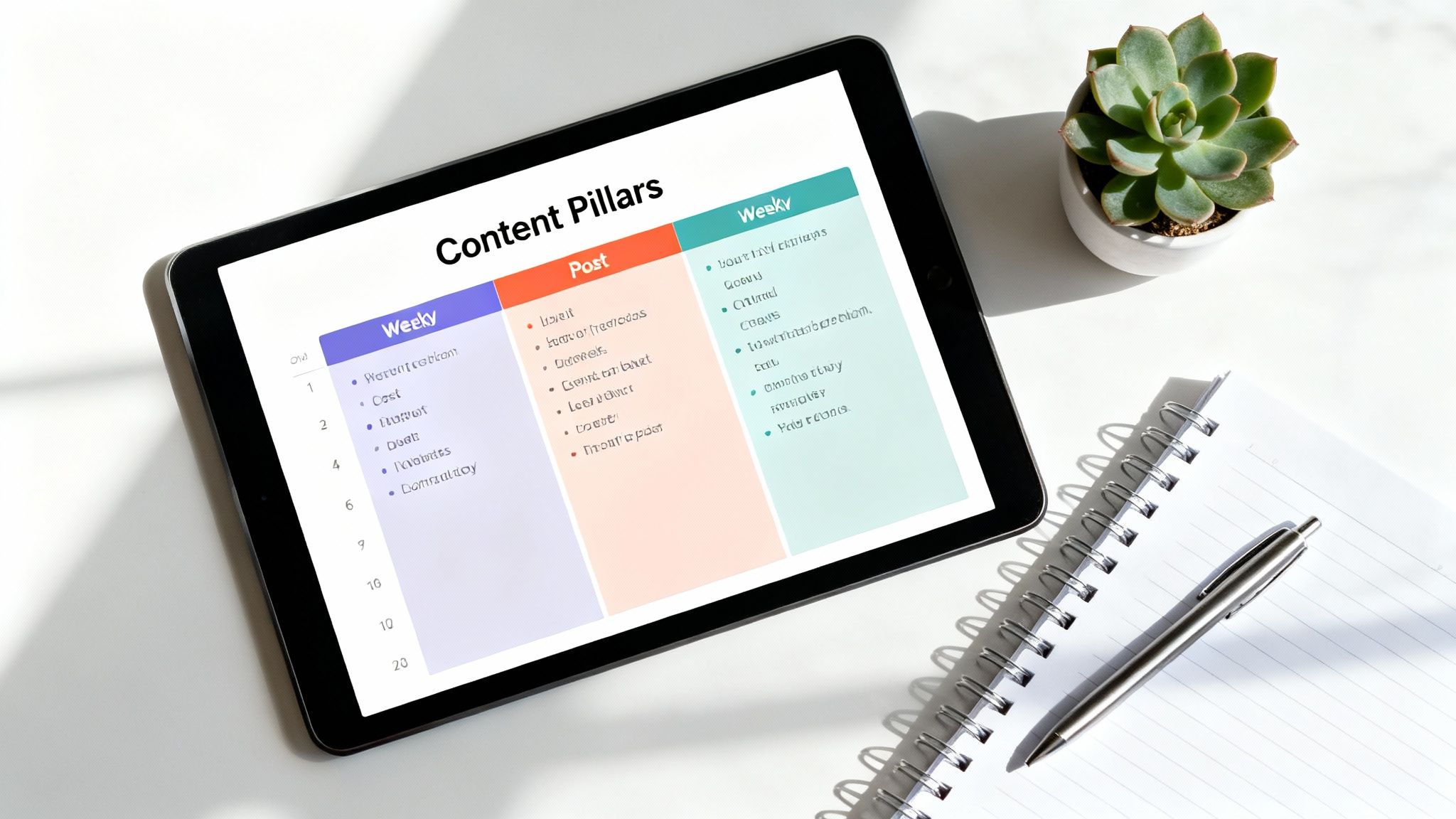
The foundation of any sustainable content plan is your "Content Pillars". Forget scrambling for ideas. Instead, work from 3-5 core themes that sit at the intersection of your expertise and your audience's biggest problems.
Think of them as the main topics you want to own. For example, a buyer's agent in Brisbane might build their content around pillars like:
- Brisbane Property Market Intel: Suburb deep-dives, auction strategies, and current market trends.
- Investment Property ROI: How to spot high-growth opportunities and calculate returns.
- First Home Buyer Crash Course: Breaking down the process from pre-approval to getting the keys.
- Renovating for Profit: Smart, cosmetic updates that add value.
These pillars become your roadmap. Every post will be relevant and will cement your authority. This targeted approach is a non-negotiable part of effective LinkedIn marketing, as it builds a strong, recognisable brand over time.
Actionable Formulas for Posts That Actually Get Engagement
Once your pillars are locked in, it’s time to mix up your post formats. Not every post needs to be a 1,000-word masterpiece. In fact, variety is what stops people from scrolling past your content.
Here are some proven formats to get you started:
- Text-Only Personal Stories: Share a lesson learned from a client meeting or a business challenge you overcame. These posts build a powerful human connection and get high engagement because they’re real and relatable.
- Insightful Carousels (PDFs): Break down a complex idea into 5-10 simple, visual slides. You could turn a blog post into a carousel on "5 Common Tax Mistakes Startups Make" or "3 Leadership Habits of High-Performing Managers."
- Value-Driven Lists: Simple listicles like "4 Questions to Ask Before Hiring a Marketing Agency" or "7 Signs You've Outgrown Your Accountant" are super scannable and shareable. They deliver quick, actionable value.
- Behind-the-Scenes Updates: Give your audience a quick look at your work process or your team. This humanises your brand and builds trust that goes beyond just professional skills.
The best content on LinkedIn doesn't just inform; it starts a conversation. Always end your posts with an open-ended question to encourage comments. This is gold for the algorithm.
Structuring Your Weekly Content Calendar
Consistency is the last piece of the puzzle. A content calendar removes the daily guesswork and ensures you're posting a balanced mix of content. Remember the rule: give value far more often than you ask for the sale.
Here’s a simple but effective weekly schedule to get you started.
Sample Weekly LinkedIn Content Calendar
A balanced weekly content schedule to build authority and drive engagement for a service-based business.
| Day | Content Theme | Format Idea | Goal |
|---|---|---|---|
| Monday | Motivational/Insight | Text-only personal story or a quote with your take. | Start the week with inspiration and build connection. |
| Tuesday | Educational (Pillar 1) | Carousel or listicle post breaking down a key concept. | Provide tangible value and showcase expertise. |
| Wednesday | Community Engagement | A poll or a question post on a common industry pain point. | Spark conversation and gather audience insights. |
| Thursday | Educational (Pillar 2) | Link to a blog post or a short video tip. | Drive traffic and demonstrate deep authority. |
| Friday | Success Story/Soft Pitch | Client testimonial or a case study with a subtle call-to-action. | Build social proof and generate warm leads. |
This structure ensures you are consistently showing up, adding value, and gently guiding your audience toward wanting to work with you.
Mastering Organic Engagement and Growth on LinkedIn
Putting out great content is a huge piece of the puzzle, but it's only half the story. The real, lasting growth kicks in when you stop broadcasting and start engaging. This is how you get your content seen, build actual relationships, and make your profile the centre of industry conversations—all without touching your ad budget.
Too many business owners post something, then log off and wonder why their follower count is stuck. The LinkedIn algorithm is hungry for interaction. When you engage with others, you signal that you're an active, valuable member of the community. In return, the platform gives your own content a serious boost.
It's More Than Just Posting Your Own Stuff
Strategic engagement means carving out time every day to interact with people in a meaningful way. It’s about playing the long game and showing up consistently where your ideal clients are already hanging out. This is your ticket to getting noticed by people who have no idea who you are… yet.
Think of it like this: your content is your storefront, but your engagement is you working the floor, shaking hands, and starting conversations.
Here are the daily habits that will fuel your organic growth:
- Comment with Insight: Aim to leave thoughtful, value-adding comments on posts from industry leaders and potential clients. "Great post!" is invisible. Instead, add to the conversation. Share a relevant story, ask a smart question, or offer a different perspective. A single well-written comment can drive dozens of high-quality people to your profile.
- Engage with Your Commenters: Someone took the time to comment on your post? Always reply. Better yet, ask them a follow-up question to keep the chat going. This shows you value their input and tells the algorithm your post is sparking a real discussion, which helps it get seen by more people.
- Get Active in LinkedIn Groups: While many LinkedIn Groups are noisy, finding one or two high-quality, well-moderated groups in your niche is pure gold. Don't just join and drop links. Jump in, answer questions, and offer genuinely helpful advice to become the go-to expert in that community.
A single, insightful comment on an industry leader's viral post can often do more for your visibility than five of your own posts. You're borrowing their audience and putting your expertise on a much bigger stage.
Use LinkedIn's Features to Spark Conversation
Beyond commenting, LinkedIn has built-in features designed to get people talking. These tools are criminally underused but are incredibly effective at starting conversations.
When you move beyond simple text or image posts, you show you know your way around the platform and give your audience fresh ways to connect.
Put Polls and Events to Work
LinkedIn Polls are one of the easiest wins for generating engagement. They take seconds for your audience to participate in and give you direct insight into their challenges, wants, and opinions.
For example, a recruitment agency could run a poll asking, "What's the biggest headache you face when hiring senior tech talent?" The results don't just create engagement; they give you a ready-made list of people who have openly admitted they have a problem you can solve. You can then follow up with every person who voted.
And don't forget LinkedIn Events. They're perfect for webinars, workshops, or virtual meetups. They create a dedicated hub for your event, letting you build buzz and chat with attendees before, during, and after. Promoting an event encourages shares and brings new people into your orbit.
By weaving these simple engagement tactics into your daily routine, you shift from a one-way broadcast into a dynamic conversation. This is how you build strong relationships, establish authority, and create a powerful organic growth machine.
Implementing Targeted Outreach That Converts
While a solid content strategy creates a magnetic pull, targeted outreach is what fills your pipeline right now. This is where you switch from passively attracting clients to proactively starting conversations. Forget old "spray and pray" tactics; modern marketing with LinkedIn is about precision and genuine connection.
The real key is moving beyond the standard LinkedIn search bar. If you’re serious about growth, tools like LinkedIn Sales Navigator are non-negotiable. They let you build incredibly specific lists of your ideal clients using filters like industry, company size, recent job changes, and even keywords they've used in their posts.
Building Your Ideal Client Lists
Great outreach starts with a well-defined list, not a shot in the dark. With Sales Navigator, you can pinpoint the exact people you need to talk to. This isn't just about finding "CEOs in Sydney."
It’s about finding "CEOs of tech companies with 50-200 employees in Sydney who have posted about 'scaling challenges' in the last 30 days." That’s a game-changer.
This level of detail means your outreach is always relevant, dramatically boosting your chances of getting a positive reply.
The biggest mistake in LinkedIn outreach is sending a generic, salesy connection request. Your goal isn't to make a sale in the first message. It’s to start a real conversation. Value and personalisation win every single time.
Crafting Messages That Start Conversations
Once you have your list, the real work begins. Your messaging has to be thoughtful, personalised, and focused on providing value. Spammy, copy-paste templates are the fastest way to get ignored.
A successful outreach sequence isn't a single message—it's a series of thoughtful touchpoints that build familiarity and trust over time.
Here’s a simple, proven framework:
- Engage First, Connect Second: Before sending a request, interact with their content. Leave a thoughtful comment on a recent post or share their article with your own insights. This puts you on their radar in a natural way.
- The Personalised Connection Request: Your request must be customised. Reference that post you commented on, mention a shared connection, or point out a mutual industry group. Keep it brief and make it about them, not you.
- The Value-Driven Follow-Up: A few days after they accept, send a follow-up message. But don't pitch! Instead, offer something genuinely helpful, like a link to a relevant blog post, a useful tool, or an insight about their industry.
- The "Gentle Ask" Follow-Up: If they respond positively, then you can gently guide the conversation toward their business. A simple, "Glad you found that helpful. I'm curious, how are you currently handling [the problem you solve]?" is a great way to open the door.
To streamline your outreach, it helps to have a clear process. A good workflow guide for automated lead generation can give you a solid foundation to build from.
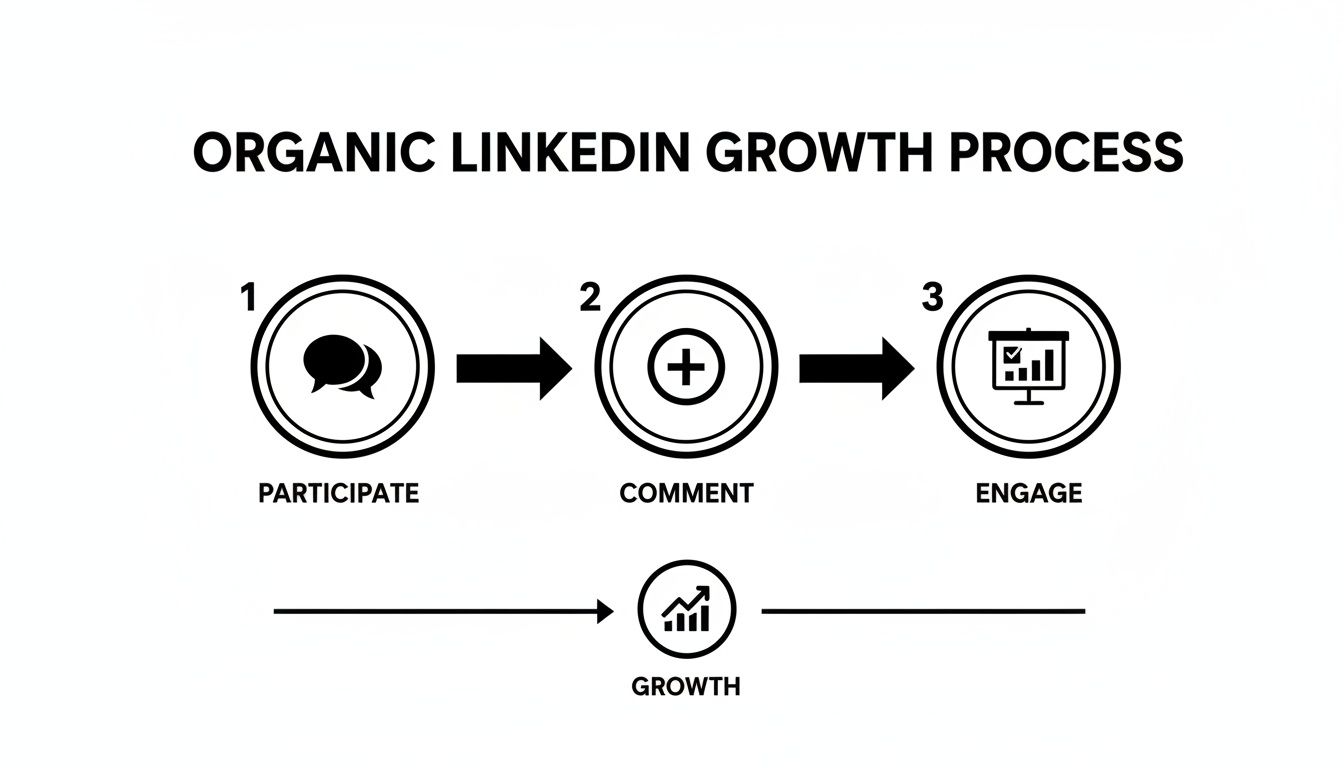
The main takeaway is that genuine interaction is the engine of organic growth. This authentic, relationship-first approach is how you turn cold outreach into warm conversations and, ultimately, land high-ticket clients who trust you before you even send a proposal.
Automating and Scaling Your LinkedIn System
To truly grow your business with LinkedIn, you need to combine authentic, human engagement with smart systems. Manually handling every connection request, follow-up, and profile view isn't scalable. This is where automation, used the right way, becomes your secret weapon.
The goal isn't to fake conversations or become a robot. It's about letting technology handle repetitive tasks. This frees you up to have real, meaningful chats with warm, qualified leads who are already curious about what you offer.
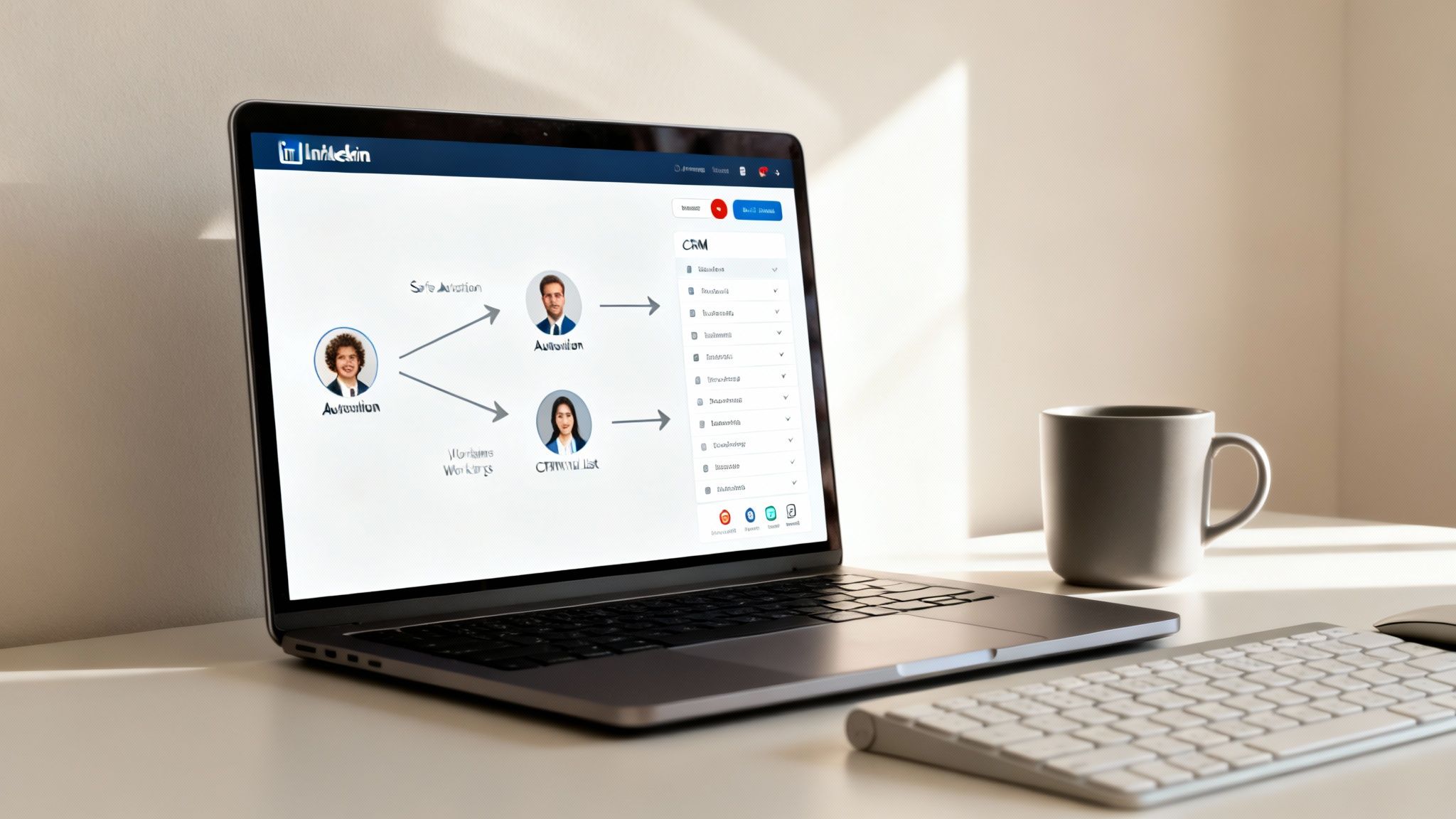
This is how you build a client-getting machine that doesn’t chain you to your desk 24/7. Your lead generation can tick away consistently in the background, ensuring a steady stream of new opportunities.
Choosing the Right Automation Tools
The world of LinkedIn automation tools is massive. The aim is to find something that helps your outreach, not makes it sound like a cheap spambot. A good tool should feel like a personal assistant. If you're just starting, The Definite LinkedIn AI Tools Directory is a great resource.
When comparing options, look for platforms that offer:
- Smart Sequencing: The tool should automatically stop campaigns the moment someone replies. Nothing is more awkward than an automated follow-up landing after you've started a real conversation.
- Personalisation Variables: Don’t settle for tools that only pull in a first name. Better ones can reference a prospect's industry, company, or a mutual connection, making your messages feel more personal.
- Safety Limits: Reputable tools have built-in safety features. These mimic human behaviour by limiting daily actions, which helps keep your account safe and on the right side of LinkedIn’s rules.
Best Practices for Safe and Effective Automation
Automation is powerful, but you must be responsible. The biggest mistake is setting up a generic, aggressive campaign and letting it rip. That’s a fast track to getting your account restricted and wrecking your brand's reputation.
The golden rule of automation is to automate the action, not the relationship. Use tools to start the conversation, but be ready to jump in with your real, human self the second they respond.
To keep your outreach working for you, always stick to these principles:
- Warm Up Your Account: Don't go from sending zero messages one day to 100 the next. Slowly ramp up your activity over a couple of weeks to avoid triggering LinkedIn's red flags.
- Focus on Hyper-Targeted Lists: Automation is most effective with small, super-specific lists. A personalised message to 50 ideal prospects will always beat a generic one blasted to 500 random people.
- Write Like a Human: Craft your messages to sound like you actually talk. Keep them short, casual, and focused on starting a chat, not closing a deal. Ditch the corporate jargon.
Integrating LinkedIn with Your CRM
This is where the real magic happens. When you connect your LinkedIn activity to your Customer Relationship Management (CRM) platform, you create a seamless system where nothing falls through the cracks. No more losing track of great conversations in your messy LinkedIn inbox.
This is a key part of marketing automation—creating systems that nurture your leads from the first hello. You can learn more in our complete guide explaining what is marketing automation.
A properly set-up system can automatically:
- Add a new LinkedIn connection as a contact in your CRM.
- Tag that contact based on which campaign brought them to you.
- Create a follow-up task in your CRM so you know exactly when to reach out next.
- Add the contact to a long-term email nurture sequence if they’re a good fit but not ready to buy.
This creates a powerful, closed-loop system. It ensures every valuable connection you make on LinkedIn gets captured and nurtured properly, turning a simple networking site into a predictable, scalable client acquisition machine.
Your Top LinkedIn Marketing Questions, Answered (FAQ)
Even with the best strategy, questions always come up. LinkedIn is a living platform, and what worked yesterday might not work tomorrow. To cut through the noise, here are the most common questions from Australian business owners, with straight-to-the-point answers.
How much time should I spend on LinkedIn each day?
This is a big one, and the answer isn’t about hours logged—it's all about consistency. You don't need to live on the platform to see incredible results.
Aim for a focused 20-30 minutes a day. Use this power block for high-impact activities: jumping into conversations in your feed, leaving thoughtful comments, and sending a few highly personalised connection requests. If you use a scheduling tool for your content, this daily window becomes pure engagement time.
Is LinkedIn Premium or Sales Navigator worth the investment?
For any service business serious about finding clients on LinkedIn, the answer is a hard yes. Specifically, Sales Navigator is a game-changer.
While the free version is fine, Sales Navigator's search filters are in a different league. It lets you zero in on your ideal clients with scary precision—filtering by company size, industry, recent job moves, or even keywords they've posted about. The hours it saves you from manual scrolling are worth the investment alone.
What's the biggest mistake businesses make with LinkedIn marketing?
Without a doubt, the most common mistake is treating LinkedIn like a CV and jumping straight into a sales pitch. It’s the fastest way to get ignored.
Sending a pitch in your first message to a new connection doesn't just feel spammy; it breaks trust before you’ve even had a chance to build it. Successful marketing on LinkedIn is about giving value first and building genuine relationships. The sales will come later, naturally, from those conversations.
Can I market my business effectively without using LinkedIn Ads?
Absolutely. In fact, a strong organic strategy is the non-negotiable foundation of any good LinkedIn presence. You can generate a consistent stream of quality leads without spending a cent on ads.
It all starts with a fully optimised profile, value-packed content, and strategic daily engagement. That’s how you build authority and become the go-to person in your field. LinkedIn Ads are a fantastic accelerator once you have a proven organic system, but they aren't essential for success. Get the organic foundation right first.
Ready to stop guessing and start getting predictable results from LinkedIn? The team at Homer Digital Marketing specialises in building powerful client attraction systems for service-based businesses just like yours. We combine proven strategy with smart automation to help you grow your visibility and scale your business. Book a discovery call today to see how we can help.
